Overview
In the increasingly crowded mosh pit of legged robotics, a new contender has elbowed its way to the front, and it hails from Shenzhen, China. Limx Dynamics, founded in 2022, is throwing down a gauntlet with its slick demos of bipedal and quadrupedal robots that move with an unnerving fluidity. Their tagline is “Cross the Limits,” and their mission is to pioneer “Embodied Intelligent Robotics,” which is corporate-speak for “robots that don’t fall over when they encounter a stiff breeze.”
While the world has been mesmerized by the parkour antics of Boston Dynamics and the logistical ambitions of Agility Robotics, Limx has been quietly (and not-so-quietly) raising staggering amounts of capital and developing machines that can not only walk but do so with a perceptive grace that suggests something more than just clever programming. They’re focused on the brain as much as the brawn, building a foundation on reinforcement learning-based motion control and advanced AI. The big question isn’t whether their robots look cool—they do—but whether Limx has the secret sauce to turn impressive demos into a viable, world-changing business.
Key Points
- Founded: 2022 in Shenzhen, China by Dr. Wei Zhang.
- Focus: Developing general-purpose legged robots powered by “Embodied AI,” with a heavy emphasis on reinforcement learning (RL) for motion control.
- Key Products: The W1 wheeled quadruped, the modular TRON series biped, and the full-size Oli (formerly CL-series) humanoid robot.
- Funding: Has raised significant capital, including a Series A+ round bringing their total to over $96 million from investors like Alibaba Group, Lenovo Capital, and JD.com.
- Core Technology: Proprietary high-performance actuators, perceptive locomotion algorithms, and an open SDK for developers. They leverage simulators like NVIDIA Isaac Sim for training.
- Notable Feats: Their humanoid robots can dynamically climb stairs and run, while the W1 quadruped can switch to a bipedal stance and roll on its wheeled feet.
Analysis
History and Evolution
Limx Dynamics burst onto the scene in 2022, emerging from the academic work of its founder, Dr. Wei Zhang, a tenured professor with a Ph.D. from Purdue University. This academic spin-off DNA gives the company a foundation in deep research, particularly in the proprietary actuators and control systems that are critical for stable, dynamic movement. The company quickly staffed up with commercialization experts, signaling an ambition that went far beyond the university lab.
Their evolution has been rapid. In a short span, they’ve gone from incorporation to showcasing a diverse lineup of robots, including the W1, which cleverly combines legs and wheels, and multiple iterations of their humanoid platform. This breakneck pace is fueled by enormous investor confidence, with tech giants like Alibaba and Lenovo pouring in capital, betting that Limx can crack the code for general-purpose robots.
Technology and Innovation
Limx’s special sauce appears to be its software-first approach to a hardware problem. While they design their own high-torque actuators, the real magic is in their “Motion Intelligence.” They lean heavily on Reinforcement Learning (RL), a flavor of AI where the robot essentially teaches itself to walk, run, and navigate obstacles through trial and error in a simulation before deploying in the real world. This is combined with real-time terrain perception, allowing robots like the CL-1 humanoid to tackle stairs and uneven ground dynamically rather than following a pre-programmed path.
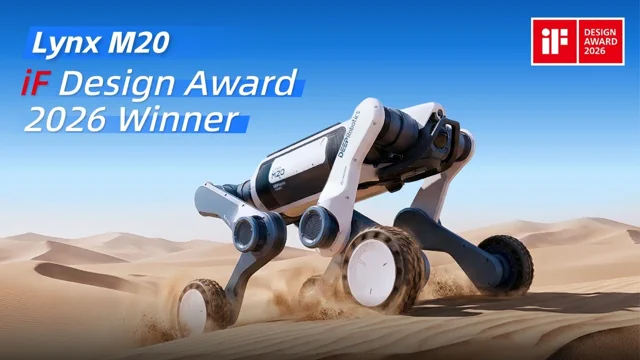
Their W1 robot is a prime example of innovative thinking. By putting wheels on the feet of a quadruped, it gets the energy efficiency of rolling on flat surfaces and the all-terrain capability of legs for stairs and obstacles. It can even pop up on two legs to achieve a greater height or navigate narrow spaces. Furthermore, their TRON 2 platform is modular, allowing it to be configured as a biped, a wheeled-leg robot, or with sole-feet, making it a “Swiss Army knife” for researchers. This focus on adaptable, intelligent motion sets them apart from companies focused purely on mechanical prowess.
Market Position
Limx Dynamics enters a battlefield of titans. Boston Dynamics owns the public imagination with its viral videos and has a commercial product in Spot. Agility Robotics is laser-focused on logistics with its Digit humanoid. Chinese competitors like Unitree Robotics are also major players. Limx seems to be carving out a niche as a provider of a general-purpose platform, aiming to be the adaptable foundation upon which others can build applications.
Their strategy appears to be twofold: create highly capable hardware and make it accessible. By providing an open SDK and Python compatibility, they are courting the R&D community, hoping to become the go-to platform for robotics research. At the same time, they are targeting B2B sectors like industrial inspection and logistics. Their success will depend on whether they can convince the market that a general-purpose robot is better than a specialized one, and whether they can move from impressive demos to reliable, deployable products that solve a real-world—and preferably boring—problem.
Strengths and Challenges
Limx’s primary strength is its demonstrated mastery of dynamic motion control. Their robots move with a confidence and agility that few can match. This, combined with strong financial backing from major strategic investors, gives them a long runway for R&D. Their academic roots also provide a deep well of technical talent.
However, the path is fraught with challenges. The chasm between a controlled demo and a 24/7 industrial application is vast. Reliability, safety, and cost are the boring-but-critical hurdles that have tripped up countless robotics startups. Furthermore, they are competing in a capital-intensive hardware space against established players with years of brand recognition. Limx has to prove not only that its technology is superior but that it can be manufactured at scale and supported globally.
Verdict
Limx Dynamics is, without a doubt, a formidable new force in legged robotics. They have successfully combined academic rigor with blistering startup speed, producing some of the most agile and dynamically impressive robots we’ve seen in years. Their software-centric approach, focusing on AI-driven motion control, allows their hardware to punch well above its weight class. The company has the funding, the talent, and the technology to be a top-tier competitor.
But let’s be honest, the world doesn’t need another robot that can climb stairs in a YouTube video. It needs a robot that can unload a truck for eight hours straight without complaining or bursting into flames. The critical challenge for Limx is to pivot from demonstrating capabilities to delivering value. They need to find a dull, dirty, or dangerous job and prove their machines can do it more reliably and cheaply than any other solution.
Limx Dynamics has certainly learned to walk, and even run, with the best of them. Now it has to learn to work. If they can make that leap, they won’t just be crossing limits; they’ll be setting a whole new standard. If not, they’ll just be another beautiful, expensive science project destined for the robotics history books.