Most robots today are clumsy brutes, blindly guessing at interaction forces by measuring motor current—a notoriously noisy and indirect method. A new startup, Silica Machines, is looking to end this era of numb robotics with an actuator that directly measures force, claiming a tenfold improvement in accuracy over the status quo. The company, part of the Founders, Inc. hardware accelerator, says it has completely redesigned the internal architecture to bake in this capability without the usual eye-watering price tag.
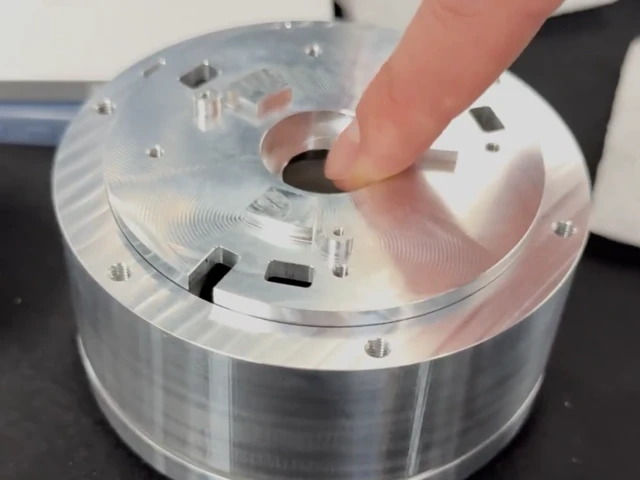
The core innovation is moving away from estimation to direct measurement. By embedding sensors directly into the actuator’s structure, Silica Machines can get a clean, high-fidelity signal of the forces being applied. In a video posted on X, a finger press on the device demonstrates a seemingly compliant and sensitive response. This approach bypasses the complex and often inaccurate models required to filter out noise from motor current readings.
The actuator itself, shown as a sleek, machined aluminum component, is designed to be an affordable, drop-in solution for robot manufacturers. By rethinking the mechanical design, the company aims to make proprioception—a robot’s sense of its own body and the forces acting on it—a standard feature rather than a premium add-on.
Why is this important?
For decades, giving robots a human-like sense of touch has been a holy grail, but the cost of high-performance force sensors has relegated this ability to expensive research humanoids and specialized industrial arms. Most robots in the wild are effectively “numb,” which is why they struggle with tasks requiring finesse, like delicate assembly, fruit picking, or safely assisting a human.
If Silica Machines can deliver on its promise of affordable, high-accuracy force sensing, it could fundamentally change the economics of what robots can do. It’s the key that unlocks a future where robots can handle fragile objects without crushing them, perform complex assembly tasks by “feel,” and collaborate with humans without being a safety hazard. This isn’t just an incremental improvement; it’s a foundational technology that could finally allow robots to stop breaking all the nice things.