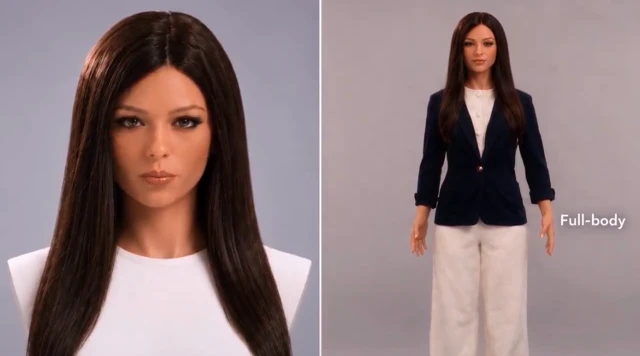
Realbotix Corp., a company with a long history of creating hyper-realistic humanoids, has unveiled Echo, a new line of AI-powered robots designed for social companionship, education, and wellness. The company is taking reservations for an initial 2027 production run, positioning Echo as a high-end interactive companion for a world grappling with a “global loneliness epidemic.”
The Echo line comes in two distinct, and distinctly priced, flavors. A desktop version, for those who prefer their companions stationary, starts at $11,950. The full-body model will set you back $59,950, and if you want your robot to make meaningful eye contact, the optional “Vinci” vision system for facial recognition adds another $24,950 to the bill. That brings the all-in price to just under $85,000 for a robot friend that remembers your past conversations and personal preferences.
According to Realbotix, Echo features lifelike facial expressions, customizable personalities, and supports over 100 languages. The company plans a very limited initial production for the second half of 2027: just 225 desktop units and a mere 25 full-body models. In a move that screams “manage your expectations,” Realbotix notes on its website that some visuals are AI-generated representations, meaning the final product may not perfectly match its glamorous headshots. The company has confirmed it will be exhibiting the Echo line at CES 2027 in Las Vegas.
Why is this important?
Realbotix is making a calculated pivot from its controversial roots in adult-oriented robotics to the burgeoning, and more mainstream, market for social and service robots. The price point, while steep for an individual, is competitive when compared to other advanced social humanoids like Engineered Arts’ Ameca, which is estimated to cost institutions around $250,000.
By targeting applications like elderly care, emotional support, and rehabilitation, Realbotix is betting that a physically embodied AI can offer something screen-based assistants cannot. The extremely small production run suggests this is a cautious first step to gauge market interest. The entire robotics industry will be watching to see if a company known for pushing the boundaries of the uncanny valley in one sector can successfully rebrand itself as a provider of wholesome, helpful companions.