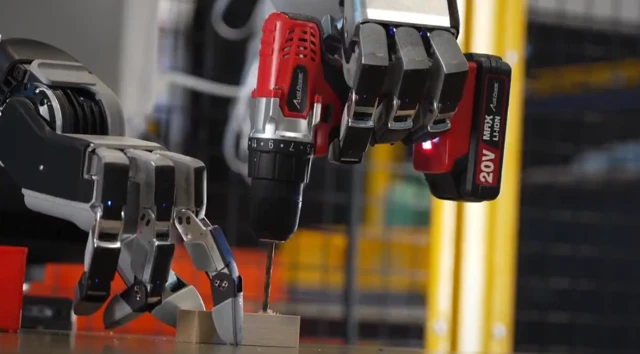
Boston Dynamics just pulled the wraps off the new hands for its all-electric Atlas humanoid, and they’re a fascinating mix of brute strength and AI-friendly design. But while the new grippers boast an impressive 13 degrees of freedom—a significant jump from the previous generation’s seven—the real story is about the finger that didn’t make the cut.
The new hands are engineered for what Boston Dynamics calls “real work,” capable of wielding tools with a tripodal grasp or executing a delicate pinch grip. As detailed in the company’s official blog post, the entire system is built for high-fidelity simulation, a critical component for training the robot with reinforcement learning (RL) and bridging the infamous sim-to-real gap. This isn’t just a lab toy; it’s designed with mass manufacturing in mind.
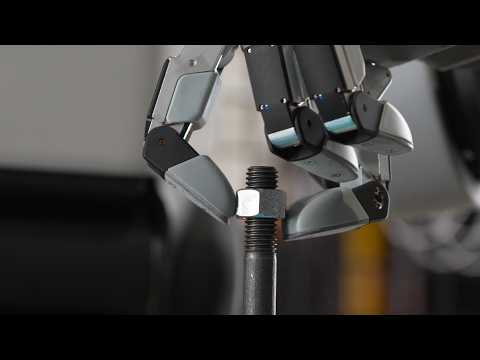
So, about that missing finger. In a moment of inspired, if slightly bizarre, management, Boston Dynamics CTO Zack Jackowski asked his team to tape their pinky and ring fingers together for a full day. The goal was to see what tasks became impossible. The verdict? The pinky was deemed not worth the added complexity of three extra actuators, power draw, and weight. It’s a refreshingly pragmatic approach to a field often obsessed with perfect anthropomorphism.
The decision was later confirmed by Alberto Rodriguez, Director of Robot Behavior for Atlas, highlighting the constant trade-offs between dexterity, strength, and ruggedness.
Why is this important?
This upgrade is more than just a new set of fingers. It signals Boston Dynamics’ serious pivot from viral video sensation to a company building a viable, scalable workforce. The focus on backdrivable, proprioceptive actuators means Atlas can “feel” forces and react gracefully to impacts—a necessity for any robot working in unpredictable human environments. By deliberately sacrificing a pinky for simplicity and ruggedness, Boston Dynamics is making a clear statement: the future of humanoid robotics will be built on pragmatic engineering, not just on mimicking human form.