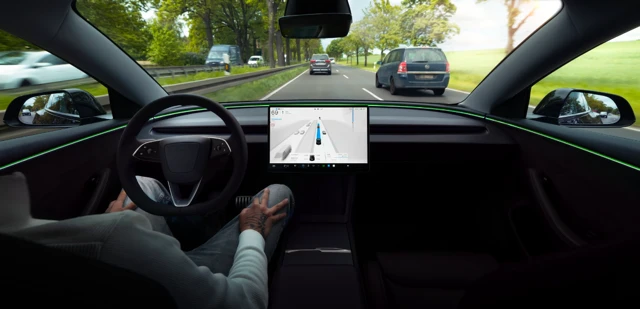
For years, the robotaxi revolution felt like a party happening exclusively in select US and Chinese cities. Now, Europe is finally getting on the guest list, though the invitations come with a significant caveat: you still have to bring a designated human driver. In a flurry of activity, commercial autonomous ride-hailing services have officially launched in Zagreb and London, while Tesla, Inc. continues its own methodical advance with a regulatory win in Slovenia.
The title of “Europe’s first commercial robotaxi service” was claimed by Pony.ai in partnership with Verne and Uber, which began operations in Zagreb, Croatia, in April 2026. The service became bookable via the Uber app on August 19th, allowing residents to hail a self-driving car in a 90-square-kilometer zone. Not to be outdone, London joined the fray on September 3rd, when British startup Wayve partnered with Uber to launch its own service using a fleet of 15 electric Ford Mustang Mach-E vehicles. In both cities, however, the term “autonomous” requires an asterisk—a trained safety operator remains firmly planted in the driver’s seat, ready to take control.
While geofenced robotaxis inch forward, Tesla is playing a different game. On September 8, 2026, the company announced that its “Full Self-Driving (Supervised)” system was approved for use in Slovenia, making it the sixth European country to give the Level 2 system the green light. This owner-based approach contrasts sharply with the fleet-based models of its rivals, betting on a wider, if less autonomous, rollout. Meanwhile, Germany is taking a more measured approach. In Hamburg, Volkswagen’s MOIA division began a limited public trial with autonomous ID.Buzz shuttles in July, though it’s a pre-registered pilot project, not an open commercial service. Further south, Waymo has targeted Munich for its European beachhead, but isn’t planning a public, fully autonomous launch until late 2027.
Why is this important?
The simultaneous, yet divergent, rollouts signal that the race for European autonomous mobility is finally moving from press releases to the pavement. While Zagreb secured the “first-mover” bragging rights, all eyes are on London. The UK’s proactive regulatory stance, specifically the Automated Vehicles Act, is creating a fertile ground for true, driverless operations. Consequently, the city is becoming a magnet for major players, with Waymo and Baidu’s Apollo Go (in partnership with Lyft’s Freenow) also actively testing on its complex streets.
This makes London the de facto European San Francisco—a crucial, high-stakes arena where different technologies and business models will clash. The current “supervised” services are a necessary, if slightly underwhelming, first step. The real prize is getting the human out of the driver’s seat, and thanks to a combination of ambitious startups and a forward-thinking government, London looks poised to be the first major European city to cross that finish line. The robotaxi wars have begun, and they will be televised… from the passenger seat.