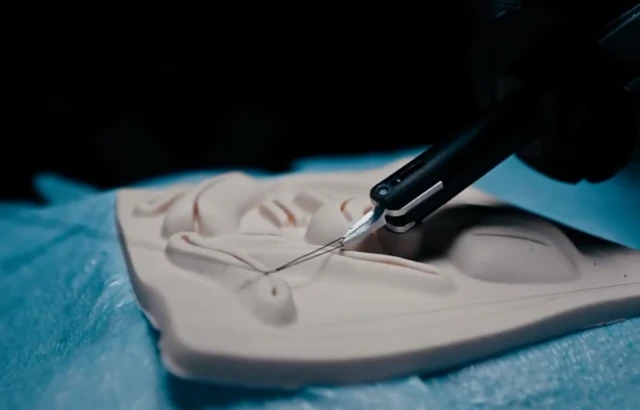
In a move that could eventually make your surgeon’s impossibly steady hands obsolete, startup Aleph Surgery has emerged from stealth with a $7.5 million pre-seed funding round. The investment was led by venture capital heavyweight Andreessen Horowitz (a16z), with participation from a roster of other firms including BoxGroup and Valkyrie Ventures. The company’s audacious goal is to build the first truly autonomous surgical robot that learns from demonstration and improves with experience.
Aleph’s vision, as outlined by co-founder Ryan McGuire, targets the extreme scarcity and high cost of surgical expertise. Unlike current robotic systems, which are sophisticated teleoperated tools, Aleph is building a system that can “acquire, refine, and transfer surgical skills across millions of procedures.” A video accompanying the announcement shows the company’s “v1” system already practicing suturing on its own, a foundational and delicate surgical task.
The startup is tackling one of the most valuable and regulated forms of labor on Earth, betting that “Physical AI” can do for surgery what software did for information. This is a long-term play, aiming to create a scalable surgeon where the training pipeline for humans takes over a decade and costs millions.
Why is this important?
This isn’t just another robotics startup; it’s a direct shot at the pinnacle of human manual dexterity and expertise. While most “Physical AI” investment has focused on logistics and manufacturing, Aleph is aiming for the operating room—a place where the stakes couldn’t be higher.
The success of such a venture would represent a paradigm shift in healthcare, potentially democratizing access to high-quality surgical care regardless of geography. However, the path is fraught with immense technical, ethical, and regulatory hurdles that make self-driving cars look like a weekend project. Still, with a significant pre-seed round from a top-tier investor, Aleph Surgery has the capital to start stitching together its vision for the future of surgery. The rest of us will be watching to see if it can cut it.