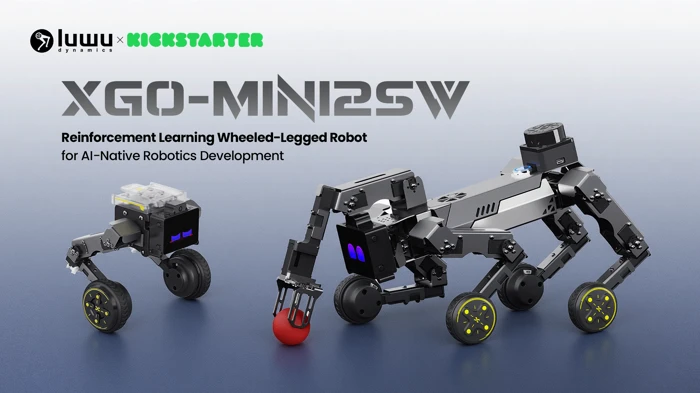
In the relentlessly expanding zoo of robotic quadrupeds, it takes a strange new gimmick to turn heads. HongKong Luwu Intelligent Technology Limited, the company behind the XGO line of robot dogs, has apparently decided that gimmick is confusion. Their latest creation, the XGO-mini2SW, is a wheeled-legged hybrid that can’t seem to decide if it wants to walk or roll, combining the agility of 12-DoF bionic legs with the sheer efficiency of wheels. The company is preparing to launch the bot on Kickstarter.
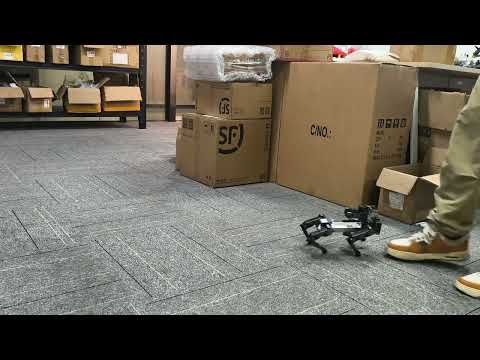
At the core of this metallic mutt is a Raspberry Pi CM5, a respectable compute module that gives developers a flexible and powerful open-source platform to build upon. This isn’t just a remote-controlled toy; it’s a serious development kit for embodied AI. The company emphasizes the robot’s role as a platform for reinforcement learning, providing an open-source Sim-to-Real pipeline. This allows developers to train AI models in a simulated environment and then deploy them onto the physical hardware, a critical workflow for modern robotics research.
The XGO-mini2SW also comes equipped for multimodal AI interactions, supporting voice control and vision-language understanding. For those who want to do more than just scuttle around, an optional 4-DoF robotic arm can be mounted on its back, enabling object grasping and manipulation tasks triggered by natural language commands. As an open-source project, the company provides its code on GitHub, which you can find here: Xgorobot GitHub.
Why is this important?
While the market is flooded with slick, proprietary robot dogs, the XGO-mini2SW is targeting a different audience: the builders, the makers, and the AI researchers who want to get their hands dirty. By basing it on a Raspberry Pi and providing open-source tools for advanced techniques like reinforcement learning, XGO is creating an accessible, relatively low-cost platform for experimenting with the future of AI. It’s less of a robot pet and more of a rolling (and walking) laboratory for anyone who thinks the best way to understand AI is to give it a body and see what happens. Just try not to trip over it while it’s having its latest existential crisis.