Just when you thought the cloud couldn’t get any higher, SpaceX decided to put it in orbit. The company has announced Starmind, an audacious plan to build a satellite-based AI supercomputer, and it’s partnering with Nvidia to power it. Each Starmind satellite will function as a “datacenter class space compute” node, equipped with Nvidia’s next-generation, and still largely unreleased, Rubin GPUs and Vera CPUs.
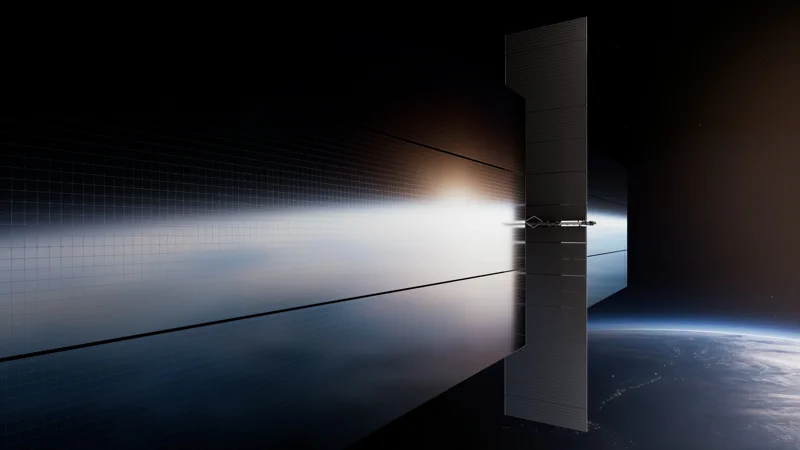
The announcement, made just before SpaceX’s first earnings call as a public company, confirms a strategic pivot that positions the aerospace giant as a major player in AI infrastructure. The Starmind AI1, the first satellite in the planned constellation, is a behemoth with a planned wingspan of 75 meters (246 ft) and a compute payload capable of drawing up to 250 kW of peak power from its massive solar arrays. The plan is to manufacture these orbital data centers at scale at a new “Gigasat” factory in Texas, with initial deployments targeted for as early as 2027.
Why is this important?
This isn’t just about finding a new place to stick servers; it’s a fundamental play on energy and efficiency. Terrestrial data centers are increasingly constrained by power grid limitations, land use, and immense water consumption for cooling. SpaceX’s argument is brutally simple: why deal with those terrestrial headaches when you have uninterrupted solar power and the vacuum of space as a free, hyper-efficient cooling system? By radiating heat directly into space, Starmind could eliminate the energy-intensive cooling systems that are a massive overhead for ground-based centers.
Of course, latency will be a factor, meaning this orbital supercomputer is likely destined for massive, asynchronous AI training tasks rather than real-time applications. However, for training the next generation of foundation models, offloading the immense computational load to an orbital platform powered by free energy could be a game-changer. It’s a classic Elon Musk move: leveraging SpaceX’s core competency—cheaply putting things into orbit—to disrupt an entirely different, and wildly profitable, industry. For Nvidia, it’s another massive design win, locking in a futuristic customer for a hardware platform that hasn’t even hit the market yet.