Figure AI, the humanoid robotics startup with more high-profile backers than a sold-out music festival, has pulled back the curtain on its not-so-secret weapon: Index. In an announcement today, the company revealed its ambitious plan to build what it calls “the most diverse robot training dataset ever built” by capturing a “global sampling of physics” from the real world. In short, they’re building a library of reality to teach their robots how to be useful.
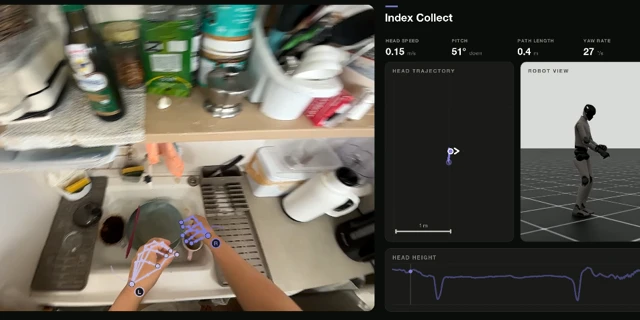
The core premise is brutally simple: the internet, for all its cat videos and questionable advice, is a terrible place to learn how to do physical tasks. To create a truly general-purpose robot, you need data that doesn’t exist online. Figure’s solution is to create it from scratch by recording humans performing everyday activities. The “Index Collect” system, shown in demonstrations, captures first-person video and intricate motion data from a human operator, simultaneously mapping those actions to a digital twin of its Figure 01 robot.
This isn’t just about learning one task at a time. Figure aims to build a massive, foundational dataset that can teach its robots to understand and interact with the physical world in a generalized way. The company stated that the data needed to scale a general-purpose robot “has to come from the real world,” a direct challenge to approaches that lean more heavily on purely simulated environments.
Why is this important?
The biggest bottleneck for useful, autonomous humanoids has always been data, not just hardware. A robot’s clumsy movements stem from a lack of the billions of data points a human accumulates through a lifetime of physical experience. Figure’s Index is a wildly ambitious attempt to brute-force that learning curve.
By building its own proprietary “ImageNet for robotics,” Figure is not only training its robots but also creating an incredibly valuable and difficult-to-replicate asset. While competitors like Google aggregate existing research datasets and Tesla leverages its vehicle fleet, Figure is betting that a bespoke, human-centric dataset is the key to unlocking embodied AI. The only question is whether watching humans do chores can truly capture the nuanced intelligence of physical interaction, or if they’re just building the world’s most overqualified dishwasher.
You can read the full, albeit brief, announcement on their official site: Introducing Index.