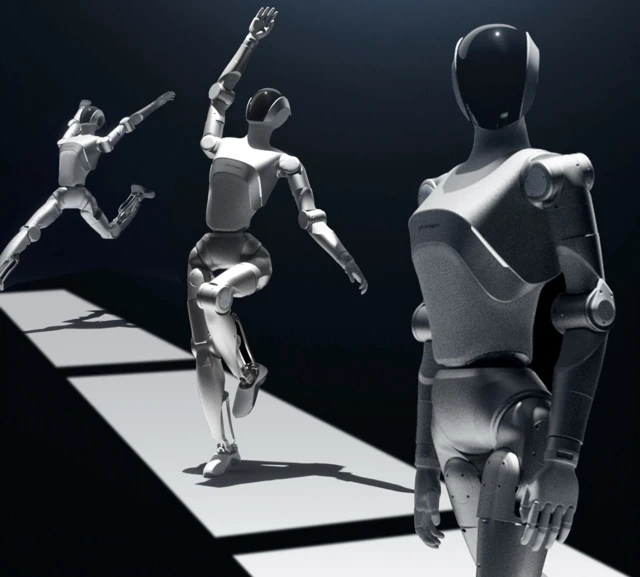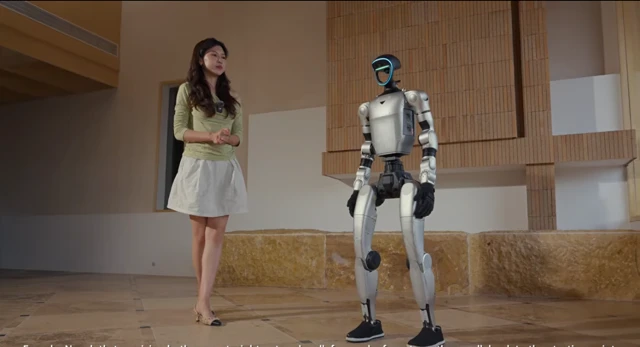
In the relentless march of metal legs and whirring servos, Unitree Robotics has just shoved its way closer to the front of the line. The company released a new video demonstrating its G1 humanoid robot responding to spoken commands, not by triggering a pre-recorded animation, but by generating actions in real-time. Crucially, Unitree claims the video was filmed in a single, unedited take, a subtle but significant jab at the carefully curated demos that often populate the robotics space.
The video shows the G1 being asked to perform a series of arbitrary actions, from “show me a cool move” to the slightly more pathetic “I’m a bit sad, can you comfort me?” Before each action, the robot audibly states, “Please wait a moment, I’m thinking,” a phrase that is both an honest reflection of its processing time and a deeply relatable sentiment for a Monday morning. Unitree is refreshingly candid about the current limitations, noting that real-time AI generation can lead to “slight latency” and “somewhat reduced” smoothness.
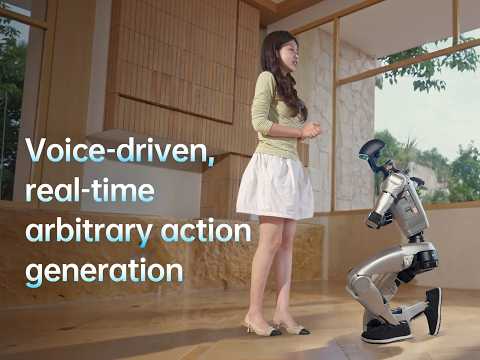
This isn’t just a party trick. The G1, marketed as a “Humanoid AI Agent,” is part of a new wave of robots designed to be more than just mindless assembly line workers. By integrating large-scale AI models, these machines are being taught to perceive, understand, and interact with the world in a generalized way. It’s the difference between a robot that can only screw in a specific bolt and one that you can ask to “pass me that wrench.”
Why is this important?
Unitree’s demo is another clear signal that the industry is rapidly shifting from rigid, pre-programmed robotics to flexible, AI-driven “embodied agents.” While competitors like Figure AI and Tesla are also racing to crack this nut, Unitree is doing so with a characteristically aggressive price point. The G1 agent model is priced at around $16,000, a fraction of the cost of other advanced humanoids.
Of course, that price is almost certainly for the domestic Chinese market and will likely see a significant markup for international customers. Still, by making the hardware more accessible, Unitree is enabling a much wider pool of researchers and developers to experiment with the complex software needed to make these robots truly useful. The result isn’t a perfectly polished performance bot, but something far more interesting: an affordable, thinking machine that’s learning on the job, one slightly laggy movement at a time.