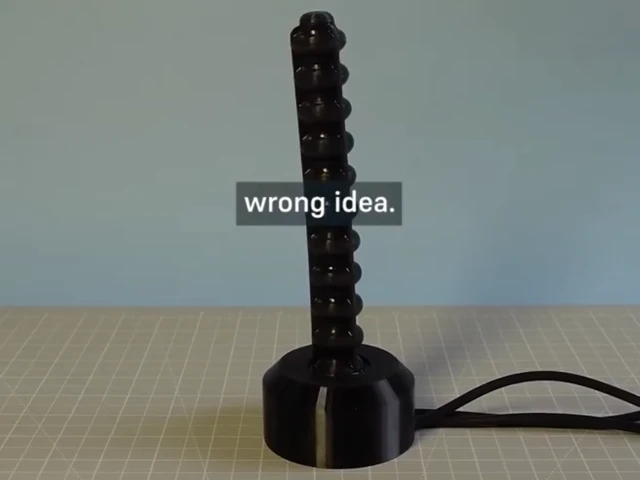
Lurking on a desktop near you is a single-part, 3D-printed soft robotic tentacle that could represent a massive shortcut for robotics development. Designed by YouTuber It’s On My Mind, the pneumatically actuated appendage was printed as a monolithic piece on a Formlabs Form 4 printer using the company’s new Silicone 40A resin. The demonstration showcases a huge leap in simplifying the creation of complex, flexible robotic components.
The secret sauce here is the material and the machine. Formlabs’ Silicone 40A is a pure silicone material, a rarity in the world of additive manufacturing that has historically relied on silicone-like photopolymers. This true silicone boasts a 230% elongation at break and a tear strength of 12 kN/m, making it both incredibly flexible and durable enough for real-world applications. The Form 4 printer can fabricate parts with intricate internal structures, such as the air pressure channels that allow the tentacle to be steered. This process completely sidesteps the traditional, labor-intensive methods of creating molds and assembling multiple components, turning a multi-week process into a matter of hours.
Why is this important?
The ability to 3D print functional, single-part soft robots from pure silicone is more than just a novelty; it’s a fundamental accelerator for research and development. Prototyping soft grippers for delicate manufacturing, patient-specific prosthetics, or minimally invasive surgical tools just got exponentially faster and cheaper. By eliminating the need for casting and assembly, engineers can iterate on designs in a single day, not a month. This breakthrough lowers the barrier to entry for creating sophisticated, nature-inspired robots that can safely interact with their environment—and with us. The squishy robotic future just got a whole lot closer.