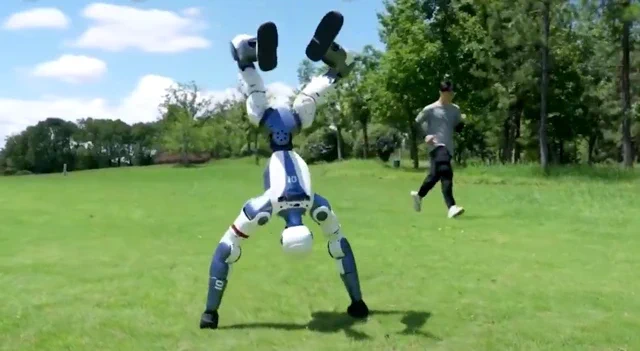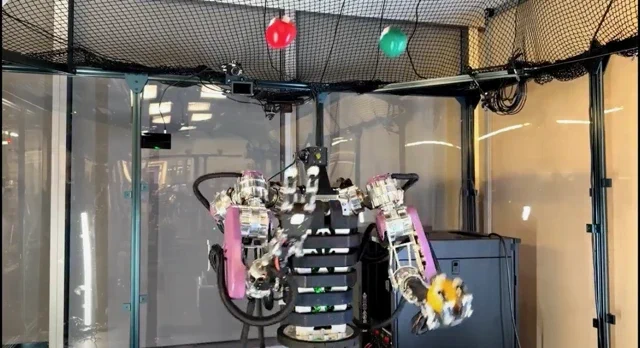
The Robotics and AI Institute (RAI), the research organization led by Boston Dynamics founder Marc Raibert, has unveiled AthenaZero, a bimanual robot that moves less like a factory machine and more like a person. In a blog post from April 7, RAI detailed the new prototype, which is designed specifically for “dynamic manipulation”—a robotics grand challenge focused on tasks requiring two hands working together with speed and grace.
While most industrial robots are notoriously stiff and clumsy due to high gear ratios, AthenaZero was built to be the opposite. The 5'3" tall robot features two 7-degree-of-freedom (DoF) arms that prioritize low inertia and high acceleration. The secret sauce is in its quasi-direct drive actuators, which allow the robot to be “force transparent.” This means it can instantly switch from applying high force for a heavy task to having a gentle, compliant touch for a delicate one, a feat most traditional robots can’t manage without risking damage to themselves or their surroundings.
The goal isn’t just to bolt two arms onto a torso; it’s to create a platform that can learn to master complex, coordinated movements. Bimanual manipulation is crucial for automating tasks that are currently impossible for single-armed robots, such as assembling intricate products, handling large or flexible objects, or basically anything that doesn’t involve picking up one specific thing and putting it in one specific place forever.
Why is this important?
For decades, automation has been defined by powerful but unintelligent arms performing single, repetitive motions. The Robotics and AI Institute is tackling the problem from both ends: building hardware like AthenaZero that is physically capable of dynamic interaction, and developing the AI and reinforcement learning models needed to control it. By creating a system designed from the ground up for learning-based control, RAI is taking a serious step toward a “general-purpose manipulator” with human-like capabilities. This is the kind of fundamental research that could eventually allow robots to move out of the cage and into unpredictable, real-world environments.