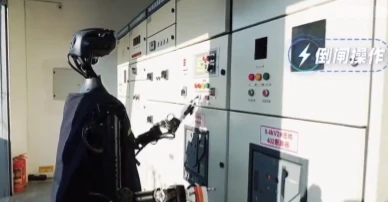
The State Grid Corporation of China is throwing a cool $1 billion (RMB 6.8 billion) at a new workforce that doesn’t need coffee breaks or safety harnesses: an army of 8,500 embodied AI robots. This isn’t just about droids sweeping floors; it’s a massive, state-backed push to automate the country’s sprawling power grid, shifting from human-led maintenance to nearly autonomous operations. The procurement plan for 2026 alone signals a major industrial transformation, putting steel where flesh and blood used to be.
The shopping list includes a menagerie of robotic platforms designed for over 600 specific tasks. The headliners are 500 humanoid robots earmarked for the most dangerous jobs, like live-line maintenance on ultra-high-voltage power lines. These bipedal workers command a hefty $370 million (RMB 2.5 billion) slice of the budget. They’ll be joined by 5,000 quadruped inspection bots and 3,000 dual-arm wheeled robots, creating a collaborative maintenance network. A who’s who of Chinese robotics firms, including Unitree, AGIBOT, DeepRobotics, UBTECH, and Fourier Intelligence, are listed as potential suppliers.
Why is this important?
State Grid isn’t buying these for the sci-fi factor. The economics are brutally efficient. The company projects each robot will save between $70,000 and $110,000 in annual labor costs, promising a brisk 2-3 year payback period. More critically, the plan aims to slash human exposure to high-risk tasks by over 90% and cut safety incidents by 80%.
The rollout is nothing short of aggressive: plans call for embodied AI to cover 30% of key grid areas by 2026, 80% of high-risk scenarios by 2027, and enable fully autonomous operations by 2030. This isn’t a pilot program; it’s a full-scale industrial revolution. By deploying robots at this scale, State Grid is turning the world’s largest utility into a massive, real-world testbed for embodied AI, which will inevitably accelerate innovation for the entire industry. What starts with the power grid today could easily be replicated across China’s other vast infrastructure sectors tomorrow.