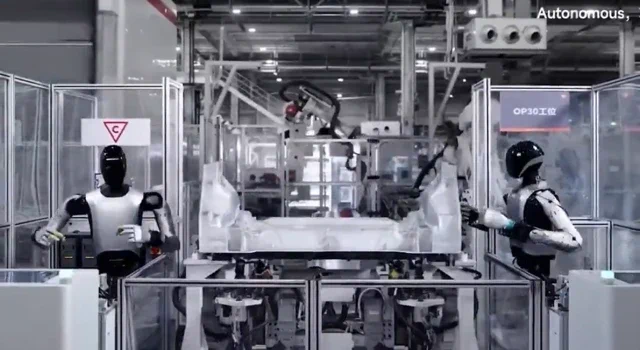
Xiaomi just gave the world a rare, unfiltered look at its humanoid robots working in its Beijing EV factory, and the results are a fascinating reality check. In a three-hour autonomous trial, the robots achieved a 90.2% success rate installing self-tapping nuts on die-cast car parts. That sounds impressive—until you look at the clock. The cycle time for this single task was 76 seconds.
For context, Xiaomi’s highly automated factory is designed to produce an entire SU7 electric vehicle every 76 seconds at full tilt. This means the robot’s entire time budget for one complex task is equal to the “production beat” of the whole assembly line. It’s a sobering metric that puts the “robots are taking our jobs” narrative on ice, at least for now. The company is leaning on a sophisticated tech stack to even get this far, using a visual-language model called Xiaomi-Robotics-0 for spatial awareness and a tactile feedback system named TacRefineNet to handle tricky alignments with its fingertips.
Why is this important?
This isn’t about failure; it’s about establishing a brutally honest baseline. By “dogfooding” its own robots in a high-stakes environment, Xiaomi is generating the kind of real-world data that simulations can’t replicate. It’s a strategy mirrored by Tesla with Optimus and Hyundai with Boston Dynamics, treating factories as the ultimate training ground.
The 90.2% success rate is a solid B-minus on the robot’s first major exam, proving the core technology is viable. However, it also highlights the monumental gap between a successful demo and a production-ready system that demands 99.9%+ reliability and superhuman speed. CEO Lei Jun has set an ambitious target for “large-scale” deployment within five years. To hit that goal and meet the factory’s relentless pace, these robotic “interns” will need to get a whole lot faster.