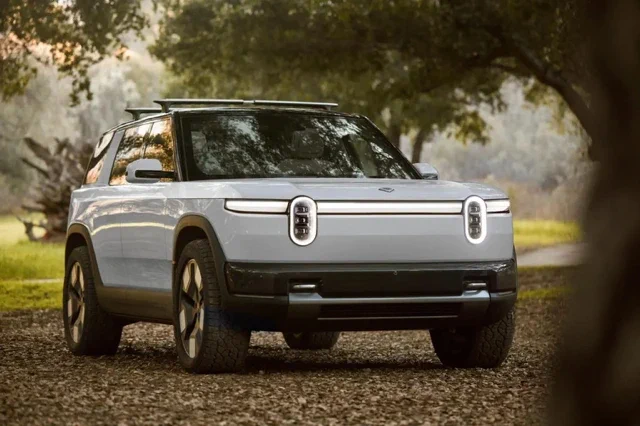
In a move that screams “the robotaxi market isn’t a one-horse race,” Uber Technologies, Inc. is investing up to $1.25 billion into Rivian Automotive, Inc. to build out a massive autonomous vehicle fleet. The partnership will see an initial deployment of 10,000 fully autonomous Rivian R2 SUVs, with an option for Uber and its fleet partners to purchase up to 40,000 more, bringing the potential fleet size to a staggering 50,000 vehicles.
The first wave of these self-driving Rivians is scheduled to hit the streets of San Francisco and Miami starting in 2028. From there, the service is expected to expand to 25 cities across the United States, Canada, and Europe by the end of 2031. This aggressive rollout is part of Uber’s broader strategy to become the go-to platform for autonomous mobility, effectively turning a potential existential threat into a core part of its business model.
This isn’t Uber’s only bet in the autonomous game. The company has been assembling a roster of partners, including a service with Motional (a Hyundai subsidiary) in Las Vegas and a recently announced deal to integrate Zoox (owned by Amazon) vehicles in Las Vegas and Los Angeles. By partnering with multiple AV developers, Uber is positioning itself as the central, brand-agnostic marketplace for robotaxi rides.
The Rivian R2s will be powered by the automaker’s third-generation autonomy platform. This vertically integrated system features a formidable sensor suite of 11 cameras, five radars, and one LiDAR. The real muscle, however, comes from two of Rivian’s custom-designed Rivian Autonomy Processor (RAP1) chips, which together provide a whopping 1600 TOPS of AI compute performance to navigate complex urban environments.
Why is this important?
This partnership is a direct challenge to companies like Waymo and Tesla, signaling that the hardware and network aspects of the robotaxi revolution are scaling up fast. For Uber, it diversifies their AV portfolio and solidifies their role as a platform provider rather than a developer, a lesson learned after selling off its own costly self-driving unit years ago.
For Rivian, this is a monumental vote of confidence and a guaranteed, large-scale commercial order that will help it scale production and its in-house autonomy stack. With a planned annual production capacity of up to 155,000 R2 units at its Illinois factory, fulfilling Uber’s order is an ambitious but achievable target. For the rest of us, it means the theoretical future of hailing a car with no driver is getting substantially closer to a daily reality. The race is on.