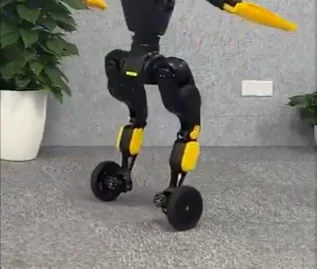
Engineers at Northwestern University have unleashed a new breed of robot that seems to have one primary directive: refuse to die. These bizarre, stick-like “legged metamachines” are the first robots to be evolved entirely inside a computer before setting foot in the real world. And once they’re out, they can recover from injuries like having a leg amputated—an injury that would be “fatal to every other wild robot”—and simply keep on marching.
The process, which lead researcher Sam Kriegman calls “instant evolution,” is as fascinating as it is unnerving. An AI algorithm designs the robots from scratch in a computer simulation with the simple goal of locomotion. The AI churns through designs that no human would likely conceive, and once a successful blueprint is generated, the Lego-like modules are rapidly assembled and “quite literally hit the ground running.”

What’s truly remarkable is their simplicity and resilience. The robots have no eyes, ears, or any external sensors. Each module is a self-contained robot with its own motor, battery, and computer, capable of only rotating around a single joint. Yet, they possess an innate “athletic intelligence.” They instinctively know when they’ve been flipped over or when a part of them has been chopped off, adapting their movement to continue their relentless forward march. The amputated leg can even keep rolling on its own.
Why is this important?
Let’s be clear: you won’t see these things delivering your pizza anytime soon. The researchers are upfront that they are “not yet useful.” But the project isn’t about immediate application; it’s a monumental step toward creating truly robust machines. Most modern robots are fragile; a broken leg can render a multi-million dollar machine useless. These metamachines, however, demonstrate a path toward robots that can survive and adapt in unpredictable, real-world environments without human intervention. By combining modularity with AI-driven design, this research could pave the way for resilient robots in search-and-rescue, space exploration, and even help us answer fundamental questions about evolutionary biology itself.