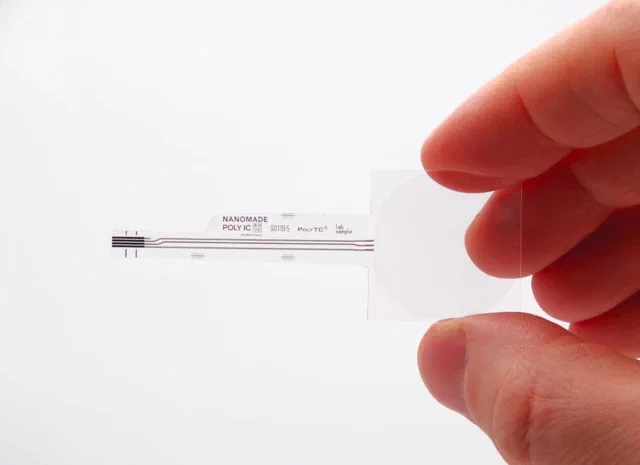
In the relentless war against physical buttons, a new weapon has been unveiled. French deep-tech company Nanomade, in partnership with German printed electronics specialist PolyIC, has announced what they are calling the world’s first fully transparent film that combines both capacitive touch and ultra-sensitive force sensing.
The breakthrough, announced on March 31, 2026, from Toulouse, France, relies on a complementary approach. PolyIC provides a transparent, flexible capacitive film with printed conductive electrodes, a technology it has refined for various touch applications. Nanomade then integrates its proprietary nanoparticle-based ink, which enables the film to detect microscopic deformations and, therefore, measure the force of a touch. The result is a single, paper-thin layer that can turn almost any surface—rigid or flexible, flat or curved—into a smart interface that knows not just where you touched it, but how hard you pressed.
Why is this important?
For the world of robotics, this is more than just a neat trick for minimalist designers. It’s a potential breakthrough for tactile sensing—the electronic equivalent of a nervous system. Giving robots a true sense of touch, or taction, is a massive hurdle in developing machines that can manipulate delicate or complex objects safely and effectively.
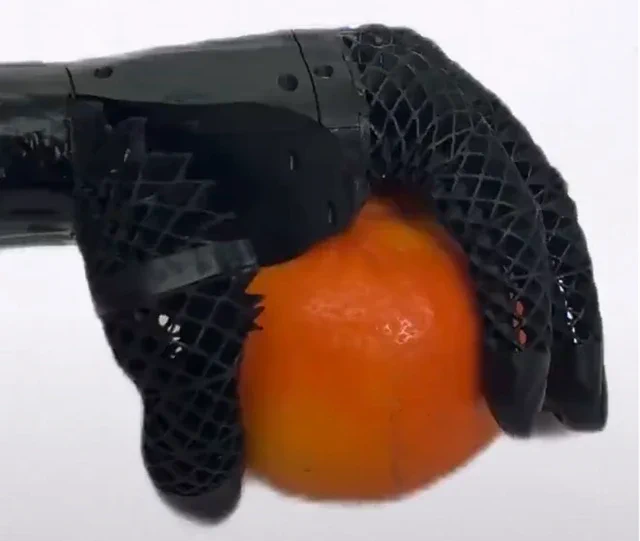
This transparent “skin” could allow a robotic gripper to not only detect that it’s holding an object but to precisely measure the force it’s applying. This is the difference between a robot that crushes a wine glass and one that can serve you a drink. Because the foil is transparent and flexible, it could be layered over a robot’s existing surfaces, providing a sense of touch without obscuring other sensors or visual indicators. While other tactile sensors for robotic skin exist, the combination of transparency, flexibility, and dual-mode sensing in a single package is a compelling proposition for the future of safer, more dexterous robotics.