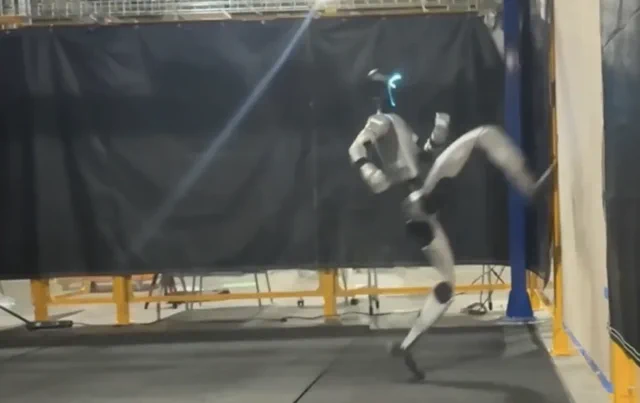
In a move that screams “we’ve just noticed the 21st century is well underway,” a bipartisan group of U.S. lawmakers has introduced the National Commission on Robotics Act. The legislation, spearheaded by Reps. Jay Obernolte (R-CA), Jennifer McClellan (D-VA), and Bob Latta (R-OH), aims to establish a national commission to figure out how America can avoid being left in the dust of the global robotics race.
The bill calls for the Department of Commerce to assemble a temporary 18-member commission of experts from industry, academia, and government. This brain trust will be tasked with a two-year mission: scrutinize everything from supply chain risks and workforce challenges to manufacturing competitiveness and the ever-looming specter of national security. Their findings will culminate in a final report with “actionable recommendations” for Congress and the White House. “As robotics continue to reshape our economy, manufacturing base, and national security, it is essential that the United States remain the global leader in robotics innovation,” said Congressman Obernolte in a statement that could have been issued any time in the last decade.
The proposal has drawn predictable, if not slightly relieved, applause from the industry. Boston Dynamics, the company that supplies the internet with videos of occasionally clumsy robot dogs, praised the bill as “the first piece of federal legislation in support of the growth and success of the robotics industry in the United States.” Michael Robbins, CEO of the Association for Unmanned Vehicle Systems International (AUVSI), added that dominance in this industry “will determine who leads the next industrial revolution.”
Why is this important?
While Washington forms a committee to write a report, the rest of the world is deploying robots at a blistering pace. The urgency behind this bill becomes starkly clear when looking at the numbers. According to the latest “World Robotics” report from the International Federation of Robotics (IFR), the United States ranked eleventh globally in robot density in 2023, with 295 robots per 10,000 employees in the manufacturing industry.
That figure is dwarfed by the world leader, the Republic of Korea, which boasts a staggering 1,012 robots per 10,000 employees. Germany and Japan also significantly outpace the U.S., with 429 and 419 units, respectively. Meanwhile, China, which now ranks third, is installing more industrial robots than the rest of the world combined, demonstrating a ferocious national commitment to automation. This commission isn’t just about fostering innovation; it’s a belated attempt to prevent the U.S. from falling into a strategic “robot gap” with severe economic and national security implications. The clock is ticking.