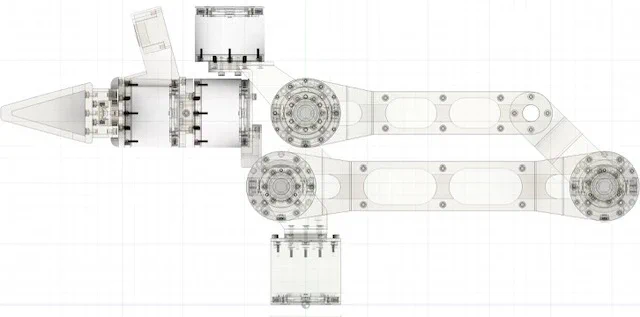
Just when you thought your project backlog was manageable, a German startup called The Robot Learning Company has decided to drop a full set of plans for an AI-native robotic arm on GitHub. The company, backed by the prestigious Y Combinator accelerator, is making a bold play to get its hardware into the hands of as many developers and researchers as possible.
Dubbed the TRLC-DK1, the project is a complete open-source development kit. The repository includes all the CAD files for the hardware and the necessary code to run it, all under a permissive Apache-2.0 license. The design is centered around a teleoperation system, featuring “Leader” and “Follower” arms—a classic setup for imitation learning, where a robot learns by mimicking the movements of a human operator. The arm boasts a 700mm reach and a 1kg payload, making it a capable platform for a range of manipulation tasks.
Why is this important?
In a field dominated by proprietary hardware that costs more than a decent used car, open-sourcing a capable dev kit is a breath of fresh, non-proprietary air. By providing the blueprints, The Robot Learning Company is lowering the notoriously high barrier to entry for hands-on AI and robotics research. This could enable smaller labs, startups, and even ambitious hobbyists to experiment with physical AI agents without taking out a second mortgage.
Of course, “free” here means “bring your own 3D printer, components, and a healthy dose of patience.” This isn’t a plug-and-play appliance for your kitchen counter; it’s a foundation for builders who are serious about pushing the boundaries of robot learning. And in a world where access to hardware is often the biggest bottleneck for innovation, that’s exactly why it matters.