AI startup Physical Intelligence (π) just stress-tested its new foundation model, pi06, in some messy, real-world scenarios—and the numbers are impressive. According to co-founder Sergey Levine, the model achieved 92% autonomy running a laundry robot and packaged 165 items per hour in a warehouse, suggesting the dream of a general-purpose AI for any robot is getting a little less dreamy.
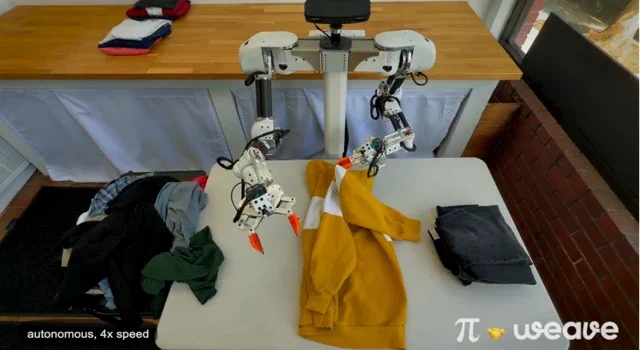
In a blog post published February 24, 2026, the company detailed collaborations with two robotics firms to see how its latest model holds up outside the lab. Teaming up with Weave Robotics, Physical Intelligence deployed pi06 to control a robot at Sea Breeze Cleaners. The result was a system that ran autonomously 92% of the time, a significant figure for a chaotic, real-world environment. A separate partnership with Ultra Robotics saw the pi06 model packaging actual products in a warehouse, hitting a rate of 165 per hour with minimal human intervention.
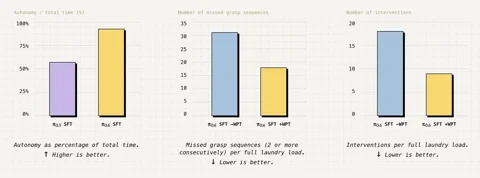
The company’s performance metrics show a dramatic improvement in autonomy and a reduction in errors and necessary human interventions compared to previous versions. This real-world data is a critical proof point for the startup’s ambitious goal.
Why is this important?
Physical Intelligence isn’t just building another robot; it’s building the brain for other companies’ robots. The startup aims to create a “Physical Intelligence Layer”—a foundational AI model that any developer can use, much like software developers use APIs instead of building entire AI stacks from scratch. Currently, robotics companies must invest heavily in creating their own complex control and perception systems. If Physical Intelligence can deliver a reliable, off-the-shelf solution that handles the hard parts of robotic learning and execution, it could radically accelerate the deployment of useful robots across countless industries.