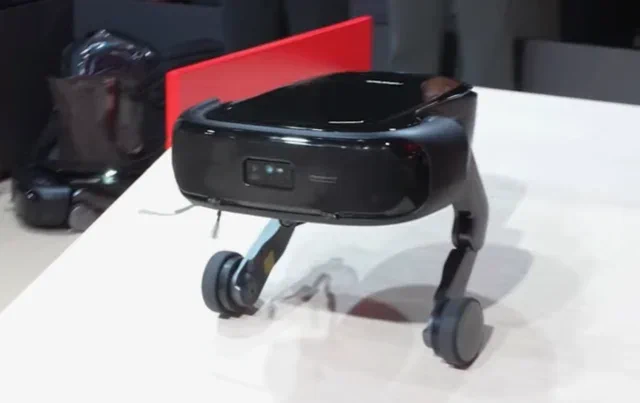
For years, the humble staircase has been the final boss for robot vacuums, a multi-level challenge that has relegated automated cleaning to a single floor at a time. At CES 2026, Roborock showed up to the fight with a new cheat code: legs. The company unveiled the Roborock Saros Rover, a cleaning automaton that ditches the traditional wheel-only design for a “wheel-leg architecture” capable of conquering stairs.
This isn’t just a clumsy shuffle up a step. The Saros Rover uses its two independently controlled legs to hoist its body, balance, and maneuver with an agility that’s frankly a little unsettling for a vacuum cleaner. It can execute small hops over thresholds, navigate ramps, and, most importantly, ascend and descend staircases—all while continuing to clean each step along the way. Roborock states the bot uses a combination of AI algorithms, motion sensors, and 3D spatial information to understand its environment and react with precision.
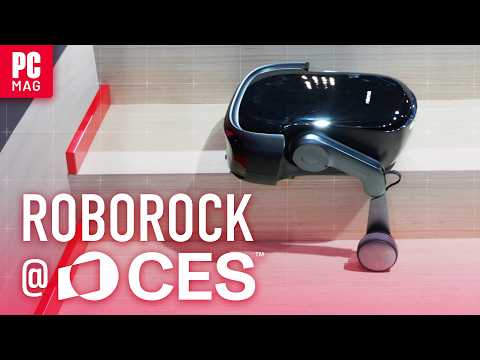
While other companies have showcased stair-climbing concepts, they’ve often relied on bulky, separate rover modules to carry the vacuum between floors. The Saros Rover’s integrated design is a significant leap forward, tackling the problem directly. This is a real, working product, not just a concept, though Roborock has yet to announce a price or release date.
Why is this important?
The Saros Rover represents a potential solution to the single biggest limitation of robot vacuums: their inability to autonomously clean an entire multi-story home. If it works as demonstrated, it could eliminate the need for consumers to purchase multiple devices or manually carry a single unit between floors. This transforms the robot vacuum from a single-floor convenience into a truly comprehensive home cleaning solution. While questions remain about its performance on narrow or curved staircases, the Saros Rover is one of the most significant—and frankly, coolest—advancements in home robotics we’ve seen in years.