NVIDIA has just thrown down the gauntlet in the autonomous driving race, announcing Alpamayo on January 5, 2026. This isn’t just another perception model; it’s an entire open ecosystem designed to give autonomous vehicles the one thing they’ve been sorely lacking: the power to reason and explain themselves. CEO Jensen Huang dubbed it the start of a “ChatGPT moment for physical AI,” aiming to help cars think through rare or novel scenarios.
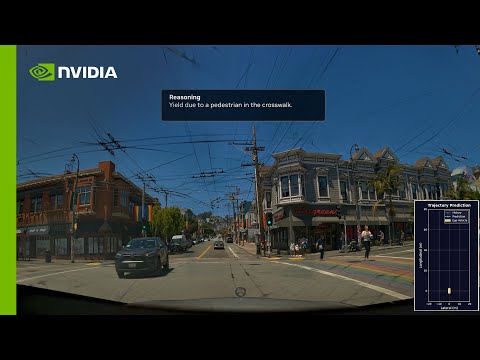
The first release, Alpamayo 1, is a formidable vision-language-action model (VLAM). In plain English, it connects what the car sees with language-based understanding to decide what to do. This allows it to generate “explicit reasoning traces,” meaning it can tell you why it decided to swerve around that rogue shopping cart. To train this AI, NVIDIA is also releasing its Physical AI dataset, a massive library containing over 300,000 real-world driving clips from more than 2,500 cities.
Why is this important?
For years, the self-driving industry has been stuck in a trust-fall exercise with a skeptical public. Models that operate as inscrutable “black boxes” don’t help build confidence. By pushing for explainable AI (XAI) that can articulate its decision-making process, NVIDIA is tackling the trust issue head-on. This move toward reasoning-driven models is a critical—and arguably necessary—ingredient for finally pushing past the stubborn barrier of Level 3 and getting to true, hands-off Level 4 autonomous driving, where the vehicle can handle most situations without human intervention. It’s less about just seeing the road and more about actually understanding it.