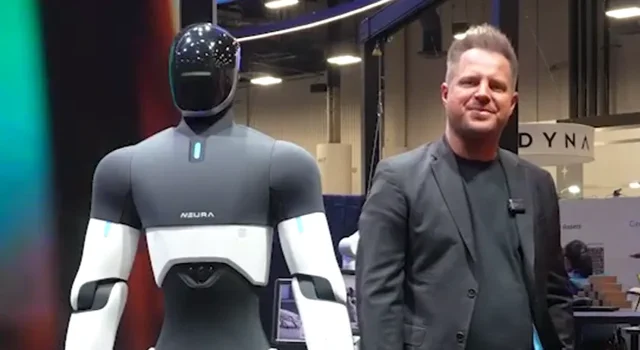
German robotics firm NEURA Robotics GmbH crashed the CES 2026 party by announcing it has opened preorders for its next-generation humanoid robots. For a fully refundable €100 deposit, you can secure a spot to purchase the flagship 4NE-1 Gen 3.5 for €98,000 or its smaller sibling, the 4NE-1 Mini, for a more palatable €19,999. The move makes NEURA one of the first Western companies to put its humanoids up for direct online sale, a bold play in a rapidly heating market.
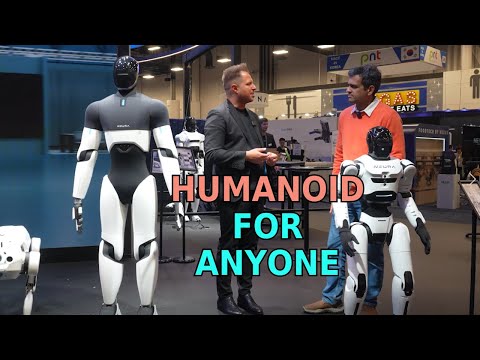
The full-sized 4NE-1, which was designed in collaboration with Studio F.A. Porsche, is likely the best-looking thing in any factory it enters. Standing 1.8 meters (5’ 11") tall, it’s engineered to lift up to 100 kg (220 lbs) and walk at a brisk 5 km/h (3.1 mph). Inside its sleek chassis is a new water-cooling system and an NVIDIA Thor T5000 processor, a powerhouse chip designed specifically for AI and robotics. During a booth interview at CES, CEO David Reger stated the first units of the 3.5 model would begin shipping as early as June 2026.
The 4NE-1 Mini is positioned as the “Western world’s answer” to affordable humanoids, with its price tag landing in the same ballpark as importing a Unitree G1 from China. At 132 cm (4’ 4") and 36 kg (79 lbs), the Mini packs the same cognitive AI as its larger counterpart into a smaller frame suitable for research, education, and light office duties. It boasts 25 degrees of freedom, a 3 kg payload, and an active battery life of around 2.5 hours. According to Reger, the Mini and a newly announced quadruped robot will begin shipping even sooner, in April 2026.
Why is this important?
NEURA Robotics is making an aggressive push to establish itself as Europe’s premier humanoid manufacturer, and opening direct preorders is a clear signal that it’s shifting from R&D to commercial reality. While competitors like Germany’s Agile Robots and Italy’s Generative Bionics are also in the race, NEURA’s direct sales model and transparent pricing could give it an edge. The company is also expanding its global footprint, with a new facility in Hangzhou, China, and a growing US presence in Detroit, with plans for Boston and San Francisco. By making its robots—and their prices—publicly accessible, NEURA isn’t just selling hardware; it’s selling its vision for a commercially viable robotic workforce.