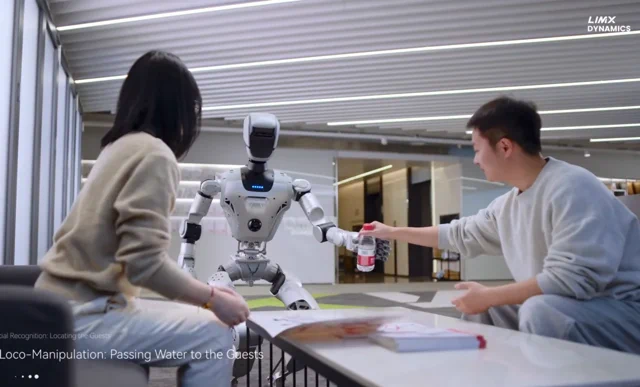
Shenzhen-based LimX Dynamics has officially pulled the curtain back on LimX COSA, its new “embodied agentic operating system” announced on January 12, 2026. The goal? To stop humanoid robots from just being impressive puppets and give them a unified brain that can think, reason, and act in the messy real world. The system aims to deeply integrate high-level cognition with whole-body motion control, enabling robots to “think, move, and act while reasoning.”
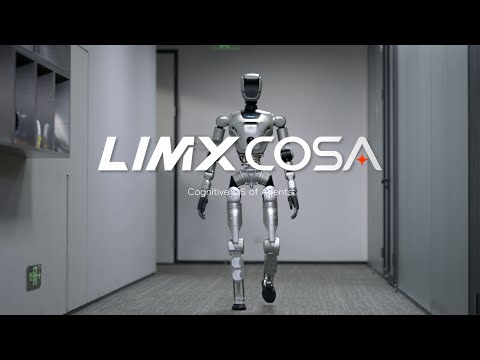
COSA, which stands for Cognitive OS of Agents, is the new software soul powering the company’s full-size humanoid, Oli. It’s built on a three-layer architecture: a foundational layer for stable movement, a middle layer for skills like navigation and manipulation, and a top cognitive layer for understanding natural language and planning tasks. Think of it as a digital cerebrum and cerebellum working in tandem, connecting vision-language-action (VLA) models directly to the robot’s physical control systems. In demonstrations, Oli can interpret complex instructions like “bring two bottles of water to the front desk” and navigate tricky terrain like stairs, all while perceiving its surroundings.
Why is this important?
While we’ve seen plenty of robots perform flashy, pre-programmed routines, the industry is hitting a wall when it comes to autonomous, real-world application. LimX’s move to a system-level OS like COSA, rather than just a better motion model, is a direct shot at solving this problem. It signals a shift from focusing on individual model capabilities to creating a scalable software platform that can handle the unpredictability of human environments. If COSA delivers, it could be a critical step toward robots that don’t just follow scripts but can actually work alongside people as true embodied intelligent agents.