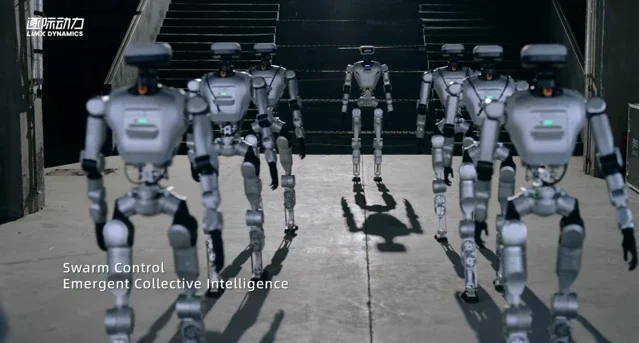
Just in case one bipedal robot wasn’t enough to haunt your dreams, Chinese startup LimX Dynamics has showcased what it’s calling the “world’s first scalable autonomous deployment” of humanoid robots. The demonstration is less a sci-fi action sequence and more of a sci-fi power-up screen, but the implication is clear: the era of the robot fleet is approaching.
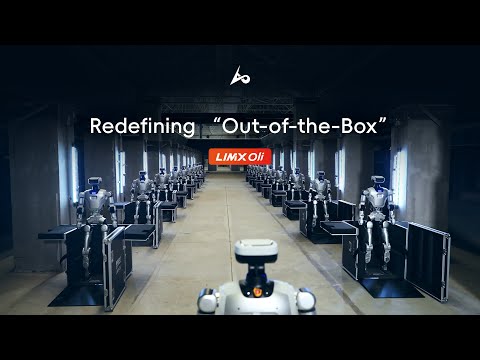
In a video titled “Oli Demonstrates the World’s First Scalable Autonomous Deployment,” a whole phalanx of the company’s Oli humanoid robots are seen powering on in unison. The synchronized awakening, dubbed an “Autonomous Awakened System,” is meant to show off a foundational capability for what LimX calls “scalable multi-robot coordination into everyday use.” While the bots don’t do much more than stand up straight, the sheer number of them in one room is a notable flex in the increasingly crowded humanoid space.
LimX Dynamics has previously shown its Oli robot navigating tricky terrain and walking over construction debris, focusing on its advanced motion control powered by reinforcement learning. This latest video, however, shifts the focus from individual capability to collective deployment.
Why is this important?
While the robotics world is currently obsessed with what a single humanoid can do—be it making coffee or folding laundry—LimX Dynamics is tackling a different, arguably more critical, problem: scale. Showing a dozen robots “waking up” together might not be as flashy as a backflip, but it’s a direct statement about manufacturing readiness and the software architecture required to manage a fleet.
This is less about a single talented worker and more about deploying an entire workforce. As companies like Tesla, Figure, and Apptronik race to perfect their individual units, LimX is signaling that the endgame isn’t just a smarter robot, but a smarter, larger, and coordinated team of them. This is a crucial, if slightly unsettling, step if humanoids are ever to move from the lab to the warehouse floor.