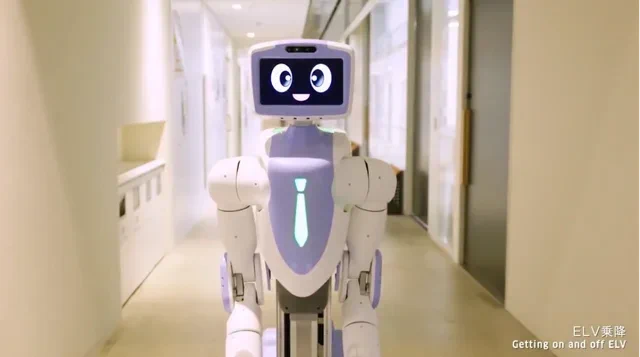
Forget coffee breaks and charging cycles. Kawasaki Heavy Industries, Ltd., in a joint effort with Toyota Boshoku Corporation and Daido University, has unveiled a version of its Nyokkey service robot that runs on hydrogen, aiming for near-perpetual operation in a country facing a historic labor crisis. The robot, first introduced around 2022, is getting a serious endurance upgrade.
The key to Nyokkey’s endless workday is a compact fuel cell (FC) unit and swappable, low-pressure hydrogen cartridges. This setup cleverly sidesteps the biggest headache of battery-powered bots: downtime. Instead of being parked for hours at a charging station, Nyokkey can have its hydrogen tank swapped in moments, a process likely faster than making a pot of terrible office coffee. The use of low-pressure cartridges also enhances safety and ease of handling compared to high-pressure alternatives.
This dual-armed “social robot” is slated for deployment in hospitals, nursing homes, and offices. Its job description includes delivering meals, transporting lab specimens, patrolling hallways, and opening doors—all while navigating safely around its fleshy, inefficient human colleagues using LiDAR and other sensors.
Why is this important?
This isn’t just a fancy tech demo; it’s a direct response to a demographic cliff. With its rapidly aging population, Japan is projected to face a labor shortage of as many as 11 million workers by 2040. A robot that never needs to sleep or charge is an incredibly compelling, if slightly dystopian, solution. By ditching batteries for hydrogen, Kawasaki is proposing a future where automation can fill critical gaps without requiring a massive new infrastructure of charging points, potentially setting a new standard for service robots in critical sectors.