Las Vegas – The parade of humanoids just got a dose of Italian design. Generative Bionics, a startup armed with a fresh $81 million in funding, crashed the CES 2026 party by unveiling its GENE.01 humanoid concept on stage during the AMD keynote. The reveal marks the public debut for the Italian firm, which is taking a decidedly different approach to the increasingly crowded field of bipedal robots.
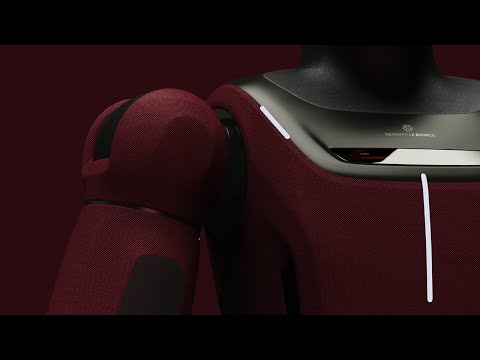
Presented by CEO Daniele Pucci alongside AMD Chair and CEO Dr. Lisa Su, GENE.01 isn’t just another collection of actuators and servos. The company is championing a concept it calls “Physical AI,” where the robot’s entire body is treated as part of the compute stack. This philosophy is physically embodied by a full-body tactile skin—a distributed network of touch and force sensors that allows the robot to perceive contact and pressure across its entire surface. Generative Bionics claims this turns physical interaction into a core capability rather than a tacked-on feature.
The partnership with AMD is more than just a stage-share; the chipmaker is a key technology partner and investor via its AMD Ventures arm. GENE.01 is powered by a suite of AMD CPUs, GPUs, and FPGAs that handle the immense data flow from the tactile skin and manage real-time motion control. “AMD technologies allow us to treat the robot’s body as part of the compute, where mechatronics and AI work as a single system,” Pucci stated during the announcement.
Why is this important?
In a market rapidly filling with humanoid contenders focused on brute strength or dazzling acrobatics, Generative Bionics is betting that ‘feeling’ is as important as ’thinking.’ While competitors boast about lifting heavy boxes, the GENE.01 concept emphasizes human-centric interaction through its novel full-body sensory input. This “Physical AI” approach, which treats the body and brain as a single, integrated computational system, could be a key differentiator in industrial and healthcare environments where robots must work safely and intuitively alongside people. With an industrial launch planned for Q4 2026, the company is on a tight deadline to prove its Italian-designed, AMD-powered philosophy can move from a CES stage to a factory floor.