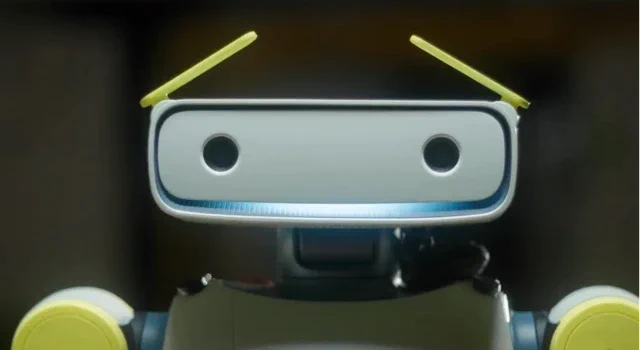
Just when you thought the robotics industry was exclusively focused on backflipping humanoids and warehouse domination, a startup is betting on a friendlier approach. Fauna Robotics launched out of stealth on Tuesday, introducing Sprout, a humanoid robot platform designed not for heavy lifting, but for operating safely in shared human spaces. Standing an approachable 3.5 feet (107 cm) tall and weighing 50 lbs (22.7 kg), Sprout is less Terminator and more WALL-E, according to its creators.
The New York-based company is shipping a “Creator Edition” of Sprout to developers, researchers, and commercial partners, with a clear goal: to provide a canvas for building the next wave of embodied AI applications. Forget the factory floor; Fauna is targeting retail, entertainment, and even home services. The specs are respectable for a platform of its size, featuring an NVIDIA Jetson AGX Orin brain, 29 degrees of freedom—including expressive eyebrows—and a 3 to 3.5-hour runtime with swappable batteries.
According to CEO Rob Cochran, the mission is to create robots that people can love, not just tolerate. This philosophy seems to be resonating, as early customers reportedly include heavyweights like Disney and, amusingly, fellow robot-maker Boston Dynamics. “Seeing their robot for the first time really lets you see the future a little bit,” said Marc Theermann, Boston Dynamics’ chief strategy officer.
Why is this important?
While companies like Tesla and Figure AI chase the industrial labor market, Fauna Robotics is making a contrarian bet on social and developmental platforms. By creating an accessible, safety-focused humanoid, Fauna is lowering the barrier to entry for developers who want to experiment with human-robot interaction in everyday environments. Sprout isn’t designed to replace a human worker but to give hundreds of developers a tool to figure out what robots should even do around people. This could unlock applications in education, elder care, and entertainment that larger, more intimidating robots simply can’t address.