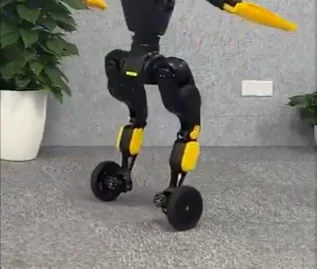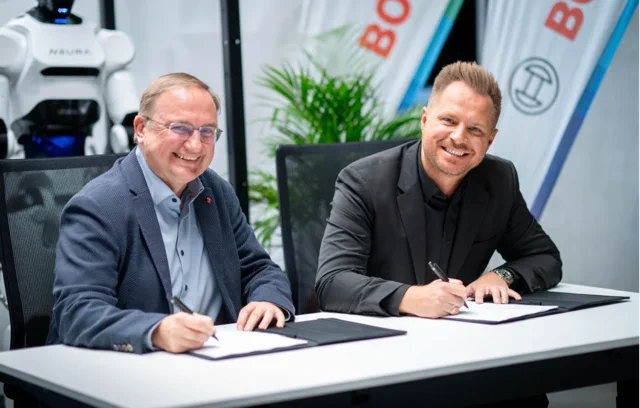
In a move that screams ‘get serious about automation,’ German industrial behemoth Bosch has announced a strategic partnership with AI and robotics startup NEURA Robotics. The collaboration aims to fuse Bosch’s colossal industrial might with NEURA’s agile cognitive robotics platform, with the ambitious goal of cornering the emerging market for “Physical AI” and developing an “OS for the physical world.”
The partnership is multifaceted, focusing on joint software development and, crucially, the collection of real-world production data from Bosch’s factories. According to NEURA Robotics CEO David Reger, physical training data is the “biggest challenge in robotics.” By leveraging Bosch’s vast manufacturing environments, NEURA gains an invaluable resource to train and validate its AI models, bridging the notorious gap between simulation and the chaotic reality of a factory floor. For its part, Bosch gains a direct line to cutting-edge cognitive robotics and potentially a key supplier of both components and fully assembled humanoid robots.
This alliance isn’t just about building smarter robots; it’s a direct response to a looming demographic crisis. Germany is projected to face a shortfall of 768,000 skilled workers by 2028, a problem exacerbated by mass retirements. The explicit goal is to deploy robotics to keep production lines running, resilient, and competitive in the face of a shrinking workforce.
Why is this important?
This partnership is a calculated bet by one of Europe’s industrial titans on a homegrown startup to create a competitive advantage in the global robotics race. While others focus on “prettier algorithms,” this alliance is grounded in the gritty reality of industrial deployment. It’s about creating robots that can be trained, validated, and scaled in real environments with non-negotiable safety and uptime requirements.
By combining Bosch’s scaling power with NEURA’s “Neuraverse” AI ecosystem, the duo aims to turn Europe’s strongest asset—its industrial base—into a data-gathering powerhouse for training the next generation of physical AI. It’s a pragmatic, hardware-first approach that could give them a decisive edge in a field where real-world interaction data is the most valuable currency.