European aerospace giant Airbus is the latest heavyweight to add humanoid robots to its workforce, signing a deal to purchase an unspecified number of UBTECH Robotics Corp.’s industrial Walker S2 robots for its manufacturing plants. The agreement will see the bipedal robots deployed in aircraft production, a significant step for the commercial application of humanoids in complex, high-stakes environments.
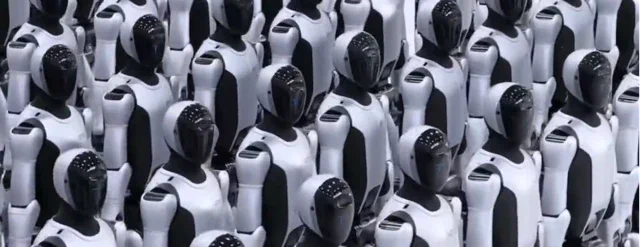
The move comes hot on the heels of a similar deployment by American semiconductor firm Texas Instruments, which is already testing the Walker S2 on its own production lines. It seems UBTECH is collecting big-name industrial partners with ambitions targeting automotive, 3C electronics, and logistics sectors next. The company is clearly scaling up, having reportedly secured over 1.4 billion RMB (roughly $200 million USD) in orders during 2025 and rolling its 1,000th Walker S2 unit off the line last December.
Why is this important?
While humanoid robots have been long on impressive demos and short on actual jobs, these deals with Airbus and Texas Instruments signal a serious shift from R&D curiosities to practical industrial tools. UBTECH’s plan to mass-produce 10,000 units this year is an aggressive bet that the market is finally ready for bipedal workers. The key feature here might be less about walking and more about utility; the Walker S2’s ability to autonomously swap its own battery suggests a focus on minimizing downtime and maximizing efficiency—a language any factory manager understands. The robot revolution won’t be televised; it’ll be quietly clocked in on the assembly line.