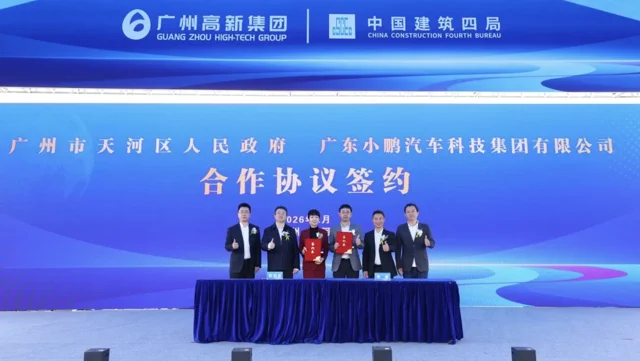
Just when Nvidia thought it had the autonomous vehicle hardware market comfortably in its silicon grasp, a new challenger has entered the ring—and it brought Volkswagen AG along for backup. At its recent AI Day, Chinese EV maker XPeng Inc. announced that Volkswagen will not only be the launch customer for its new VLA 2.0 autonomous driving platform but will also license the entire hardware and software stack for its EVs in China starting in 2026. This isn’t just a component deal; it’s a full-throated challenge to Nvidia’s DRIVE platform from a company that was, until recently, just another customer.
The centerpiece of XPeng’s audacious play is its new Turing AI chip and the accompanying VLA 2.0 large model architecture. XPeng claims the system can run models with billions of parameters directly on its in-vehicle hardware, a significant leap from the tens of millions common in the industry. The top-tier consumer models will boast 2250 TOPS of compute, while the upcoming Robotaxi platform will feature four Turing chips for a staggering 3000 TOPS. Volkswagen has evidently seen enough to bet its “In China, for China” strategy on it, integrating XPeng’s tech to shorten development cycles and better compete in the hyper-competitive local market.

But XPeng’s ambition doesn’t stop at licensing software. The company is positioning itself as a “Physical AI” powerhouse, simultaneously unveiling plans for a Robotaxi service launching in 2026, a new hyper-realistic humanoid robot, and the ever-present promise of flying cars. The Robotaxi, notably, aims for a pure-vision approach—no LiDAR, no high-precision maps—a direct philosophical parallel to Tesla’s approach. It’s an aggressive, all-in bet on a vertically integrated AI ecosystem that extends far beyond the automobile.


Why is this important?
For years, the self-driving narrative was simple: automakers either bought a full-stack solution from a supplier like Nvidia or tried to build their own like Tesla. XPeng’s deal with Volkswagen scrambles that equation. A relatively new EV player is now a core technology supplier to one of the world’s largest legacy automakers. This partnership creates a formidable third bloc in the autonomous race, potentially boxing Nvidia out of a significant slice of the world’s largest EV market and proving that the most valuable asset isn’t just the silicon, but the intelligent, vertically integrated software stack built on top of it.