In a move that screams “we’re actually building this thing,” Tesla, Inc. has unleashed a flood of 110 open job listings for its Optimus humanoid robot program. The positions aren’t just for AI theorists in Palo Alto; they span the entire operational pipeline, from AI and reinforcement learning to mechanical design, manufacturing controls, and actuator integration in places like Austin and Fremont. Apparently, building an army of general-purpose robots requires, well, an army of highly specialized humans.
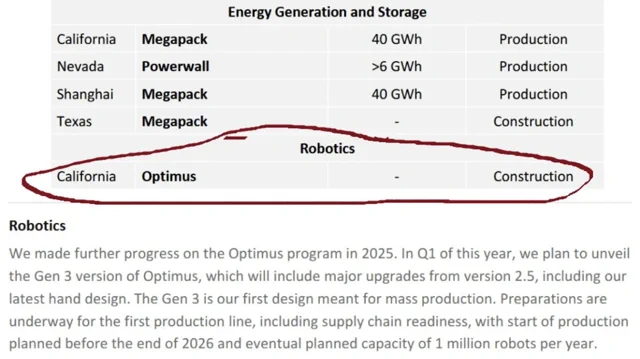
This hiring blitz adds a dose of tangible reality to CEO Elon Musk’s characteristically audacious timelines. The plan, as outlined recently, is to have a production-intent prototype of Optimus version 3 ready by February or March 2026. From there, Tesla intends to build a one-million-unit production line, with a “hopeful” start by the end of 2026. A million units a year is the kind of goal you set when you’ve either cracked the manufacturing code or have simply stopped listening to your project managers.
Why is this important?
The sheer breadth of these job listings signals a critical pivot for the Optimus program, moving it from a captivating (and sometimes awkward) tech demo to a serious manufacturing endeavor. While competitors have showcased more agile robots, none possess Tesla’s massive manufacturing infrastructure and experience with scaling complex products. The focus on manufacturing, controls, and assembly roles suggests Tesla is betting it can brute-force the industrialization of humanoid robots in a way smaller, more research-focused firms cannot. This isn’t just about making a robot walk; it’s about building the factory that builds a million of them, a challenge that might be even harder than the AI itself.