In the world of automation, some problems are so notoriously difficult they get named after unsolved mathematical proofs. But robotics startup TARS just claimed to have solved one. At its “Needle Kung Fu” tech debut, the company unveiled what it calls the world’s first autonomous embroidery robot, which, more importantly, can transfer that delicate skill to the gritty world of industrial wire harness assembly. This effectively cracks a bottleneck so persistent it was nicknamed the “Goldbach Conjecture” of the industry.
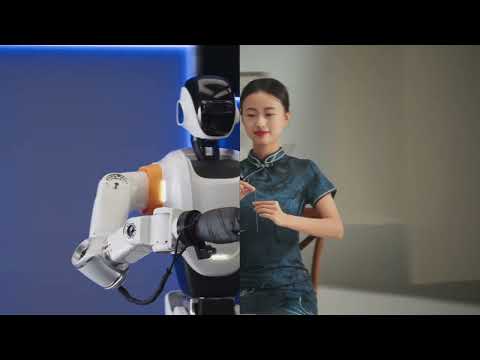
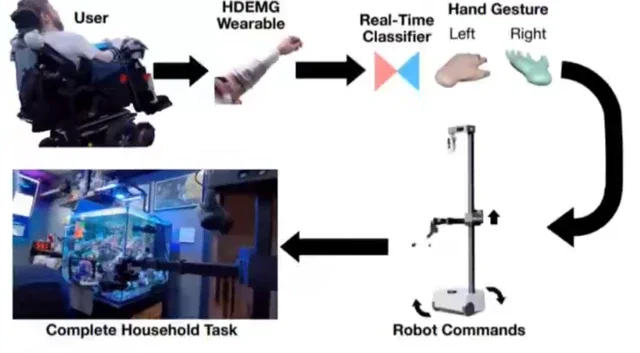
According to Founder & CEO Dr. Yilun Chen, the company’s rapid progress—it was founded less than a year ago in February 2025—is thanks to a full-stack “DATA – AI – PHYSICS” trinity. It starts with SenseHub, a wearable system that captures multi-modal data from human workers to teach the AI. That data feeds TARS AWE 2.0, a foundation model designed for end-to-end learning that allows skills to be generalized across different tasks. Finally, the company’s “Born for AI” T-Series and A-Series robots are built specifically to minimize the gap between digital simulation and messy reality.
Why is this important?
While a robot embroidering a logo is a neat party trick, the real story is the verified, industrial-grade proof of concept for the Embodied AI Scaling Law. TARS is demonstrating a clear, reproducible methodology for teaching robots complex, dexterous tasks that involve soft and deformable materials—a massive hurdle for automation. By solving a real-world industrial problem, not just a lab demo, the company is showcasing a scalable path from the factory floor to, eventually, the home. Now, if it can just learn to darn socks, the revolution will truly be complete.