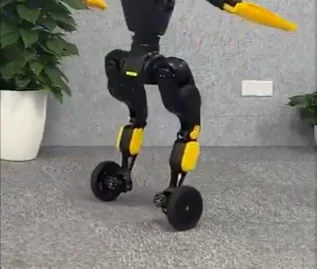
In the grand arena of robotic supremacy, the latest battleground isn’t a factory floor or a disaster zone—it’s your kitchen sink. Scrappy startup OpenDroids has publicly challenged robotics heavyweight 1X Technologies, claiming its droid can load a dishwasher twice as fast as 1X’s well-funded Neo humanoid. The audacious claim, delivered with a side of shade, notes this feat was accomplished with “99.9% less funding,” a direct jab at 1X’s war chest, which is notably bolstered by investors like OpenAI.
The challenge from OpenDroids establishes a new, comically domestic “dishes benchmark,” inviting other robotics firms to prove their mettle in the chaotic, unpredictable environment of the average home. While 1X’s Neo has been showcased performing a variety of household tasks, from folding laundry to fetching drinks, this public call-out shifts the focus from polished demos to raw, measurable speed on a universally despised chore. It’s a classic David-versus-Goliath setup, pitting lean engineering against massive capital in a race to see who can conquer the drudgery of daily life first.
Why is this important?
This sudsy showdown is more significant than it appears. By creating a simple, relatable, and public benchmark, OpenDroids is forcing a critical conversation in the consumer robotics industry about real-world utility versus theoretical capability. Forget carefully choreographed lab demonstrations; the ability to efficiently stack dirty plates under pressure is a surprisingly complex task that tests a robot’s perception, dexterity, and path planning. This rivalry could accelerate practical development, pushing companies to prove their robots can handle the glorious mess of reality, not just the sterile perfection of a simulation. It marks a shift towards valuing tangible, everyday helpfulness over flashy-but-frivolous acrobatics.