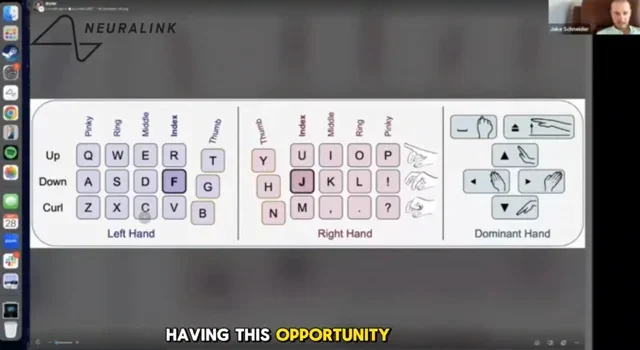
In a development that blurs the line between biology and silicon, a Neuralink patient with ALS is reportedly typing at a staggering 141 words per minute using only his mind. The patient, identified as Jake Schneider, is achieving speeds that nearly double the 65-75 WPM average of a professional human typist—all without lifting a finger. This isn’t eye-tracking or some other assistive technology; it’s the direct translation of neural signals into text, effectively bypassing a body impaired by neurodegenerative disease.
The implant works by interpreting the intent to move from the brain’s motor cortex. Schneider isn’t consciously spelling out words in his head; he’s recalling the sensation of physical movement, and the coin-sized chip deciphers those signals into cursor control on a screen. This achievement follows the public demonstrations of Neuralink’s first patient, Noland Arbaugh, a quadriplegic who used the implant to play video games and control a computer. Schneider’s reported typing speed, however, represents a significant leap in the quest for high-bandwidth neural communication.
Why is this important?
Strip away the inevitable hype and sci-fi tropes, and what remains is a foundational breakthrough in assistive technology. This is about more than just thought-tweeting; it’s a proof-of-concept for restoring profound functional loss. For conditions like ALS, spinal cord injuries, and stroke, where medical options often run out, brain-computer interfaces are demonstrating a viable path to restoring communication and digital autonomy. While the technology is nascent, achieving able-bodied—and even superhuman—performance metrics suggests the definition of paralysis is about to be permanently rewritten.