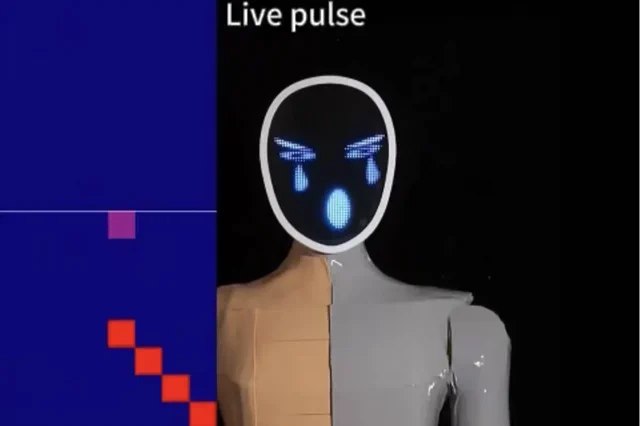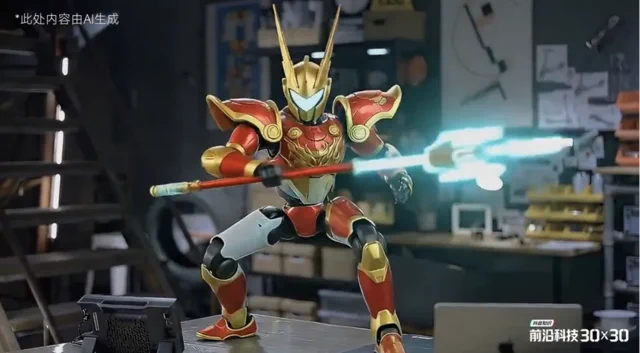
The dream of a personal robot just got smaller and a lot more durable. AGIBOT, a Shanghai-based startup co-founded by renowned developer and CTO Zhihui Jun (Peng Zhihui), has officially unveiled the Q1, a 0.8-meter (2.6 ft) humanoid robot designed to be a “backpack lab” for the next generation of embodied AI. Unlike its towering, expensive brethren, the Q1 is engineered for one thing above all: accessibility.
The key innovation lies in the joints. AGIBOT claims to have shrunk high-performance Quasi-Direct Drive (QDD) actuators—the components that allow for fluid, powerful movement—down to the size of an egg. This miniaturization, combined with its small stature, makes the Q1 about 1/8th the weight and volume of typical full-sized humanoids. The result is a bot that is inherently “crash-resistant,” a feature that will have researchers and developers breathing a collective sigh of relief. The astronomical cost of a “faceplant” for larger robots has long been a barrier to aggressive, real-world algorithm testing.
AGIBOT is leaning heavily into the open-source ethos to spur adoption. The Q1 comes with a fully open SDK/HDK (Software/Hardware Development Kit) and a “zero-code” creative platform that allows users to program complex motions visually. The company even encourages users to 3D-print their own custom shells, cheekily suggesting everything from a research workhorse to a “Cyber-Maid” companion. The robot’s intelligence is powered by the company’s “Agi-Soul” AI platform, which handles tasks like voice interaction and learning.
Why is this important?
The AGIBOT Q1 represents a significant shift in humanoid robotics philosophy, moving from monolithic, industrial-scale projects to a more democratized, PC-like model. By drastically lowering the financial and psychological cost of failure, it invites a much wider audience of students, makers, and startups to experiment with embodied AI. This approach could significantly accelerate innovation by bridging the treacherous “Sim-to-Real” gap, allowing algorithms to be tested on physical hardware early and often. While larger bots from competitors focus on factory floors, AGIBOT is betting that the next big breakthrough might just come from a lab that fits in a backpack.