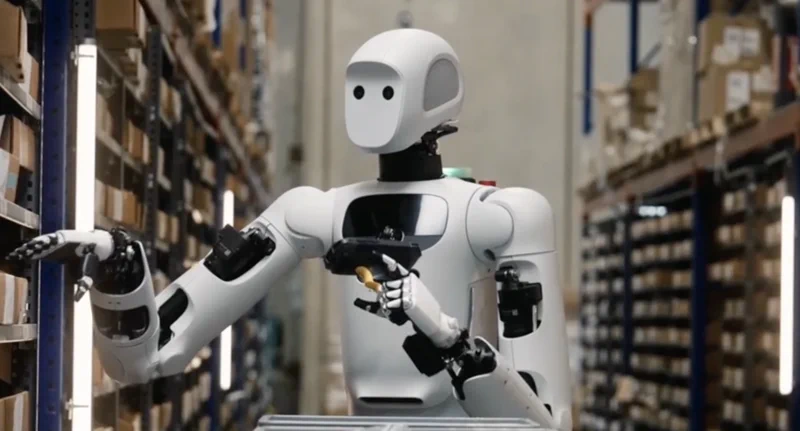
The humanoid robot arms race is officially insufferable. Every few weeks, another slickly produced video drops, showing a gleaming bipedal machine performing a task with just enough grace to be impressive and just enough wobble to remind you it’s still a prototype. But while most of the industry is busy chasing viral moments, Austin-based Apptronik has unveiled its new humanoid, Apollo 2, with a message that is as refreshing as it is brutally pragmatic: this one is actually built for work.
Forget backflips and parkour. Apollo 2 is designed for the grueling, unglamorous reality of warehouse logistics and manufacturing lines. Apptronik’s entire pitch seems to be a subtle jab at its more theatrical competitors. Instead of promising a sci-fi future, they’re offering a tool—a versatile, scalable, and, most importantly, reliable tool that might finally bridge the gap between humanoid hype and humanoid utility.
From NASA’s Workshop to the Factory Floor
Apptronik isn’t some fresh-faced startup that just discovered bipedal locomotion. The company was spun out of the Human Centered Robotics Lab at the University of Texas at Austin and has a serious pedigree. We’re talking about a team that helped NASA build its Valkyrie humanoid robot. This deep-rooted experience in tackling complex, real-world robotics problems shines through in Apollo 2’s design, which prioritizes function over flash.
The robot stands 5 feet 8 inches tall, weighs 160 pounds, and can lift a respectable 55 pounds. These are not earth-shattering numbers, but they are perfectly calibrated for tasks currently performed by humans in environments built for humans. The real genius, however, isn’t in its raw strength, but in its endurance. Apollo 2 is powered by a swappable battery that provides about four hours of operation. This enables what Apptronik calls “7x22 operation”—with a quick battery change, the robot is back on the job, minimizing downtime and maximizing productivity. It’s the robotic equivalent of a cordless drill, and that’s a compliment.
A Humanoid with an Identity Crisis (In a Good Way)
Perhaps the most telling feature of Apollo 2 is its modularity. Apptronik understands a dirty little secret of robotics: legs are cool, but wheels are often better. For navigating the cluttered, dynamic environments of a human world, bipedalism is key. But for the flat, predictable superhighways of a modern warehouse floor, wheels are faster, more stable, and vastly more energy-efficient.
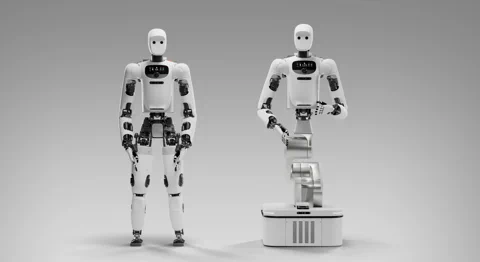
Apollo 2 gives you both. Customers can opt for the full bipedal setup or a version where the torso is mounted on a wheeled base. This dual-pronged approach is a masterstroke of pragmatism. It allows Apptronik to target the logistics market with a purpose-built solution while still developing the more complex bipedal platform for broader applications. It’s a tacit admission that forcing legs into every problem isn’t just inefficient; it’s bad business.
Communication is another area where Apptronik has clearly thought about the human-robot interface. An expressive LED “mouth” and a configurable chest-mounted display provide at-a-glance status updates on tasks, battery life, and system status. It’s about making the robot less of an inscrutable black box and more of a predictable coworker.
The Brains Behind the Brawn
A capable body is useless without a powerful mind. Apollo 2 runs on Artemis, Apptronik’s onboard control software that handles everything from perception to motion planning. For large-scale deployments, Fleet Connect provides the operational toolkit to manage and orchestrate an entire fleet of robots from a single interface.
But the most exciting part of Apollo’s intelligence is its collaboration with Google DeepMind. Apptronik is positioning Apollo as the premier physical platform for the next generation of embodied AI. By providing its hardware to leading AI researchers, Apptronik gets to leverage frontier models like Gemini to give Apollo advanced reasoning and learning capabilities. This is a symbiotic relationship: Apptronik focuses on building world-class hardware, while Google and others push the boundaries of the AI that will bring it to life.
Safety is also baked into the system, with hardware-level “impact zones” that pause movement upon contact and configurable software “perimeter zones” that adjust behavior based on nearby people or obstacles.
Is This the Humanoid That Finally Clocks In?
Apptronik is entering a crowded field. Figure is working with BMW, Boston Dynamics has the new all-electric Atlas, and Tesla’s Optimus continues to loom. Yet, Apollo 2 feels different. Every design choice seems to answer a practical question about deployment, scalability, and uptime. The focus on mass manufacturability and supply chain resilience signals an ambition that goes far beyond research grants and pilot programs.
The company has yet to announce a price, which remains the billion-dollar question for the entire industry. But the philosophy underpinning Apollo 2—modularity, endurance, and a clear focus on solving today’s labor shortages rather than tomorrow’s sci-fi dreams—suggests that Apptronik isn’t just building a robot. They’re building a product. And in the long run, that might be the most impressive feat of all.