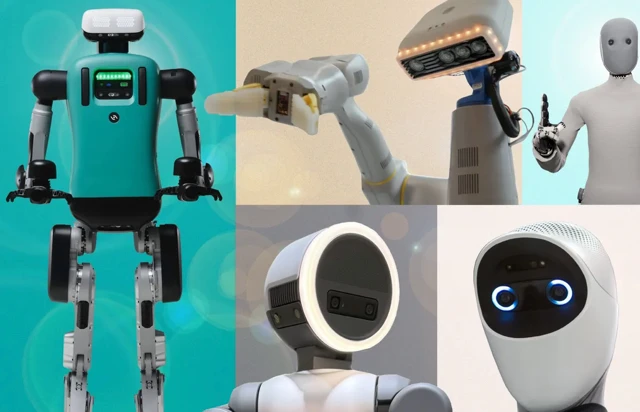
The venture capital is flowing, the YouTube demos are racking up millions of views, and the promises are getting bolder by the quarter. After watching large language models like OpenAI’s ChatGPT seemingly conquer the digital world overnight, everyone is asking the same multibillion-dollar question: When will robotics have its “ChatGPT moment”?
According to two men who have been deep in the trenches of embodied AI, the answer is simple: it won’t. And you’d be wise to listen. Jonathan W. Hurst, the co-founder of Agility Robotics (the minds behind the Digit humanoid), and Hans Peter Brøndmo, who led the Everyday Robots moonshot at Google X, have penned a much-needed reality check. They’re here to pour a bucket of ice-cold, industrial-grade coolant on the hype train, arguing that a single, magical AI breakthrough isn’t coming to save the day. The path to a world populated by useful robots is paved with grueling, incremental, and deeply unsexy engineering work.
With venture funding for robotics hitting $6.1 billion in 2024, up from $5.1 billion in 2023, the stakes are astronomically high. But as Hurst and Brøndmo argue, the gap between a flashy demo and a commercially viable, safe, and reliable robot remains a chasm.
The Grand Illusion: Deconstructing the YouTube Demo
We’ve all seen them. The videos of humanoid robots executing flawless backflips, performing synchronized dances, or engaging in tightly choreographed martial arts routines. The latest viral sensation featured Unitree Robotics’ humanoids in a kung fu performance at the 2026 Spring Festival Gala in China, an impressive display of coordination just feet from child performers.

Hurst and Brøndmo are quick to point out what insiders have known for years: “never trust a YouTube robot video.” These performances, while technically stunning, are the robotic equivalent of a meticulously planned Broadway show. They demonstrate remarkable low-level motor control and choreography, but their level of autonomy is closer to an assembly-line robot than a thinking machine. The real world—messy, unpredictable, and stubbornly unscripted—is a different beast entirely. This is a classic case of Moravec’s paradox: tasks that are trivial for a human, like navigating a cluttered room, are monumentally difficult for a robot, while complex calculations are easy.
Data is an Unsolved, Herculean Challenge
LLMs had a massive advantage: they were trained on the internet, a colossal, human-generated database of text and images. Robots have no such luxury. To learn, a robot needs data from the physical world, a high-dimensional space where variables include everything from joint angles and force feedback to lighting conditions and the unpredictable movements of people.
The scale of this challenge is staggering. At Everyday Robots, Brøndmo’s team ran 240 million simulated robot instances in 2022 just to train a model to sort trash with something approaching competence. And that was for a single, relatively simple skill set. Now, multiply that effort across the near-infinite number of tasks we expect general-purpose robots to perform. It’s a data collection problem of a completely different magnitude, and one that remains broadly unsolved. The project itself was ultimately shut down in early 2023 as part of wider cost-cutting measures at parent company Alphabet.
There Will Be No Single “Robot AI”
The idea of a single, monolithic AI model that can pilot any robot—wheeled, legged, flying, or swimming—is pure science fiction. The physical realities of different embodiments and environments are too vast. The authors contend that the winning architecture will be what they call “agentic AI.” This involves high-level coordinating models that can reason, plan, and delegate tasks to a suite of smaller, specialized AI tools. One model might handle bipedal locomotion, another fine-grained manipulation, and a third would be dedicated to safe human-robot interaction.
This modular approach, they argue, will lead to a “Cambrian explosion” of useful, intelligent machines. It won’t be a single big bang, but a blossoming of diverse, specialized capabilities that, when orchestrated correctly, create a truly competent machine.
Hardware Is Still Agonizingly Hard
For all the focus on AI, a robot is still a physical object. And the hardware, particularly the parts that allow it to interact with the world, remains a major bottleneck. Most industrial robots use rigid, powerful actuators that are fantastic for precision in a caged-off area but disastrous in a human environment. A simple, accidental collision could be catastrophic.
Humans, by contrast, are compliant. We use touch and force feedback constantly, whether we’re jiggling a key into a lock or bracing ourselves on a counter. For robots to achieve this, they need a new class of actuators that are sensitive, compliant, and force-aware. While these exist in labs, they are not yet available at the scale, cost, or reliability needed for mass deployment. The most brilliant AI in the world is useless if its body is a clumsy, dangerous liability.
Real Value Comes From Solving “Easy” Problems
The final, and perhaps most important, truth is that real-world value doesn’t come from backflips. It comes from reliably performing the mundane, repetitive, and often physically taxing jobs that humans don’t want to do. This is where the rubber meets the road, or in this case, where the robot’s feet meet the warehouse floor.
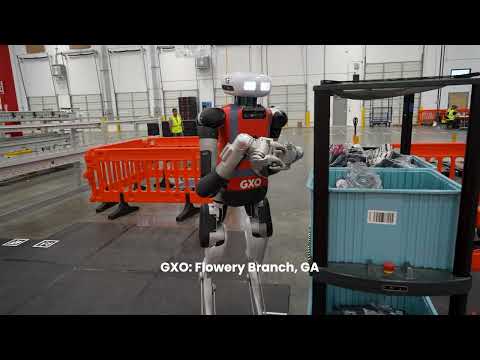
Both authors speak from experience. When Agility Robotics began deploying Digit in customer locations with partners like GXO Logistics, they quickly realized their first major hurdle wasn’t task performance—it was safety. This led to a multi-year engineering effort to redesign the robot for safe operation in human spaces. Similarly, the Everyday Robots team at Google learned firsthand how messy and difficult a seemingly simple environment like an office cafeteria is for a robot trying to clean tables.
This real-world experience is the only way forward. It informs the AI architecture, highlights hardware deficiencies, and grounds ambitious roadmaps in the harsh reality of customer needs. There is no silver bullet algorithm or dataset that can substitute for the slow, painful, and expensive process of deploying robots, watching them fail, and meticulously engineering solutions. The future of robotics is coming, but it will arrive one deliberate, well-engineered step at a time.