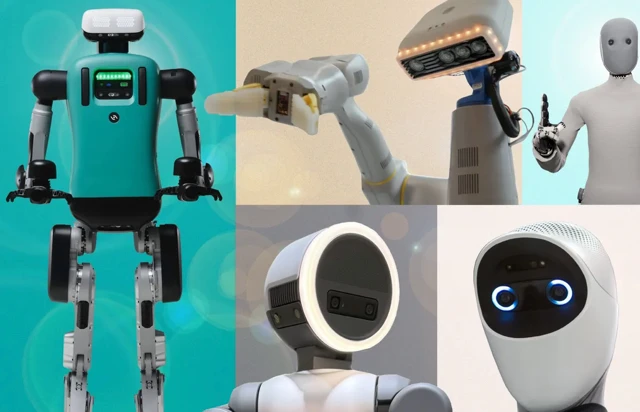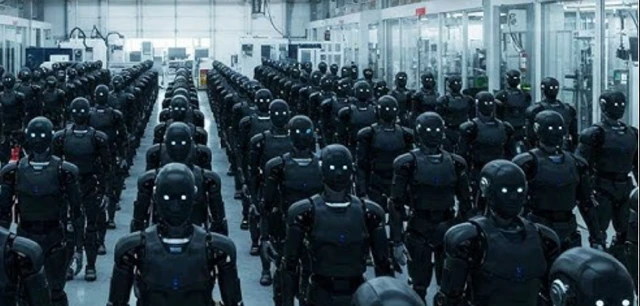
The next time you fret about the robot uprising, consider this: for the world’s second-largest economy, it might be less of a dystopian threat and more of a demographic necessity. According to the 71st edition of Barclays’ flagship Equity Gilt Study, China is facing a colossal labor shortfall that only an army of robots can fix. And not just any robots—we’re talking 24 million humanoid ones by 2035.
The British bank’s new report, titled “Robots Roll Out, Economies Rewire,” paints a stark picture. Over the next decade, China’s labor force is projected to shrink by a staggering 37 million people, assuming participation rates hover around 65%. In an optimistic but startling scenario, Barclays analysts project that deploying 24 million humanoid robots could offset as much as 60% of that decline. This isn’t just plugging a few gaps on the assembly line; it’s a new workforce equivalent to about 4% of the country’s current labor pool.
The Demographic Time Bomb and Its Robotic Solution
China’s demographic crunch is no secret. A shrinking working-age population, a byproduct of decades of the one-child policy, is now a ticking time bomb for its manufacturing-heavy economy. With the working-age cohort falling from over 70% of the population a decade ago to around 61% in 2025, Beijing is turning to automation not just for efficiency, but for survival.
This is where the humanoids march in. Barclays frames this as automation’s “third phase.” Forget the single-task arms bolted to a factory floor. This new generation of physical AI, powered by breakthroughs in machine learning, battery life, and precision mechanics, is designed to perform entire jobs within environments built for humans.
“Humanoid robots represent the next frontier of AI, combining intelligence with physical capability,” said Ajay Rajadhyaksha, Global Chairman of Research at Barclays. “Their effect could extend well beyond technology, reshaping the structure of the global economy.”
The economic case is getting brutally efficient. The study notes that unit costs for humanoids have plummeted roughly 40-fold over five years to around $100,000, with some analysts predicting prices could fall to as low as $37,000 by 2030. Barclays estimates the global humanoid robotics market could explode from a mere $2–3 billion today to a massive $200 billion by 2035.
China’s Unassailable Lead
While Western firms like Tesla and Figure AI generate headlines with slick demos, China is quietly cornering the market through sheer industrial might. The country already accounted for a jaw-dropping 85% of humanoid deployments in 2025, according to the study. This isn’t an accident; it’s a state-backed strategy to maintain its manufacturing dominance.
Investment bank Morgan Stanley echoes this sentiment, projecting that the humanoid robot push will help expand China’s share of global manufacturing from 15% to 16.5% by 2030. They see direct parallels between China’s current robotics strategy and its rise to dominance in the electric vehicle sector a decade ago. While US firms pursue an “AI-first” perfectionist approach, China is executing a “deployment-first” strategy, flooding the zone with hardware to collect real-world data at an unmatched scale.
This creates a formidable feedback loop: more robots deployed means more data, which leads to smarter AI, better hardware, and lower costs—a cycle that competitors will find nearly impossible to break.
The Global Economic Rewiring
The implications of this shift extend far beyond China’s borders. The Barclays report argues that by expanding the production frontier, physical AI will boost productivity, earnings growth, and long-term asset returns.
There’s also a geopolitical resource angle. The construction of this 24-million-strong robot army will require a mountain of raw materials. Bloomberg reported that the study highlights an impending boom for commodity-exporting nations. Countries like Chile, Peru, Brazil, and Indonesia are poised to benefit from the soaring demand for the metals and minerals essential for building advanced robotics and AI systems.
Of course, this robotic future isn’t a foregone conclusion. The “up to 24 million robots” figure is an optimistic, maximum-substitution scenario. It assumes rapid technological adoption and smooth integration into the workforce. However, even if the reality is half of that projection, it represents a fundamental rewiring of the global economy. The age of physical AI is here, and it appears to be marching to a decidedly Chinese drumbeat.