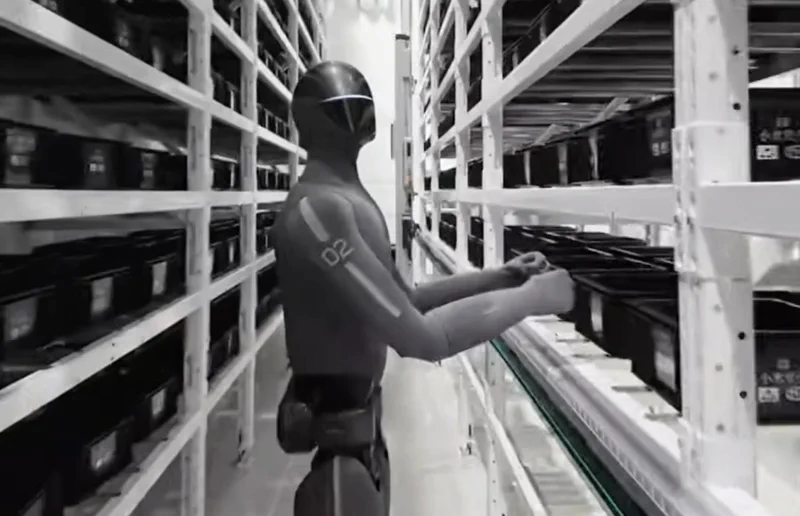
Remember the Xiaomi CyberOne? It shuffled onto the scene a few years back, handed its CEO a flower, and generally looked like it might trip over a power cord. It was an amusing, if slightly clumsy, first step. We even called it Xiaomi CyberOne: The Ghost of a Tesla-Beating Robot . Well, it seems CyberOne spent its time away from the spotlight hitting the gym, because it’s back with a completely redesigned physique and a killer new feature: hands that can sweat.
That’s not a joke. In a massive update, Xiaomi has revealed a new bionic hand for its humanoid that tackles one of the biggest bottlenecks in robotics: heat. By integrating a liquid cooling system that functions as “bionic sweat glands,” CyberOne can now perform demanding tasks for hours without its high-powered motors throttling themselves into oblivion. It seems the future of robotic labor won’t just be automated; it’ll be slightly damp.
The Hand That Sweats
The central problem with creating powerful, compact robotic hands is the same one plaguing every high-performance gadget: thermal management. The tiny, high-density 100W motors required for human-like dexterity generate a blistering 30W of heat. Pack them into a hand, and you’ve built a very expensive pocket warmer that quickly loses performance.
Xiaomi’s solution is as clever as it is bio-inspired. They’ve embedded 3D-printed metal liquid cooling channels directly into the hand’s structure. This system evaporates 0.5 mL of water per minute, providing a continuous 10W of active cooling. It’s an elegant piece of engineering that prevents thermal throttling during the kind of high-load, multi-hour shifts expected on a factory floor. While your laptop just whines with a fan, CyberOne quietly sweats out the pressure.
More Than Just a Cool Trick
This sweaty solution enables a host of other radical improvements. The entire hand has been shrunk by 60% to achieve a perfect 1:1 scale with a 1.73-meter human male’s hand, a critical step for simplifying sim-to-real data transfer. It’s not just smaller; it’s smarter and tougher.
The new configuration boasts an 83% increase in active degrees of freedom, bringing it tantalizingly close to the 22-27 DOFs of a biological human hand. This isn’t just for show. The hardware has been tested to endure over 150,000 grasping cycles, blowing past the typical 10,000-cycle failure point for many tendon-driven designs. This is industrial-grade reliability, not a lab prototype.
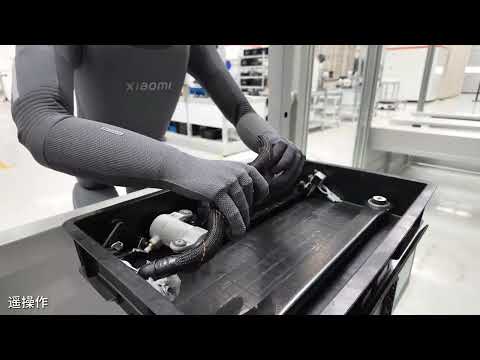
The proof is in the pudding, or in this case, the car parts. In automotive assembly tests, CyberOne demonstrated a 90.2% success rate fastening nuts within a tight 76-second cycle, and it maintained that performance for over three hours.
A Robot With Feeling (And an Open-Source Brain)
To make all this hardware useful, Xiaomi blanketed the hand with 8,200 square millimeters of tactile sensors. This full-palm feedback allows the robot to “feel” its way through a task, a vital skill when its own arm or other objects obstruct its vision. It’s the difference between fumbling for your keys in the dark and expertly finding the right one.
In a move that should earn applause from the entire robotics community, Xiaomi is also giving away some of the secret sauce. The company has open-sourced its TacRefineNet framework, a tactile-based system for improving sim-to-real transfer, along with 61 hours of raw data collected using tactile gloves. You can find the project right here: TacRefineNet on GitHub.
This combination of advanced, reliable hardware and an open approach to software development suggests Xiaomi is no longer just playing around. The clumsy flower-bot is gone, replaced by a machine built for actual work. The addition of full-palm tactile sensing and active liquid cooling might just be the missing link needed to finally push humanoids out of the lab and into 24/7 industrial roles. The era of the sweating, feeling, tireless robot worker is getting uncomfortably close.