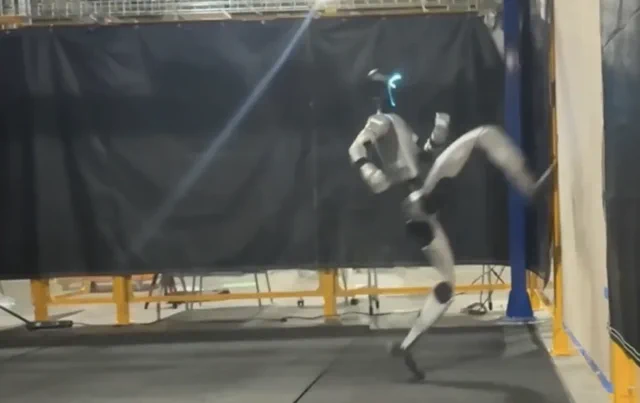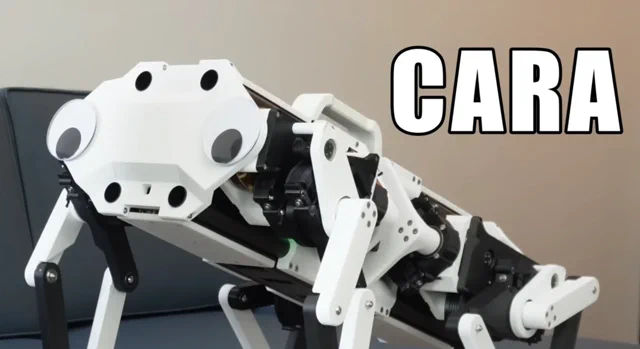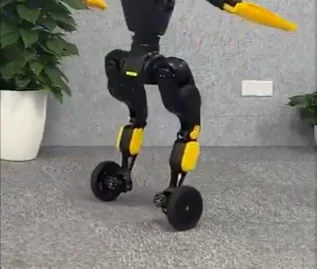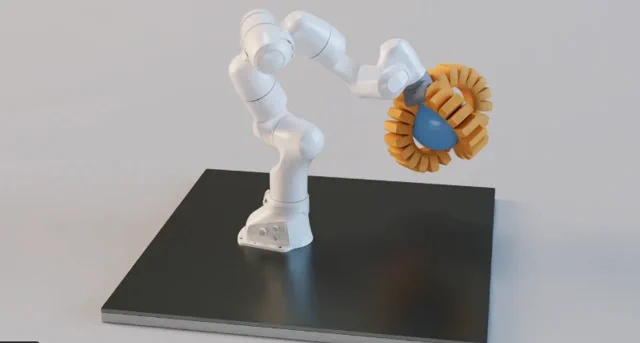
For years, the biggest problem in robotics hasn’t been the robots. It’s been the gap between the virtual worlds where they learn and the unforgiving physics of our own. This “sim-to-real” gap has been the quiet bottleneck slowing down progress, where a robot trained for thousands of hours in simulation fails the moment it touches a real cable or a slippery surface. Now, a powerhouse collaboration aims to build a bridge across that chasm.
The Linux Foundation, the neutral home for the world’s most important open-source projects, has announced the general availability of Newton 1.0. It’s an open-source, extensible, GPU-accelerated physics engine designed specifically for training robots. And its list of developers should make anyone in the industry sit up straight: NVIDIA, Google DeepMind, and, yes, Disney Research. This isn’t just another simulator; it’s a concerted effort to create a standard, a common language of physics for an entire industry.
The Unlikely Alliance Forging Robot Reality
At first glance, the partnership is… eclectic. You have NVIDIA, the undisputed king of GPU hardware and simulation platforms like Isaac Sim. You have Google DeepMind, the AI research titan that already owns MuJoCo, one of the most popular physics engines in robotics research. And then you have Disney Research and Walt Disney Imagineering, the people who have spent decades making sure Captain Jack Sparrow’s animatronic swagger looks just right.
But it makes perfect sense. NVIDIA provides the accelerated computing backbone with its Warp framework. Google DeepMind brings its deep expertise in robot learning and physics simulation. And Disney? They are masters of complex, real-world robotic systems that have to perform flawlessly millions of times. This collaboration brings together the key ingredients for a simulator that is not only fast but also deeply understands the nuances of physical interaction.
By housing Newton at the Linux Foundation, the project gets something crucial: neutral governance. It ensures that this foundational piece of the robotics stack won’t be controlled by a single corporate entity, encouraging broad adoption and community-driven development.
What’s Under Newton’s Hood?
Newton 1.0 isn’t just about making things faster; it’s about simulating the messy, contact-rich problems that have stumped previous engines. The goal is to tackle scenarios like a robot walking on gravel, manipulating delicate fruit, or handling a flexible cable. To do this, it packs several key features:
- GPU Acceleration: Built on NVIDIA Warp, Newton is designed from the ground up to run on GPUs, cutting simulation times from days to minutes and allowing for massive parallel training. NVIDIA claims that on its latest hardware, Newton can be up to 475 times faster than alternatives for certain manipulation tasks.
- Deformable and Soft Bodies: One of the holy grails of simulation is accurately modeling things that aren’t rigid, like cables, cloth, and rubber. Newton includes advanced solvers designed specifically for these deformable materials. Early adopters like Samsung are already using this to simulate cable manipulation for refrigerator assembly.
- Hydroelastic Contact Modeling: Forget simple point-based contact. Hydroelastic models simulate the pressure distribution over a contact patch, providing a much richer and more realistic simulation of how objects touch and deform. This is critical for tasks requiring a delicate touch or understanding friction.
- Differentiable Physics: Newton’s physics are differentiable, which in simple terms means that machine learning models can “see” through the simulation and learn more efficiently how their actions affect the outcome. It allows for gradients to be propagated through the simulation, accelerating training and optimization.
Hyperlink: Newton Project on GitHub
A Standard Model for the Robotic Metaverse
Newton doesn’t exist in a vacuum. The physics engine battlefield is crowded with contenders like PyBullet and Google’s own MuJoCo. However, Newton’s strategy is one of unification. It integrates MuJoCo Warp (a GPU-optimized version of MuJoCo) as a key solver, positioning itself not as a replacement but as a unifying framework. It’s built on the OpenUSD standard, allowing for interoperable descriptions of robots and their environments.
The release of Newton 1.0, managed by the Linux Foundation and backed by the heaviest hitters in tech and robotics, feels like a pivotal moment. The goal isn’t just to build a better physics engine, but to create a common ground—a “physics kernel” for robotics. By making a high-performance, open, and extensible simulation engine freely available, the project lowers the barrier to entry for everyone and allows the entire community to build upon a shared foundation. This is how standards are born, and how industries make massive leaps forward. The sim-to-real gap may not be closed overnight, but with Newton, the other side has never looked closer.