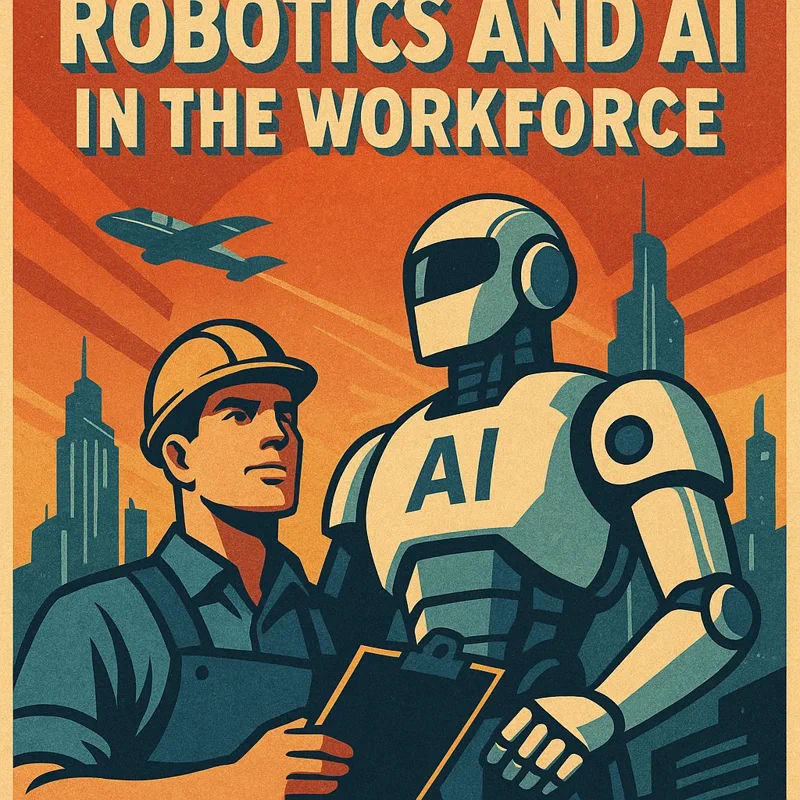
I Don’t Like to Predict — it’s a tricky business and all too easy to miss the mark. But everyone’s asking, and let’s be honest, I’m curious too. It matters to me personally (that’s how I got into AI and robotics in the first place) and for my kids as well. When even moms start discussing it at the playground, you know it’s a seriously important topic. So, I’ll dive in, fully aware that this is just a snapshot of thoughts valid for this very moment—nothing more.
Labor Market Overview
As we head into the mid-2020s, Europe’s job market is undergoing a historic transformation. On one hand, more people are employed now than ever before, yet paradoxically, there are more unfilled jobs across the continent. It might seem contradictory at first glance, but the answer lies in a structural crisis. A demographic downturn, coupled with a green and digital transition and rapidly accelerating automation, is reshaping the labor landscape. This article maps out this new era, armed with data, forecasts, and, importantly, opportunities.
EU: Record Employment Yet Growing Skills Shortages
According to the European Commission’s Employment and Social Developments in Europe (ESDE) quarterly report from January 2025, employment has hit historic highs:
- 219.1 million people are employed in the EU (ages 20–64), reflecting an annual increase of 1.49 million.
- The employment rate stood at 75.9%, up from Q3 2023 (75.1%)—eight member states have already hit their national target of 78% set for 2030.
- Unmet labor demand has eased slightly, dropping to 2.3% from the 2.4% recorded in the second quarter.
However, the demographic challenge continues to fuel skilled labor shortages: Europe’s working-age population has been declining since 2009, and the IMF forecasts that the number of hours worked could decrease further over the next five years. Many sectors are still struggling to fill positions due to insufficient domestic supply and skills mismatches.
The report indicates that three-quarters of member states are experiencing a critical shortage of labor in certain professions, affecting all levels of education—from truck drivers to software developers and nurses to electricians.
Most Common Shortage Occupations in the EU by 2025
- Healthcare: nurses, specialists, elderly caregivers
- Industry: welders, metalworkers, machine operators
- Construction: masons, roofers, HVAC technicians, carpenters, electricians
- Logistics: truck drivers, warehouse workers
- IT/STEM: programmers, cybersecurity experts, engineers
For instance, Germany has over 70 occupations classified as acute shortages, and in France, 61% of employers report recruitment difficulties. The issue isn’t unemployment; it’s a skills gap—available workers often lack the skills that are in demand.
What to Expect by 2030?
Clear Societal Trends
- The working-age population is shrinking (projected to drop by 7 million in the EU by 2030).
- The construction industry will need an additional 2 million workers to meet climate goals.
- A wave of retirements is approaching in healthcare (30% of nurses are over 55).
- There are already tens of thousands of unfilled positions in IT.
In these sectors, excessive aging, working conditions, and training deficiencies are leading to severe labor shortages.
Of course, startups and companies working on AI and robotics are well aware of these statistics and are developing their tools accordingly. They’re focusing on areas where demand is highest and where tech solutions can be economically feasible.
The Winds of Change
Coming from the software development side, I sensed a grand, “game-changing” shift even before ChatGPT hit the scene—that’s why I delved deeper into the topic of AI. Economic and labor market transformations are already measurable across various professions: fewer copywriters and graphic designers are in demand, and junior programmers are finding it harder to land jobs. This trend is likely to continue among white-collar workers, especially where large volumes of processable data exist (and tasks can be easily automated with AI)—whether in creative fields, law, or healthcare.
Specifically Regarding Robotics
…according to those banking on the proliferation of robotics (and invested in it):
Nvidia CEO Jensen Huang (Nvidia’s stock value: ~$4 trillion) asserts that AI isn’t just a technical revolution; it’s a powerful workforce-replacing engine that can simultaneously boost GDP and help solve the global labor shortage. “AI won’t take your job—it will transform how you work,” he told Business Insider. History shows us that the automation of agriculture didn’t eliminate agricultural work; it redistributed it—just like the current AI revolution.
Recently, he stated: “Every job will change. Some will disappear, and new ones will emerge… the labor market is transforming.” Huang believes that 30–40 million people could re-enter the labor market due to productivity boosts from AI (though not everyone agrees with him).
Elon Musk shares a similar optimism, suggesting that robotization could help the U.S. economy climb out of debt and might even enable the introduction of Universal Basic Income (UBI). According to him, if just a few people work alongside AI, it could still generate income for society as a whole—potentially laying the groundwork for a new golden age.
David Reger, head of Germany’s Neura Robotics, painted a dramatic picture in a July post:
A severe labor shortage threatens the world’s largest economies… Both the EU and Japan could be short 7 million workers, while China could be facing an astounding 87 million fewer workers by 2030.
Reger emphasizes that automation is the only answer to structural labor shortages, yet paradoxically, the robotics industry itself is grappling with a severe shortage of skilled workers—there’s a need for AI and robotics developers, engineers, and programmers.
Let’s consider an alternative narrative—currently more focused on AI: Dario Amodei, CEO of Anthropic (a leading AI development company), believes that AI will replace entry-level office jobs within the next 1–5 years. His estimates suggest that this could lead to the elimination of half of all entry-level jobs, with unemployment rates potentially hitting 10–20%. Amodei highlighted the importance of transparency: “As technology creators, we have a duty to honestly discuss what’s coming”. He pointed out that companies can simply “kick people out” as soon as it makes economic sense—this could lead to sudden large-scale layoffs. Let’s face it; we’ve already seen the early signs of this.
Many big tech companies are scrambling to respond. Google is releasing staggering statistics about what percentage of its code is written by AI, while Microsoft has restructured and laid off thousands. The CEO of Amazon announced that tens of thousands of employees will be laid off due to AI-driven automation, including positions that were involved in developing AI tools. The company claims that its generative AI assistant saved 4,500 years of developer work last year and is set to improve efficiency by $260 million per year.
The Impact of Software and Hardware AI, and Automation
So, let’s return to specific professions and shortage occupations. Robotics, artificial intelligence, and automation have a dual role in addressing labor shortages. On one hand, they can alleviate some skills shortages by replacing a portion of human labor; on the other, they demand new skills and, in some cases, may exacerbate the shortage (as they require specialized professionals). It’s essential to note that automation primarily provides real solutions in roles involving routine, standardized tasks.
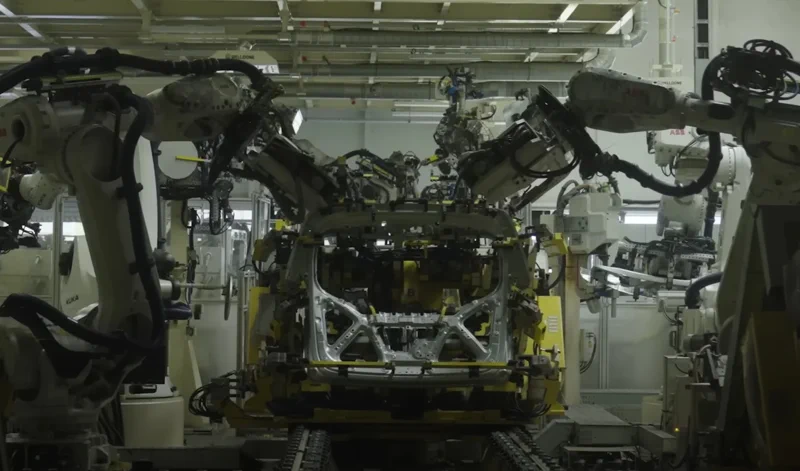
- Manufacturing and Physical Routine Tasks: Industrial robots and automated systems are already widely used in manufacturing. Shortage occupations like factory assemblers, welders, painters, packers, and material handlers can be partially or fully taken over by robots and automated production lines. For example, in a modern car factory, a significant portion of welding tasks is performed by robots, reducing the need for welders. This could help alleviate the shortage of welders in large operations. Similarly, material handling robots and sorting machines are replacing some warehouse workers—for instance, in Amazon warehouses, robots bring shelves to packers. Note: However, industrial automation creates a new shortage: robot programmers and maintenance engineers are needed to operate the robots. Overall, though, the demand for physical labor decreases due to automation, which could alleviate some of the blue-collar labor shortages.
- Transportation and Logistics: The development of self-driving vehicle technology has the potential to mitigate the driver shortage. For instance, by 2030, self-driving trucks could appear on highways, and advanced driver assistance systems (like convoying trucks with automated following) may reduce the number of vehicles needed per driver. However, experts predict that mass replacement of truck drivers isn’t likely by 2030; it will instead serve as a complementary technology. In urban transport (e.g., metros, predictable routes), there are already examples of fully automated trains. In logistics, AI-driven route optimization and robotized warehouses (as mentioned earlier) are also decreasing labor demand. For instance, some distribution centers are using robots to address the warehouse worker shortage. Thus, automation in transportation and warehousing could partially solve the shortage.
- Administration and Customer Service: These are areas where software automation (RPA) and artificial intelligence have the most significant impact. This is because chatbots and virtual assistants are becoming increasingly sophisticated—they can respond to basic customer inquiries 24/7. Many companies now employ AI chatbots in the first line of call centers, reducing the need for human operators. As a result, by 2030, it’s conceivable that the supply of accounting, data entry, and banking positions may decrease, lessening their current shortages. However, it’s important to note that AI still requires human oversight: it cannot yet fully take over customer interactions that demand complex, empathetic skills or decision-making. Nevertheless, a significant portion of routine office tasks will be automatable, meaning that these professions are unlikely to remain in shortage for long, as technology will replace the workforce.
- Healthcare and Education: These are human-centered professions, where the role of automation remains highly questionable, with no complete solutions currently available. For example, surgical robots (like the Da Vinci robot) exist, but they are typically guided by a physician—however, they allow for more precise procedures and enable remote surgeries, somewhat alleviating geographical shortages of doctors. An example is the Neuralink brain surgery robot, needed because it can place electrode chains in brain tissue much more precisely and safely than any doctor. AI diagnostics (like automatic evaluation of X-rays) can speed up medical work, allowing doctors to treat more patients in the same time frame, thereby lessening the shortage. In elderly care, robots (such as therapeutic and lifting robots) can assist nurses, but they cannot replace human compassion. In education, e-learning platforms and educational software support teachers’ work (one teacher can conduct online classes for multiple students, or adaptive software assists with practice), but there is also active research into personalized teaching methods offered by AI. Currently, we think that for instance, a human masseur can only be truly good… but isn’t this naivety?
Many tech companies are starting to focus on healthcare, from increasingly sophisticated diagnostic AIs to drug research and medical robots (see the aforementioned brain surgery robot) to elderly care robots. They are mobilizing significant resources in this direction, so I’m keeping an eye on this field.
- Hospitality: Cleaning tasks can be partially automated (I’d still love a dusting robot), but many of my acquaintances unanimously agree that despite several companies trying to launch serving robots (and there are such in Hungary too), we may not yet be at the technological or social point where this can work effectively today.
Expected New (or Intensified) Shortage Occupations by 2030
To complete the picture, not everything will have a technological solution from day one. On the other side of the scale, certain occupations are likely to remain in shortage for several years to come:
- Green Energy: solar panel installers, energy auditors, heat pump technicians
- AI/Automation: AI trainers, robot maintenance technicians, data engineers, and those I call AI agent shepherds
- Education: vocational teachers, digital educators
- Healthcare: geriatric nurses, telehealth providers, diagnostic specialists
…along with those who have the appropriate knowledge and experience to develop, implement, or maintain these solutions.
Upholsterers: The New Star Occupation
Conversations with friends are revealing another intriguing trend: skilled maintenance crafts. This includes auto mechanics, plumbers, electricians, and indeed upholsterers. These roles require experience, a certain aptitude, diverse tool usage, fine motor skills, excellent spatial awareness, and so on—qualities that I suspect average robots won’t possess for many years to come.
Summary
As the pace of our world quickens, jobs are appearing and disappearing faster than ever. There’s no longer a need for lamplighters, wake-up services, elevator operators, or subway drivers—the list goes on.
For a relevant example, the prompt engineer (the whisperer of AI, a professional ChatGPT command writer) could become one of the shortest-lived professions: it came and went, as the new, smarter, more thinking AIs make its role almost obsolete.
As history has shown, we must preserve our good habit of watching, adapting, and learning. Some professions will vanish, become hobbies, or transform. We no longer buy pots from potters, unless we really want something artisanal. Perhaps the same will happen with graphics or music, as we still go to live concerts today, even though music is available in high quality right from our pockets.
A few years ago, programmers and creatives thought their jobs were secure… I believe history has proven otherwise. The next wave could be lawyers, doctors, teachers, and writers.
There will likely be a demand for less documented, uniquely solution-oriented, less automatable, and rarer professions. Or for those who know these professions well and can support their automation.