Artificial intelligence (AI) has evolved from a buzzword into a fundamental part of our everyday lives. But what lies ahead on the horizon? The vision laid out by two pivotal figures in the field—OpenAI co-founder Ilya Sutskever and former Google CEO Eric Schmidt—is both awe-inspiring and sobering. Their insights hint at a radically new era, one whose implications even the experts struggle to fully grasp.
Ilya Sutskever: The Inevitable Logical Leap
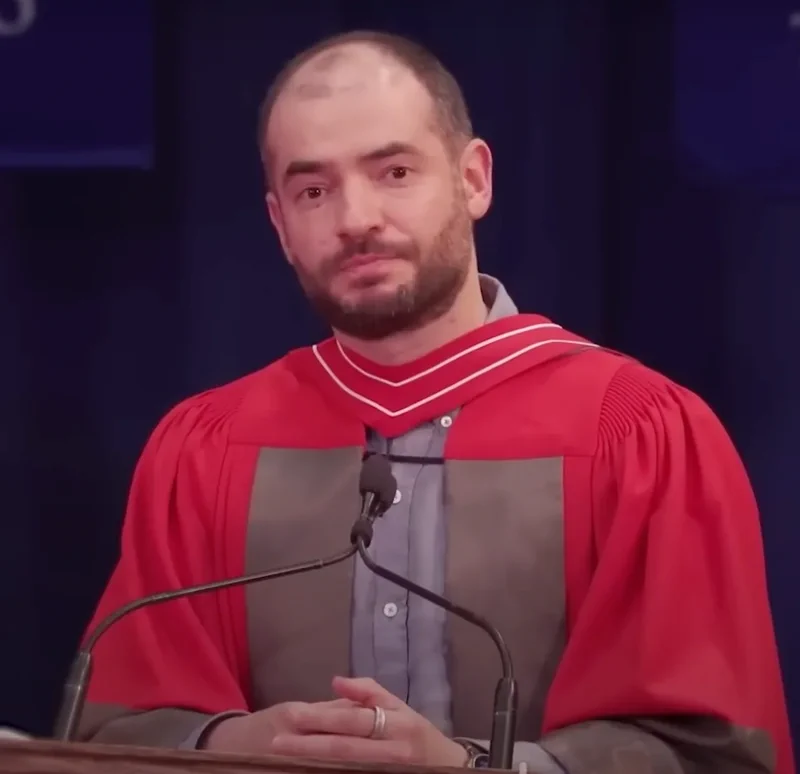
Ilya Sutskever presents a clear, almost deceptively simple yet startling argument for the inevitable rise of AI. He asserts that we are living in an extraordinary time, where AI is already reshaping our relationship with learning and work. However, the real, dramatic shift is still to come.
Sutskever’s central thesis is this: the human brain is a biological computer. This seemingly straightforward assertion logically leads to the conclusion that a digital computer will eventually be capable of performing everything a biological one can. Not just certain tasks, but everything. This is where the questions become profound: what happens when machines can do all the jobs currently done by humans? According to Sutskever, this will initiate a self-reinforcing process where AIs will conduct further research and development, accelerating progress at an unimaginable pace.
He draws a powerful parallel: “You may not care about politics, but politics will care about you.” He believes this is doubly true for artificial intelligence. He describes it as the greatest challenge humanity has ever faced, but also as an opportunity for immense reward. Our task is not to look away, but to pay attention and harness the energy needed to tackle these monumental challenges.
What I often add to this thought is that there’s a significant difference between chips and our brains: scalability. We can’t simply double our brains; at best, we collaborate with a few others through a relatively low-bandwidth communication channel. Scaling AI chips, on the other hand, is comparatively straightforward—we can buy two, a hundred, or a thousand and link them together. Leading frontier companies are training new models on hundreds of thousands of GPUs, with Elon Musk’s xAI aiming to build a training system equivalent to 5 million (H100) chips within five years, with their Grok 4 model currently being the smartest based on certain tests with 200,000 chips.
Eric Schmidt: The Practical Roadmap and the “San Francisco Consensus”
While Sutskever philosophically addresses the “why,” Eric Schmidt brutally honestly tackles the “how and when,” providing a practical roadmap. Schmidt outlines a concrete, alarmingly near timeline that is already being treated as a consensus within the industry, particularly in San Francisco.
In the next 1-2 years: Schmidt predicts that a significant portion of programmers and graduate-level mathematicians will be replaced by AI systems. The reasoning is that the language of mathematics and code is much simpler and more rule-based than human language, making it easier for AI models to master. The goal will be to produce effective code, regardless of whether it was written by a human.
Within 3-5 years: We may enter the era of AGI (I like to freely translate this as General Generative Intelligence, and the acronym fits). Schmidt defines this as a system that is as smart as the top professionals—be they architects, physicists, or artists (all in one). At this point, not just programmers but virtually everyone will be affected, as “agents”—autonomous, goal-oriented AIs—will be able to perform complex, multi-step tasks, from purchasing land to designing houses and managing full construction projects. This essentially means the automation of every business and government process.
Beyond 5-6 years: We’ll see the rise of Artificial Superintelligence (ASI). Through recursive self-improvement—when AI participates in its own development—the intelligence of machines could exceed the collective knowledge of humanity. Schmidt argues that society is unprepared for this speed, and the subject is actually “underrepresented” because people do not understand what it means for near-free, superhuman intelligence to emerge.
Synthesis: When the Logic of the Future Becomes Unfathomable
The visions of these two experts complement each other perfectly. Sutskever provides what seems like an irrefutable logical foundation, while Schmidt outlines the practical steps leading us to superintelligence. Both emphasize that even they find it emotionally challenging to process this future.
The real challenge, then, is not just technological. It’s about whether human society, our institutions, and our individual capacities can keep pace with such exponential change, the logic of which is already upon us, but whose consequences may surpass even our wildest imaginations. The question is no longer whether this will happen, but rather, when the inevitable logic of the future bears down on us, will we be ready with a response?
Related video:
Ex-OpenAI Scientist WARNS: “You Have No Idea What’s Coming”