The Comprehensive Glossary of Robotics: From Basic Concepts to Artificial Intelligence
I believe in the importance of education and raising awareness in fields related to AI and robotics, which is why I enjoy teaching so much. As a sign of this commitment, here’s a handy FAQ that breaks down the foundational concepts of robotics so even a fifth grader can grasp them. So, what exactly is… robotics, to start with?
Robotics is an incredibly complex and interdisciplinary field that combines the best of mechanical engineering, electronics, computer science, and artificial intelligence. Its goal is to design, build, and operate machines capable of autonomously carrying out tasks in the physical world. Given the rapid advancement of this field, having a common vocabulary is essential to navigate the maze of technological concepts, hardware components, and software solutions.
This glossary was created to provide clear and comprehensible explanations of the most important concepts in robotics, from basic definitions to current trends. The entries are organised into logical categories so readers can understand both individual terms and the connections between them. Illustrations are included where they make a concept easier to grasp.
Before diving into the technical details, it’s worth mentioning the cultural and ethical foundations of robotics as well. Isaac Asimov’s three laws of robotics—though fictional—are deeply embedded in our thinking about robots and have sparked dialogues about the safe and ethical coexistence of humans and machines. These laws serve as a reminder that technological advancement should ultimately serve humanity.
A crucial note on terminology: many robotics concepts are used internationally in English, while local professional communities may also use established translations. We keep the English term visible wherever it improves discoverability and cross-border collaboration.
Contents
- Basic Robotics Concepts
- Classification and Types of Robots
- The Anatomy of Robots: Hardware Components
- The “Mind” of Robots: Software Elements and Intelligence
- Conclusion
Basic Robotics Concepts
Before diving into the specific types or components of robots, it’s essential to familiarize ourselves with the fundamental concepts that form the backbone of the science of robotics. These definitions provide the theoretical framework within which we interpret and analyze robot behavior. They determine what we call a robot, how we mathematically describe its movements, and how it relates to the humans controlling it. Understanding these principles is key to grasping more complex topics.
The distinction between automaton (automata) and modern robot (robot) highlights a crucial milestone in technological evolution: the shift from fixed, mechanical repetition to programmable, flexible behavior. While an automaton performs a single, predetermined task repeatedly, a robot is driven by software, allowing it to accomplish various tasks without physical alterations. This transition emphasizes the shift from mechanical functionality to programmable logic, and this flexibility is foundational to modern robotics. This evolution has led to the development of cognitive robots, which are now controlled by artificial intelligence and can adapt to any environment.
- Robotics (Robotics): An interdisciplinary field that combines engineering and science focused on the design, construction, operation, and use of robots, as well as the computer systems required for their control, sensory feedback, and information processing. It merges mechanical engineering, electrical engineering, computer science (programming), and increasingly, artificial intelligence.
- Robot (Robot): A programmable machine capable of automatically executing complex sequences of actions. Robots interact with the physical world using sensors and actuators to perform a task, often with a certain degree of autonomy. They are distinguished from simpler machines by their programmability and the ability to adapt their actions based on sensory feedback (which makes them more advanced than a basic factory robotic arm).
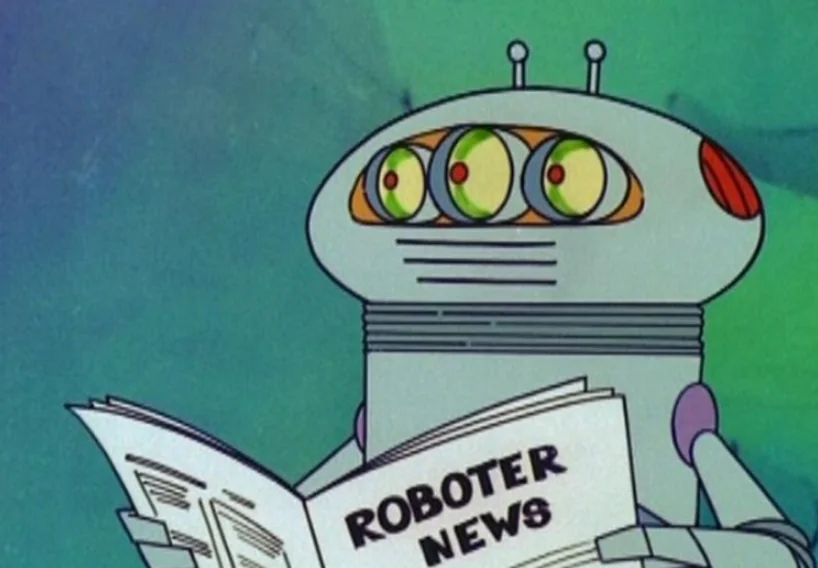
- Automaton (Automaton): An early self-operating machine designed to automatically follow a predetermined sequence of operations or respond to pre-set instructions. Unlike modern robots, an automaton is generally not reprogrammable for other tasks and cannot modify its behavior based on environmental feedback, instead repeating the same actions.
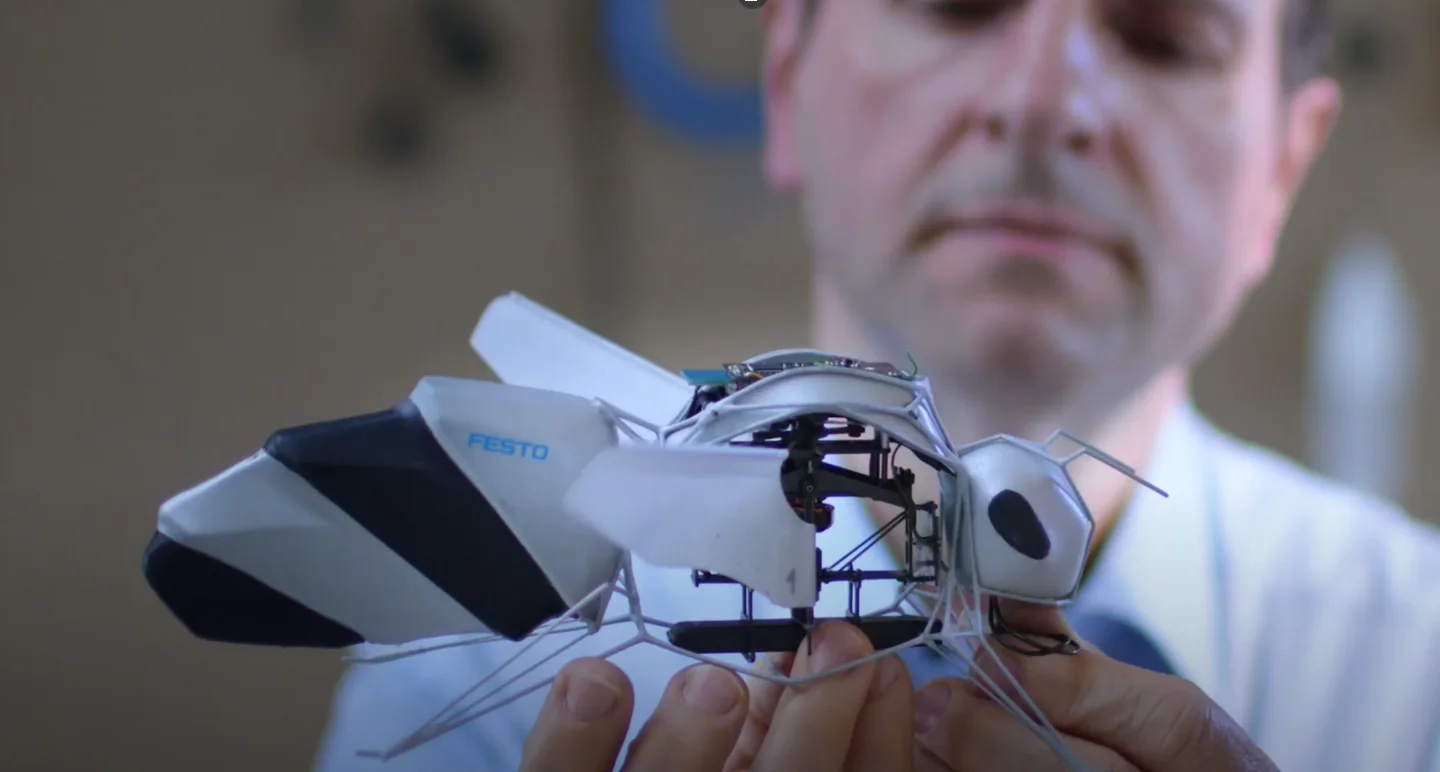
- Bionics (Bionics): The study and application of biological systems, methods, and processes found in nature to modern engineering systems and technologies, including the design and development of robots. This field draws inspiration from living organisms to create more efficient and capable machines, such as robots with legs designed based on insect movement.
- Kinematics (Kinematics): The study of the motion of points, bodies, and systems of bodies without considering the forces that cause the motion. In robotics, kinematics uses geometry to analyze the movement of kinematic chains (structures made of robot links and joints) to relate joint parameters to the spatial position and orientation of the end effector or any other part of the robot. Kinematic equations allow a controller to translate a command like “grab the object at X,Y,Z coordinates” into the necessary rotations of the robot’s joints.
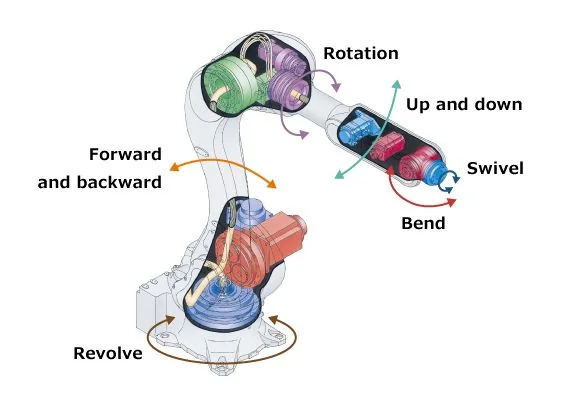
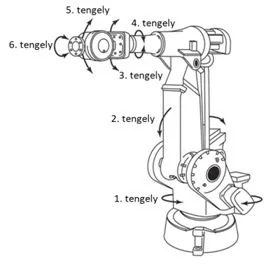
- Degrees of Freedom (DoF): The number of independent parameters that define the configuration of a mechanical system. In robotics, this refers to the number of independent directions of movement that a robot or its end effector can achieve. For a robotic arm, this typically corresponds to the number of axes or joints, determining its ability to reach various positions and orientations within its workspace.
- Payload (Payload): The maximum mass or weight that a robot, especially an industrial manipulator, can carry or handle at its end effector while maintaining specified operational characteristics such as speed and precision. This is a critical performance specification in industrial applications.
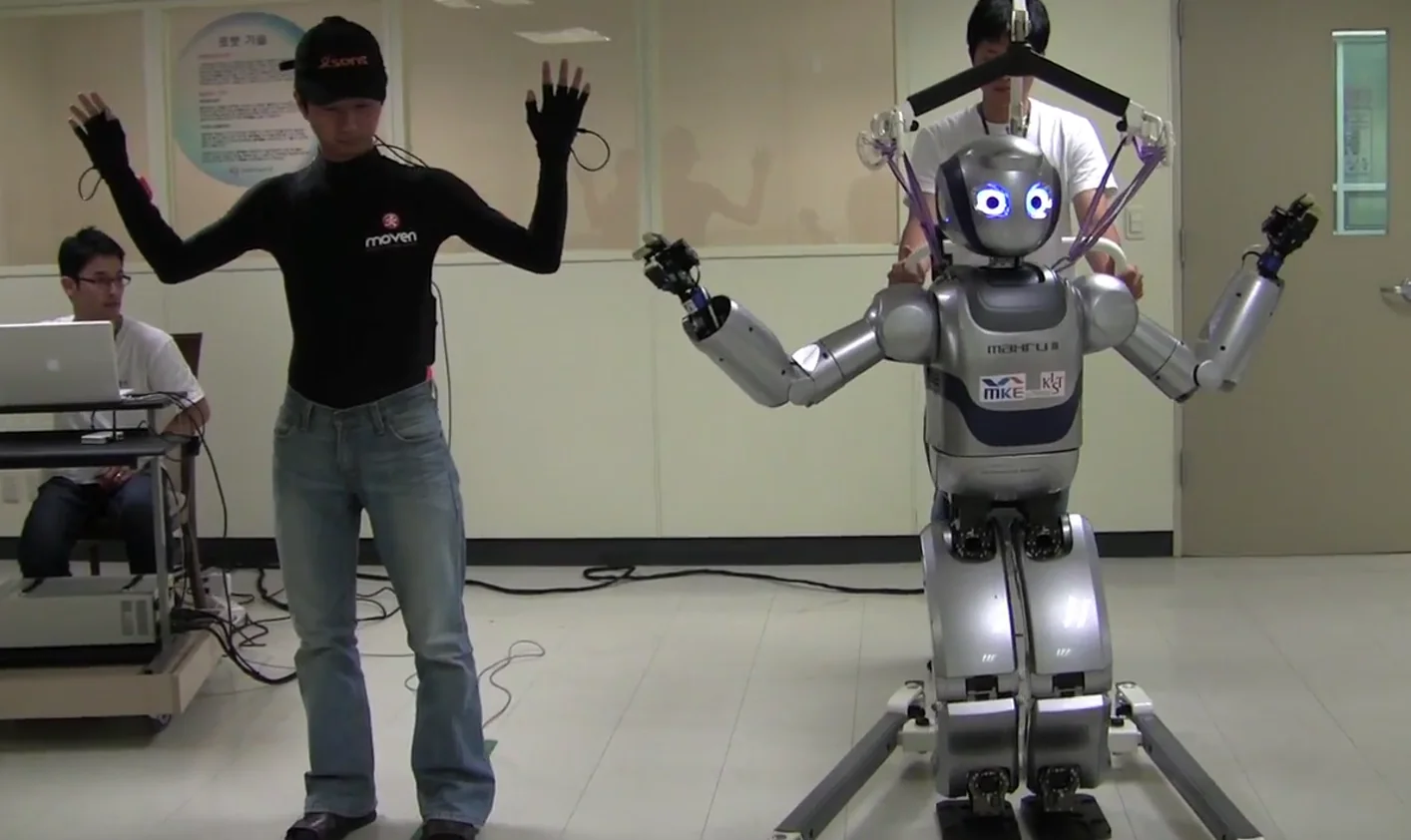
- Human-Robot Interaction (HRI): A multidisciplinary field concerned with understanding, designing, and evaluating robotic systems that are used by or with humans. HRI covers all forms of interaction, including teleoperation, close collaboration, and social interactions, drawing on areas such as psychology, design, artificial intelligence, and robotics.
- Teleoperation (Teleoperation): The remote control of a robot by a human operator. In a teleoperation system, the operator sends commands from a remote location and receives feedback from the robot, such as video streams or sensor data, to control its actions in real-time. This approach is critical for tasks performed in dangerous, inaccessible, or overly complex environments for full autonomy.
Classification and Types of Robots
The world of robots is incredibly diverse. To navigate this complex ecosystem, categorizing robots is essential. Classification helps understand the purpose for which a specific robot was designed, the environment in which it operates, and how it relates to humans. This classification also sketches an evolutionary path: from the initial, constrained industrial robots performing repetitive tasks to the flexible, intelligent, and mobile systems we have today.
This evolution has occurred along two main trajectories. One is the development of mobility and autonomy: simple line-following Automated Guided Vehicles (AGVs) expanded automation on factory floors but remained “dumb” machines. The real breakthrough came with Autonomous Mobile Robots (AMRs), which can navigate and make decisions independently, shifting the focus from automation to autonomy. The other trajectory is the changing nature of interaction with humans. Instead of isolation, collaborative robots (cobots) have emerged, designed not to replace humans but to work safely alongside them.
The physical structure of robots—articulated, SCARA, delta, etc.—is also far from arbitrary; it perfectly exemplifies the classical principle of “form follows function.” For a welding task that requires navigating around obstacles, the most ideal would be a multi-jointed robotic arm similar to a human arm. Conversely, a delta robot is most efficient for rapidly moving small, lightweight objects, as its parallel-arm structure minimizes inertia. This section presents the most important types of robots based on these criteria.
Industrial and Service Robots
Robots can be classified into two broad categories based on their area of application. This is the most fundamental distinction, defining the operational environment and purpose of the robot.
- Industrial Robot (Industrial Robot): An automatically controlled, reprogrammable, multi-purpose manipulator that can be programmed on three or more axes, and can be either fixed or mobile, for industrial automation applications. Industrial robots are typically deployed in structured, controlled environments like factories to perform dull, dirty, or dangerous tasks such as welding, painting, assembly, and material handling with high precision and endurance.
- Service Robot (Service Robot): A robot that performs useful tasks for humans or equipment, excluding industrial automation applications. Service robots are categorized based on their use cases into personal/household robots (e.g., robotic vacuums, lawn mowers) and professional service robots (e.g., logistics, medical assistance, hospitality, or inspection systems). They are designed to operate in public or human-populated, often unstructured and dynamic environments.
By Structure (Mechanical Structure)
The mechanical structure of robots, or their kinematic chains, determines their movement capabilities, the shape and size of their workspace, as well as their speed and load capacity. Below are the most common industrial robot architectures.
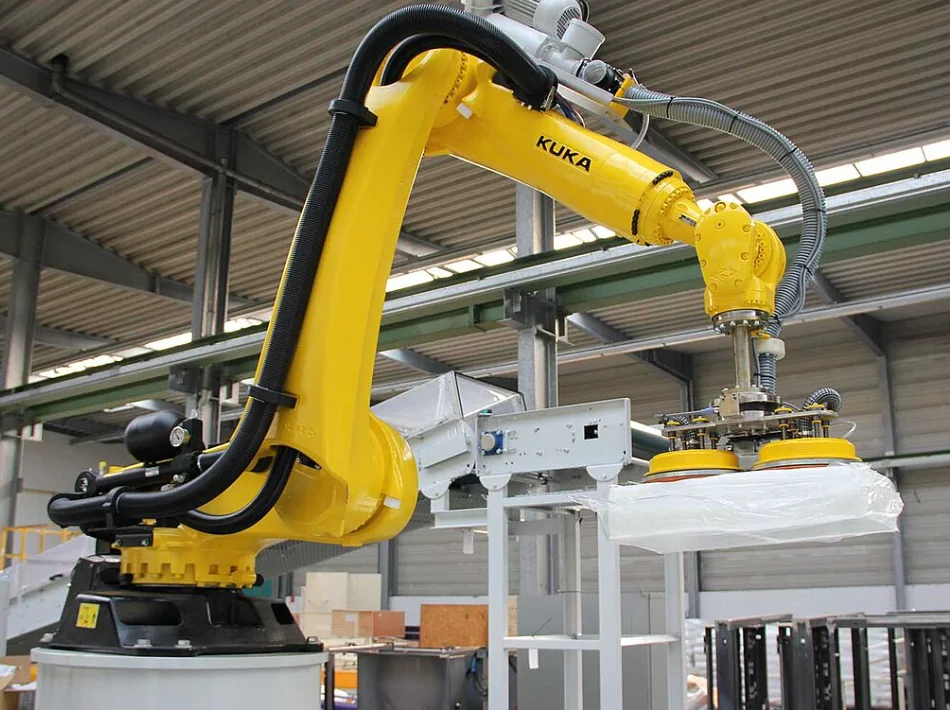
- Articulated Robot (Articulated Robot): A robot with an arm that has multiple rotating joints, typically six, making it similar to a human arm. This design provides great flexibility and a large, complex workspace, enabling it to move around obstacles. Articulated robots are the most common type of industrial robots, widely used for welding, painting, assembly, material handling, and machine tending.
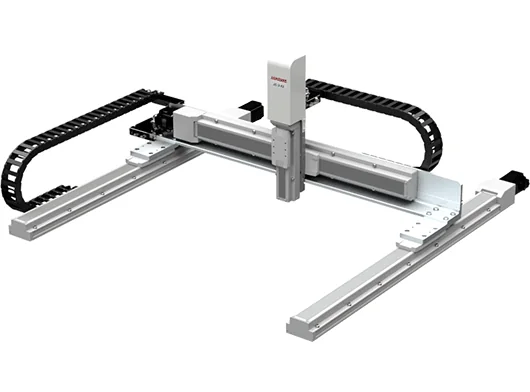
- Cartesian/Gantry Robot (Cartesian/Gantry Robot): A robot that operates on three mutually perpendicular linear axes (X, Y, and Z) defining a Cartesian coordinate system. Also known as linear or gantry robots, they are characterized by their rigid structure, high precision, and ability to handle heavy loads within a large, box-like workspace. They are often used for pick-and-place tasks, CNC machining, and 3D printing.
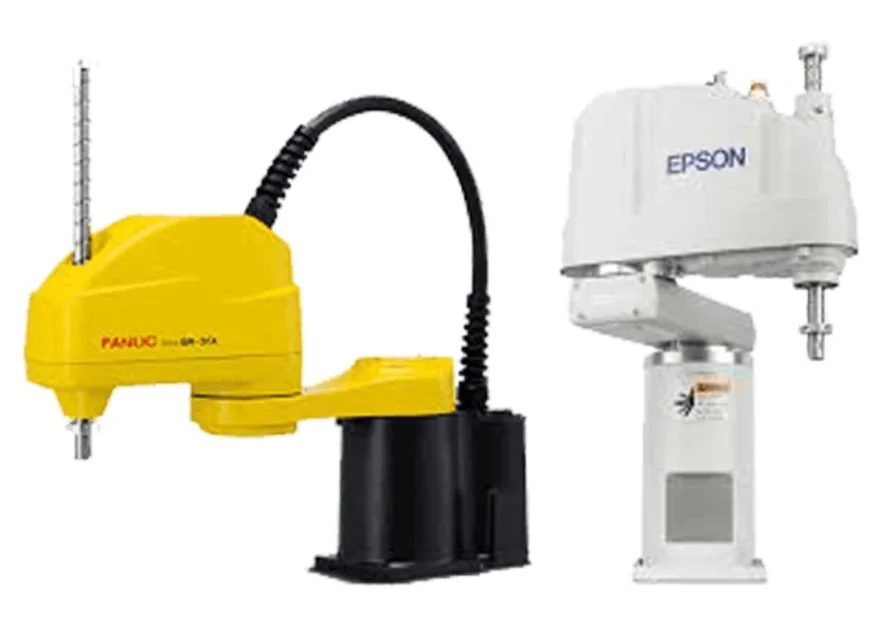
- SCARA Robot (SCARA Robot): Short for Selective Compliance Assembly Robot Arm. This robot is compliant (flexible) in the X-Y plane but rigid along the Z-axis. This unique feature makes it extremely fast and precise for tasks like pick-and-place, assembly, and packaging, where most movement is horizontal, culminating in a final vertical insertion.
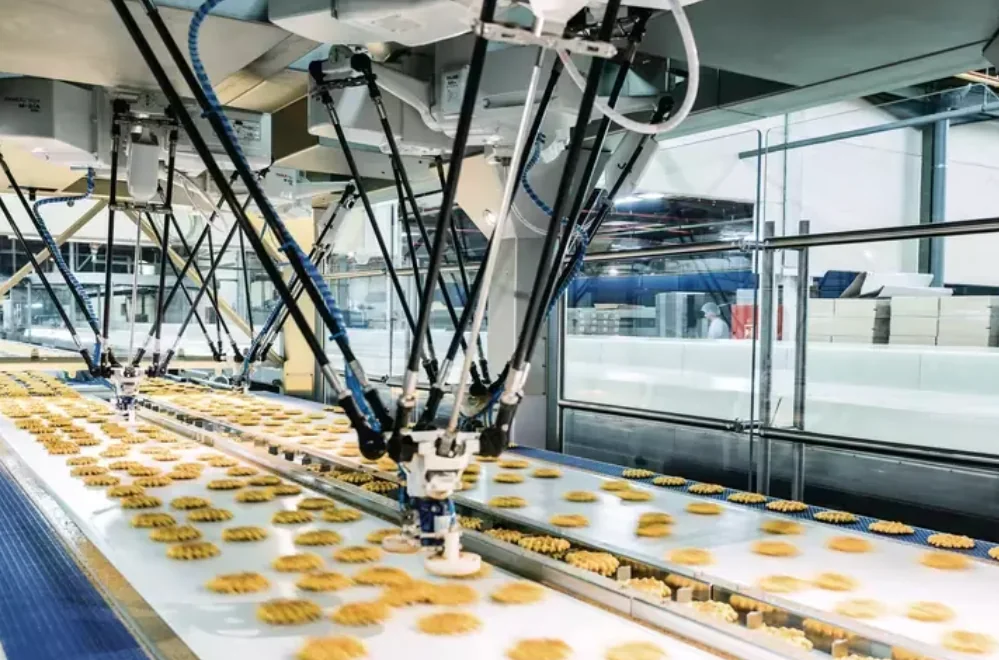
- Delta/Parallel Robot (Delta/Parallel Robot): A spider-like robot consisting of three or four arms connected to a single base platform. The actuators are located in the base, making the arms very lightweight and allowing for extremely high-speed movements. Delta robots are primarily used for fast pick-and-place and packaging tasks involving small, lightweight objects, which is common in the food, pharmaceutical, and electronics industries.
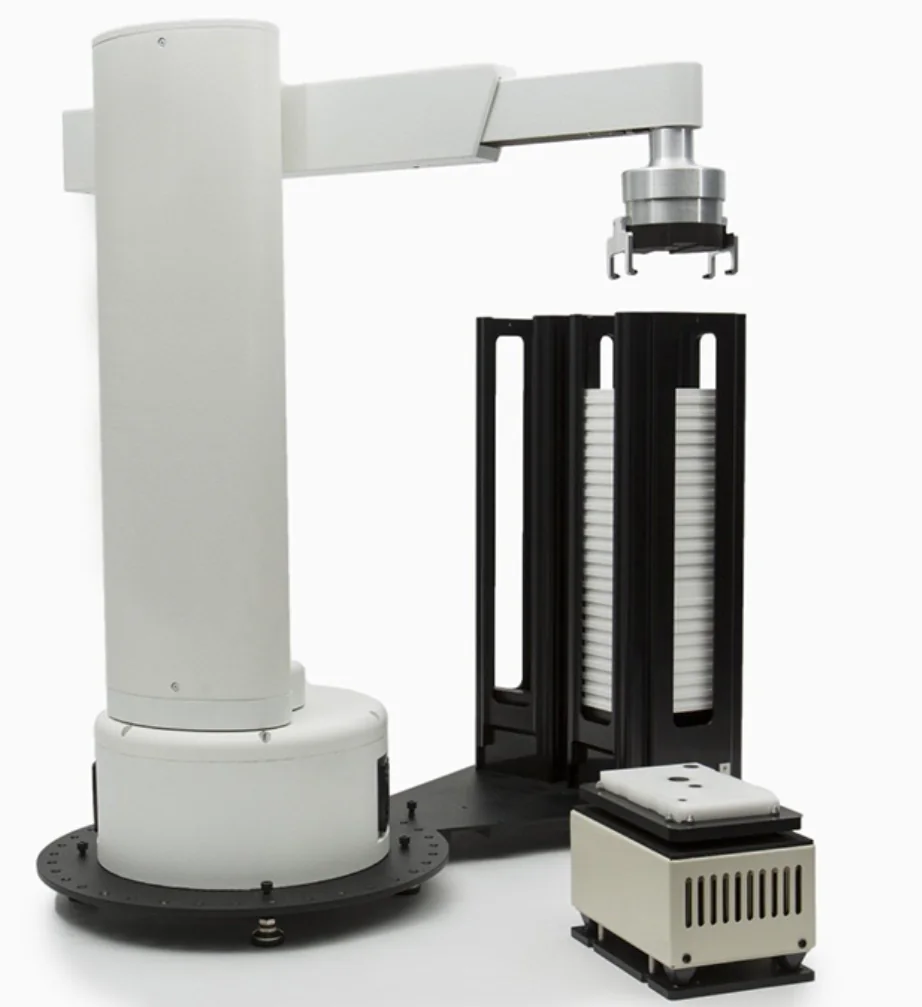
- Cylindrical Robot (Cylindrical Robot): A robot whose configuration includes at least one rotating joint at the base and at least one prismatic (linear) joint connecting its links. Its movements define a cylindrical workspace. These robots are used for tasks like assembly, machine tending, and spot welding, although they are less common today than articulated or SCARA robots.
By Mobility (Mobility)
An increasing number of robots are capable of moving from one place to another. The mode of mobility fundamentally determines how effectively a robot can navigate different terrains.
- Mobile Robot (Mobile Robot): An autonomous and self-sufficient robot that can move on a mechanically unrestricted path. This is a broad category that includes all robots not fixed to a single location, encompassing wheeled, legged, and aerial robots.
- Wheeled Robot (Wheeled Robot): A mobile robot that uses wheels for movement. This is the most common and energy-efficient form of mobility for robots operating on flat or relatively smooth surfaces, such as warehouse, hospital, or home floors.
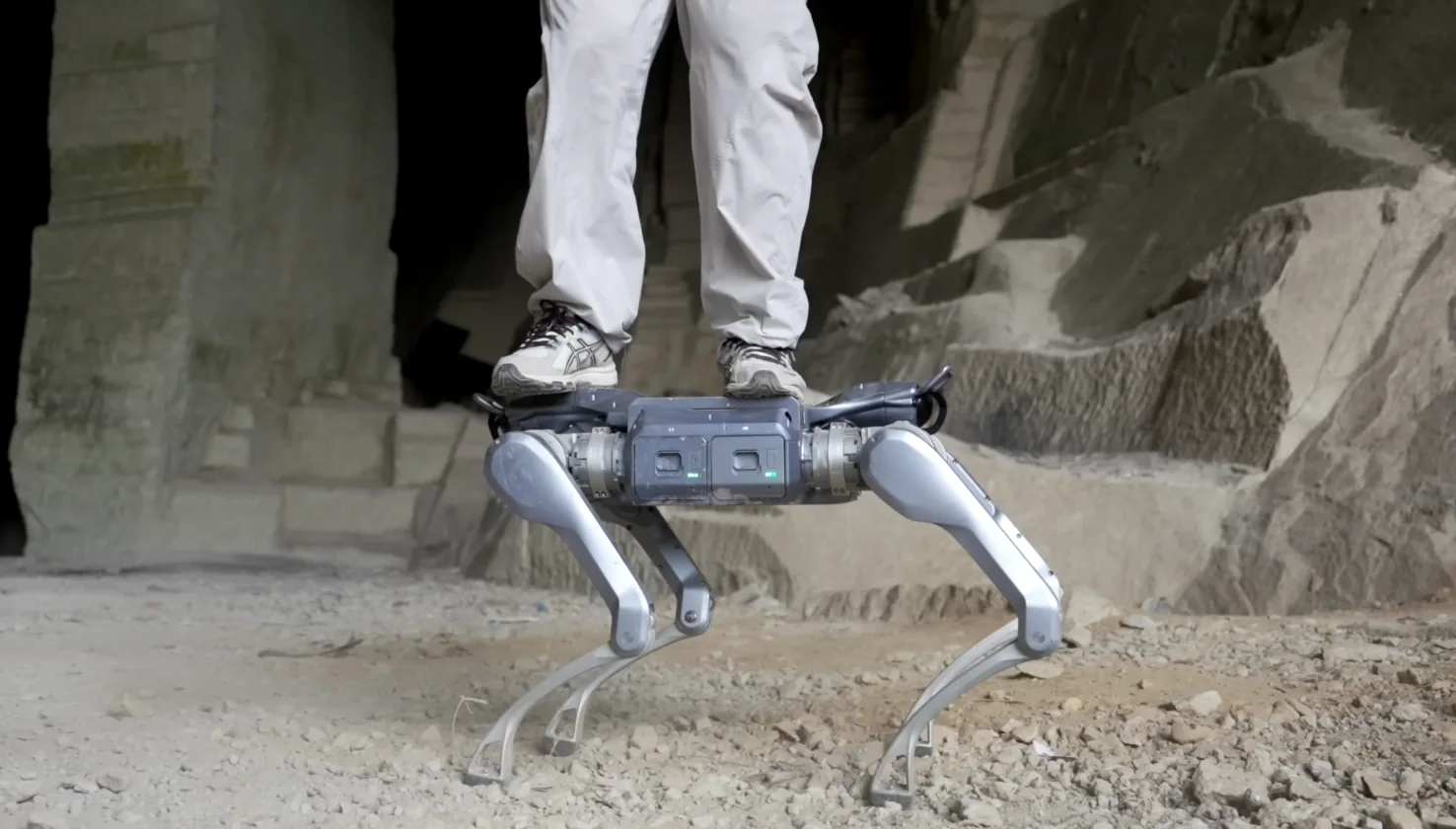
- Legged Robot (Legged Robot): A robot that uses articulated limbs, or legs, for movement. Legged robots, such as bipeds or quadrupeds, can provide excellent mobility in uneven, rugged, or complex terrains where wheels would fail, mimicking animal movements.
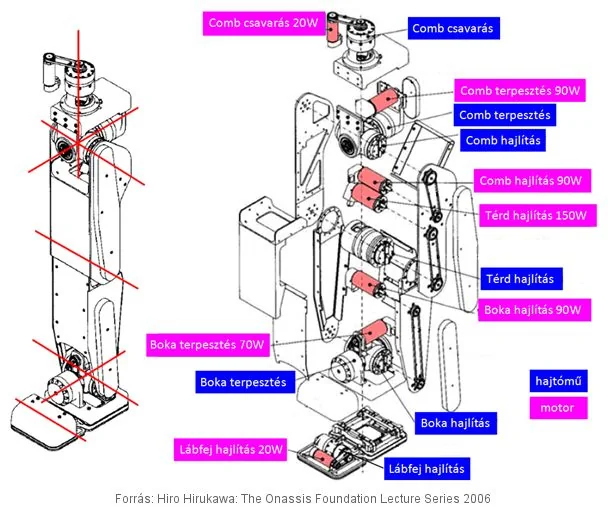
- Quadruped Robot (Quadruped): A four-legged robot, often inspired by animal locomotion, known for its dynamic stability and ability to navigate through challenging and unstructured environments. These robots can walk, run, and climb over obstacles that would be inaccessible to wheeled vehicles.
Of course, there are also combinations of the above, such as two- or four-legged wheeled robots that blend the abilities of both worlds, albeit at a slightly higher cost.
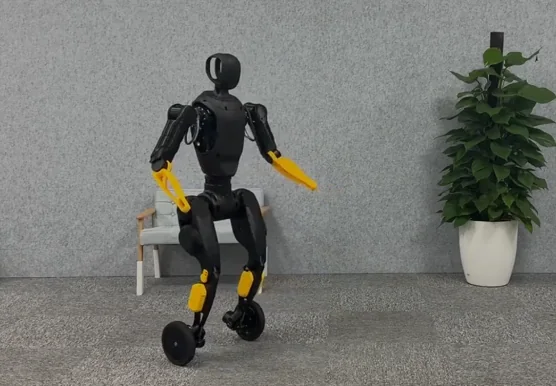
Naturally, there are robots with five, six, or even more legs, as well as all sorts of exotic configurations, but listing them all would take forever!
- Automated Guided Vehicle (AGV): A mobile robot that follows predetermined paths marked by wires, magnetic strips, or optical lines embedded in the floor. AGVs are used for material handling in structured environments like warehouses and factories. They can detect obstacles in their path but typically must stop and wait for them to be removed, as they cannot navigate around them autonomously.
- Autonomous Mobile Robot (AMR): An advanced mobile robot that uses sensors (like LiDAR and cameras) and sophisticated software (such as SLAM algorithms) to map its environment and navigate dynamically without predefined paths. Unlike AGVs, AMRs can autonomously plan the most efficient route and safely maneuver around unexpected obstacles, making them highly flexible in dynamic environments. Self-driving cars also fall into this category, often with hybrid functionality.
- Drone / Unmanned Aerial Vehicle (UAV): An aerial vehicle without a human pilot on board. Drones are either autonomously controlled by onboard computers or operated remotely by a ground operator. They are widely used for aerial photography, inspections, surveillance, and delivery. The term Aerobot is a related term for a robot capable of autonomous flight, often in extraterrestrial atmospheres.
By Interaction and Appearance (Interaction and Appearance)
Robots differ not only in function but also in their relationship with humans and their physical appearance. These types often fall into the category of service robots, where direct interaction and acceptability are crucial.
- Collaborative Robot / Cobot (Collaborative Robot / Cobot): A robot specifically designed for direct human-robot interaction within a shared workspace, eliminating the need for traditional safety barriers. Cobots are equipped with advanced safety features such as force and torque sensors, rounded edges, and speed monitoring to work safely alongside human operators on tasks like assembly, inspection, and machine tending.
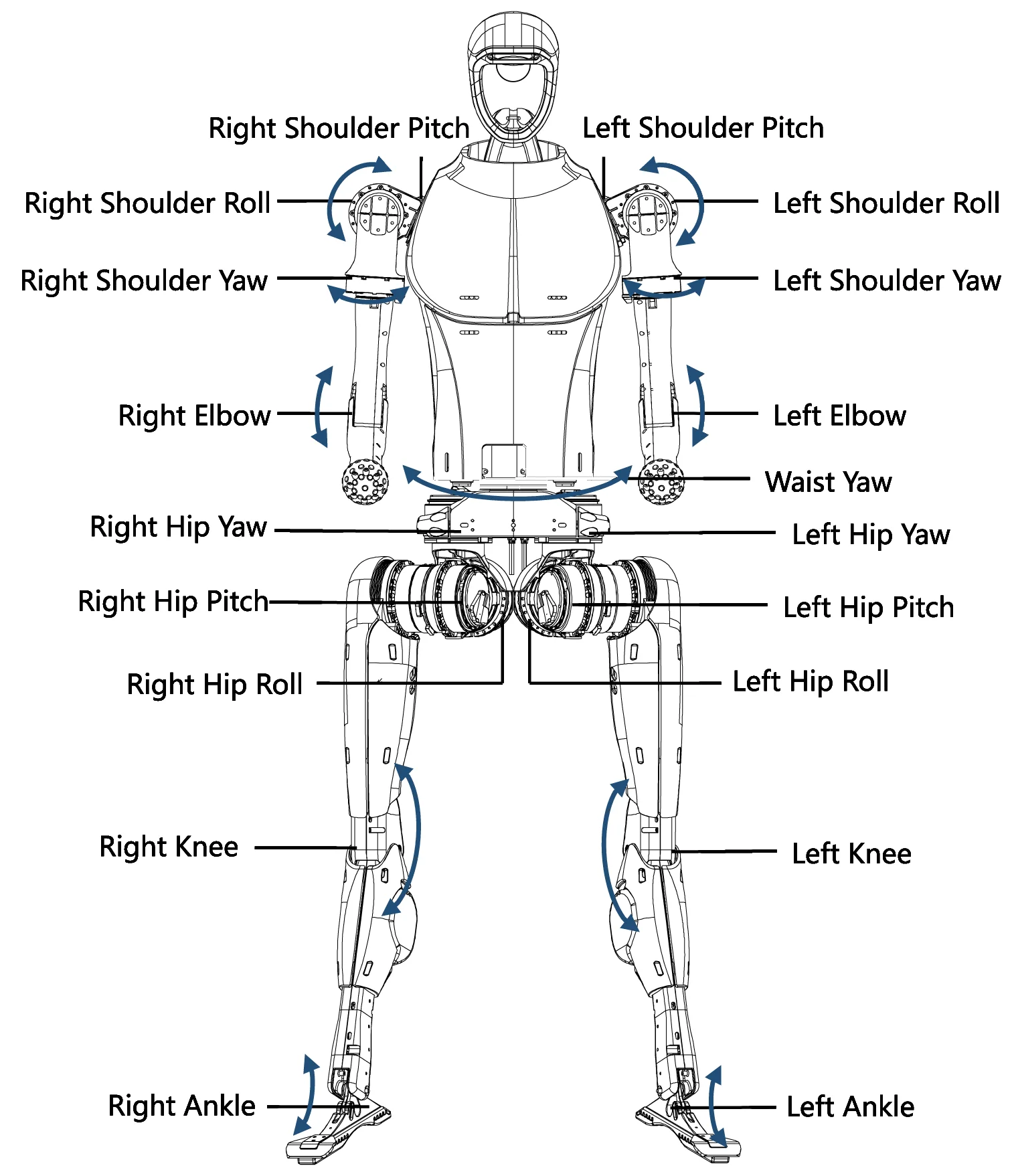
- Humanoid Robot (Humanoid): A robot whose body structure mimics the human body, typically having a torso, head, two arms, and two legs. The humanoid form is advantageous for operating in human-centric environments, using human tools, and facilitating more natural interactions with people.
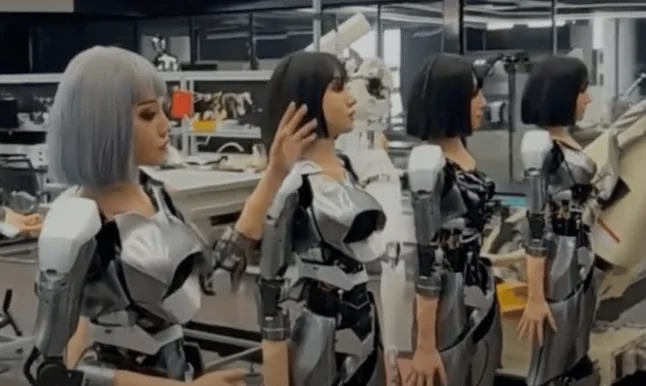
- Android (Android): A humanoid robot designed to closely resemble and behave like a human, often featuring synthetic, flesh-like skin. The term technically refers to a male-looking robot (derived from the Greek root “andr-”, meaning man), while Gynoid refers to a robot resembling a female human.
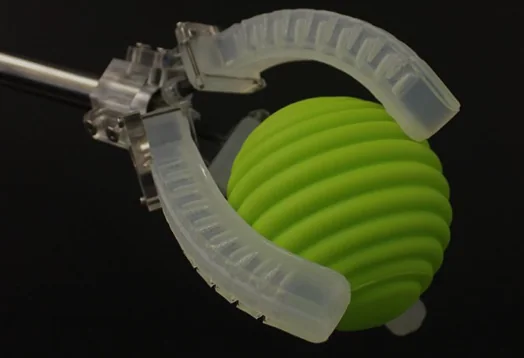
- Soft Robot (Soft Robot): A robot made from highly flexible and elastic materials, such as elastomers, gels, or fluids, instead of rigid components. Soft robots, inspired by biological organisms like octopuses, can bend, stretch, and deform. This inherent flexibility makes them safer for human interaction, more resilient to damage, and highly adaptable for tasks like grasping delicate or irregularly shaped objects.
The Anatomy of Robots: Hardware Components
A robot’s operation relies on the coordinated work of its hardware components. These parts make up the robot’s physical body, enabling it to sense its environment, move, and perform tasks. The anatomy of a robot can be likened to a biological organism: the controller acts as the brain, making decisions; the actuators and motors function as the muscles that generate movement; the sensors serve as the sensory organs that gather information about the world; and the manipulator and end effector act as the arm and hand through which the robot interacts with its environment.
This system functions as a closed-loop feedback system. The process begins with the controller issuing a command, such as “move forward.” This command is executed by the actuators, which rotate the wheels. As the robot moves, its sensors—such as LiDAR—detect the environment and identify an obstacle. The sensed data returns to the controller, which processes the new information and modifies the command: “stop” or “navigate around.” This continuous perception-cognition-action cycle enables intelligent and adaptive robot behavior. Within this, the choice of end effector is critical, as it determines what specific task the robot can perform. A robot arm alone is just a moving platform; with a welding torch, it becomes a welding robot; with a gripper, it transforms into a material handler; and with a camera, it serves as an inspection system.
Control and Actuation
These components are responsible for directing the robot’s movement and physical implementation.
- Controller (Controller): The robot’s “brain.” This is a computer-based system that includes the hardware and software responsible for executing the robot’s program. The controller interprets instructions, processes data from sensors, calculates the necessary movements, and sends signals to the actuators to control the robot’s actions, speed, and position.
- Actuator (Actuator): A machine component responsible for moving and controlling a mechanism or system. In robotics, actuators are the “muscles” that convert stored energy (typically electrical, hydraulic, or pneumatic) into physical movement. They receive control signals from the controller and drive the joints and links of the robot.
- Motor (Motor): The most common type of electric actuator used in robotics to create rotational or linear motion.
- DC Motor: A simple and widely used motor that provides continuous rotation. It is often used to drive the wheels of mobile robots due to its high speed and ease of control.
- Servo Motor: A rotary or linear actuator that allows precise control of angular or linear position, speed, and acceleration. It consists of a motor and a sensor for position feedback (encoder), forming a closed-loop control system. Servos are essential for precise movements of robot joints.
- Stepper Motor: An electric motor that divides a full rotation into equal steps. The motor’s position can be commanded to move and hold at one of these steps without feedback sensors (open-loop control), making it ideal for precision positioning applications like 3D printers.
- Hydraulics (Hydraulics): An actuation system that uses pressurized liquid, usually oil, to create mechanical force and movement. Hydraulic systems can exert very high forces and are used in large, powerful industrial robots for heavy lifting and high-force applications.
- Pneumatics (Pneumatics): An actuation system that uses compressed gas, usually air, to create movement. Pneumatic systems are known for their speed, low cost, and cleanliness, making them suitable for end effectors (like robot hands) and robotic applications requiring quick movements.
Sensing and Perception
Sensors are the robot’s sensory organs, allowing it to gather data about its state and environment, which is a prerequisite for autonomous operation.
- Sensor (Sensor): A device that detects incoming information from the physical environment. The specific inputs can be light, heat, motion, moisture, pressure, or any other environmental phenomenon. Sensors provide data to the robot about the world, enabling it to perceive its surroundings and adjust its behavior accordingly.
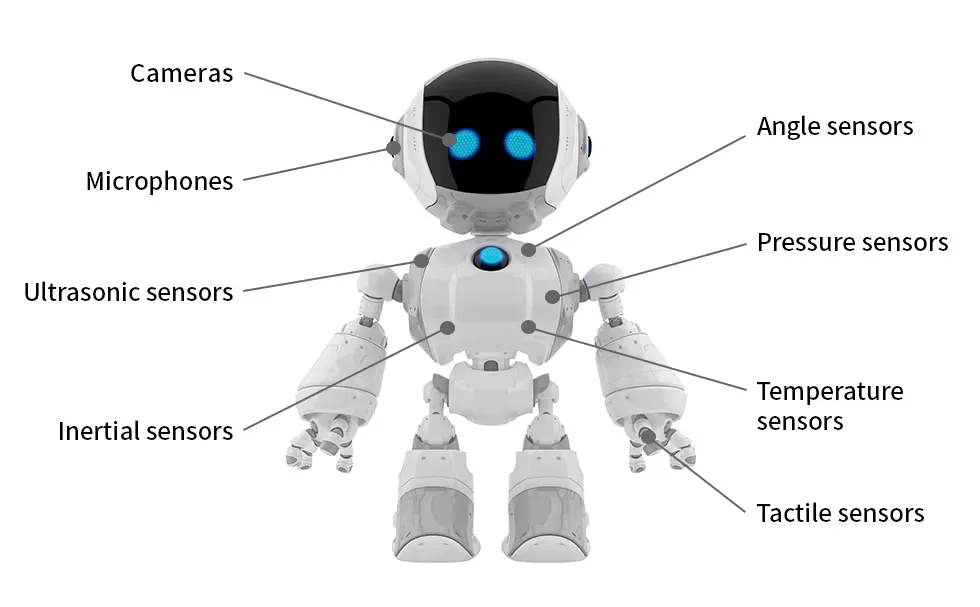
- LiDAR (Light Detection and Ranging): A remote sensing method that uses light in the form of laser pulses to measure distances to the Earth or other objects. The LiDAR sensor emits laser pulses and measures the time it takes for the reflected light to return. This data is used to create highly accurate 2D or 3D digital representations of the environment, known as point clouds. It is a key technology for navigation and obstacle avoidance in autonomous vehicles and mobile robots.
- Inertial Measurement Unit (IMU): An electronic device that measures the specific force, angular rate, and sometimes the magnetic field surrounding a body using a combination of accelerometers, gyroscopes, and sometimes magnetometers. IMUs are crucial for tracking a robot’s orientation, speed, and gravitational forces, enabling tasks such as balancing, navigation, and motion stabilization.
- Camera / Vision System (Camera / Vision System): A sensor that captures visual information from the environment, functioning as the robot’s “eyes.” Vision systems can range from simple 2D cameras to complex 3D stereo or depth-sensing cameras, used for various tasks including object recognition, barcode scanning, quality control, guidance, and navigation (e.g., visual SLAM).
- Force/Torque Sensor (Force/Torque Sensor): A sensor that measures the forces and torques applied along multiple axes. Typically mounted on the robot’s joints, it provides feedback that allows for precise control in touch-sensitive tasks like assembly, sanding, polishing, and deburring. It is also a critical safety component in collaborative robots, enabling them to detect collisions.
Interaction with the Environment
These components are the robot’s “executive” parts, allowing it to physically interact with the world.
- Manipulator / Robot Arm (Manipulator / Robot Arm): The robot’s arm-like mechanism, consisting of a series of links connected by joints. The manipulator is responsible for moving and positioning the end effector within the robot’s workspace to perform a task. The term is often used synonymously with “robot arm.”
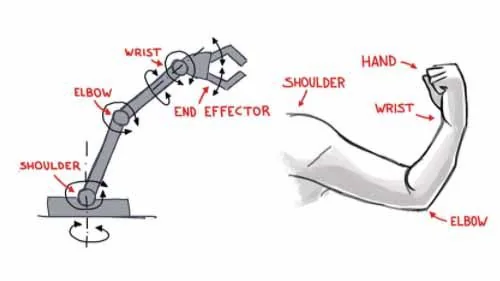
- End Effector / End-of-Arm Tooling (End-Effector / End-of-Arm Tooling – EOAT): The tool located at the end of the robot arm designed for interaction with the environment. The end effector is the robot’s “working tool,” and its function depends on the application. Without an end effector, a robotic arm is merely a positioning device. The choice of end effector determines what the robot can do.
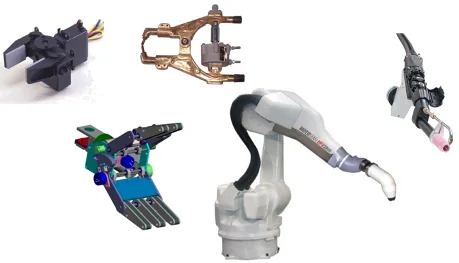
- Gripper (Gripper): The most common type of end effector serving as the robot’s “hands” for grasping, holding, and manipulating objects. Grippers come in many forms, including two-finger or multi-finger grippers, vacuum grippers (using suction), and magnetic grippers.
- Mechanical Grippers (Mechanical Grippers): These devices grasp objects using fingers or jaws with mechanical force. The simplest versions have two fingers that close in parallel or at an angle. However, more complex versions with multiple fingers (anthropomorphic) can adapt to objects of different shapes and sizes. Their operation can be pneumatic, electric, or hydraulic.
- Vacuum Grippers (Vacuum Grippers): These grippers lift objects using suction cups and vacuum. The pressure difference created in the suction cup provides the required holding force. They are particularly suitable for moving flat, smooth-surfaced, lightweight objects like glass panels, cardboard boxes, or electronic components. Their advantages include speed and gentle handling of materials.
- Magnetic Grippers (Magnetic Grippers): These grippers secure and move ferromagnetic (iron-containing) materials using a magnetic field. They can be permanent magnets or electromagnets, where the magnetic force can be regulated. They are often used in the automotive and metal processing industries for lifting heavy steel sheets or components. They are reliable and require minimal maintenance.
End effectors can also be other tools, such as welding torches, spray guns, cutting tools, and other machining equipment.
The “Mind” of Robots: Software Elements and Intelligence
The physical body of a robot is merely a tool; its true capabilities and behavior are defined by software, algorithms, and intelligence. This section discusses the “mind” of robots: the non-physical components that enable learning, decision-making, navigation, and development. This is where modern intelligent robots diverge from the simpler automatons of the past.
One of the most significant milestones in development is the emergence of the concepts of simulation and digital twin. While these two terms are often used interchangeably, they actually represent two different yet interconnected phases of the robotics lifecycle. In the pre-development, design phase, engineers use simulation software to test the robot’s movements in a purely virtual space, avoiding collisions and optimizing cycle times before purchasing a single screw. Recently, AI robots’ neural networks are also being trained in a simulated world, speeding up and simplifying programming. This reduces initial risks and costs. After the physical robot is deployed, the digital twin is created, which is not just a simulation but a live, sensor-data-updated virtual replica of the actual robot. If the physical robot’s motor heats up, this data appears instantly in the digital twin model, enabling predictive maintenance and real-time optimization. Thus, simulation reduces design risks and costs, while the digital twin manages operational risks and expenses.
Intelligence and Learning
These concepts allow robots not only to follow pre-programmed instructions but also to learn from their experiences and adapt to changing conditions. Here are the essentials, with more details available on the aiszakerto.hu blog.
- Artificial Intelligence (AI): A broad and interdisciplinary branch of computer science focused on constructing smart machines that are capable of performing tasks that typically require human intelligence. This includes problem-solving, learning, reasoning, perception, and understanding language. In robotics, AI enables autonomy and intelligent decision-making.
- Machine Learning (ML): A subfield of artificial intelligence that focuses on using data and algorithms to imitate human learning, gradually improving accuracy. ML algorithms build models based on sample data, known as “training data,” to make predictions or decisions without being explicitly programmed for the task. This is the key technology that allows robots to learn from experiences.
- Physical AI (Physical AI / Embodied AI): The integration of artificial intelligence with physical systems, such as robots that can perceive, reason, act, and learn in the real world. Unlike purely digital AI, Physical AI operates through a continuous feedback loop of perception, decision-making, and physical action, enabling machines to interact with and adapt to dynamic, unstructured environments. It represents the convergence of AI, robotics, and sensor technology.
- Cognitive/Smart Robot (Cognitive/Smart Robot): An intelligent robot capable of sensing its environment, learning from experiences, and modifying its behavior based on sensor data without direct human intervention. The term emphasizes the robot’s cognitive functions, such as reasoning, planning, and learning, indicating a deep fusion of robotics and AI.
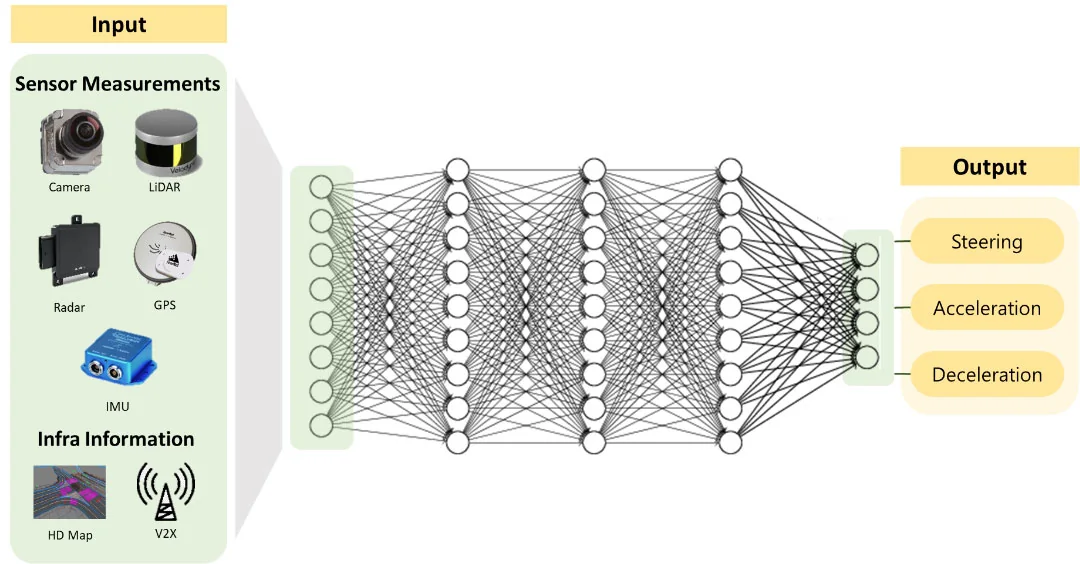
- End-to-End Neural Network (End-to-End Neural Network) (E2E): An artificial intelligence model that treats the entire task as a single, integrated system. Instead of breaking the problem down into several distinct, sequential steps (e.g., data preprocessing, feature extraction, classification), the end-to-end model takes raw input data (e.g., an image) and directly outputs the final result (e.g., naming the object in the image or the coordinates needed to grasp it).
Navigation and Virtual Modeling
These technologies enable robots to navigate in space and allow developers to test and optimize them in virtual environments.
- SLAM (Simultaneous Localization and Mapping): A computational method used by robots and autonomous vehicles to build a map of an unknown environment while simultaneously tracking their own location within that map. SLAM algorithms process data from sensors, such as LiDAR or cameras, to create the map and enable self-localization. This key technology allows mobile robots to achieve true autonomy in unknown areas.
- Computer Vision (Computer Vision): A field of artificial intelligence that enables computers and systems to extract meaningful information from digital images, videos, and other visual inputs—and act on that information or make suggestions based on it. In robotics, computer vision allows robots to “see” and interpret their surroundings for tasks like navigation, object recognition, quality control, and manipulation.
- Simulation (Simulation): The creation and execution of a virtual model of a physical robot and its environment using specialized software. Robotics simulation allows engineers to design, test, program, and optimize robotic systems and workstations in a digital space before building or deploying the physical hardware. This saves time, reduces costs, enhances safety, and allows for thorough validation of robot paths and logic.
- World Simulation (World Simulation): A computer model that mimics the functioning, rules, and interactions of a complex environment or “world.” In the context of artificial intelligence, this represents a virtual learning environment where AI agents (e.g., software for a self-driving car or a robot) can safely and rapidly learn from a vast amount of experience without causing damage in the real world or using expensive resources. This approach is crucial for developing self-driving technologies and complex robotic tasks, as it allows for efficient testing of rare or hazardous situations.
- Digital Twin (Digital Twin): A virtual representation of a physical object, process, or system that serves as a real-time digital counterpart. Unlike static simulations, the digital twin is continuously updated with data from sensors on the physical device, creating a live bridge between the physical and virtual worlds. In robotics, it is used for real-time monitoring, performance analysis, predictive maintenance, and optimizing operations throughout the robot’s lifecycle.
- GPU (Graphics Processing Unit): A specialized electronic circuit designed to manipulate and alter memory to accelerate the creation of images in a buffer intended for output to a display device. In modern AI and robotics, GPUs are widely used for general-purpose computing (GPGPU), as their highly parallel architecture makes them exceptionally efficient for training deep learning models and processing large, parallelizable computations required for real-time sensor data analysis.
AI-specific concepts
How does AI control robots? (Read my detailed article here)
- The VLM (Vision-Language Model) primarily focuses on perceiving and interpreting the environment: it processes visual input (e.g., camera images) and language instructions (e.g., “Sort the fruits by color!”) and then devises logical plans. This is the “thinking” phase, where the model understands the world but does not directly control movements.
- The VLA (Vision-Language-Action) builds on this: it integrates the capabilities of the VLM but adds the generation of physical actions, such as motor commands for the robot (e.g., “Lift your arm and place the banana on the yellow plate!”). Thus, the VLA is not necessarily a separate model but often an extended VLM that bridges thought and action—though, in systems like Google Robotics 1.5, these work in tandem.
Conclusion
This comprehensive glossary has gathered the essential concepts of the robotics world, from mechanical foundations to software intelligence. The presentation of definitions and categories has illustrated that the essence of modern robotics lies in the seamless integration of hardware (the body) and software (the mind). A robot is not just a collection of parts but a complex system based on feedback loops, where perception, decision-making, and action form an inseparable unity.
From the discussed concepts, several key trends can be derived that will shape the field’s development today and in the future:
- The shift toward autonomy: The journey from simple, pre-programmed AGVs to dynamically navigating AMRs, enabled by SLAM technology, clearly indicates the demand for more flexible, intelligent systems requiring less human oversight.
- Human-centric collaboration: The emergence of cobots has brought about a paradigm shift in industrial automation. The goal is no longer just to replace human labor, but to complement human capabilities, creating a safer and more efficient working environment.
- The pervasive role of artificial intelligence: The concept of Physical AI highlights that the robots of the future will not only be mechanically advanced but also possess cognitive abilities. Machine learning, computer vision, and advanced sensors enable robots to adapt to the unpredictability of the real world.
- The intertwining of the virtual and physical worlds: Simulation and digital twin technologies are revolutionizing the design, deployment, and operation of robots. Virtual testing and real-time monitoring reduce costs, increase efficiency, and minimize risks.
We hope this glossary serves as a valuable foundation for anyone looking to deepen their understanding of the exciting and rapidly evolving world of robotics. Use this knowledge base as a starting point for further exploration, and return to it as new questions arise!