Upcoming Events:August 22, 2026 - August 26, 2026
Location:
About the Event
Get ready for the robot apocalypse, but make it sports. The 2nd World Humanoid Robot Games is descending upon Beijing from August 22-26, 2026, and it’s shaping up to be less of a gentle symposium and more of a full-blown android Olympics. After a modest debut in 2025, the organizers have apparently decided that subtlety is overrated. The number of metallic competitors has quadrupled, promising a spectacle of whirring servos and spectacular falls.
Hosted at the iconic National Speed Skating Oval, aka the “Ice Ribbon,” this event is where theory meets the unforgiving laws of physics. Organizers from the Beijing Municipal Bureau of Economy and Information Technology are blunt about the goal: to transform research into revenue. As director Jiang Guangzhi put it, the aim is to help robots “turn medals into orders and move directly from the competition arena to real-world workplaces.” This event is for engineers, researchers, and anyone curious to see if a robot can perform a standing long jump without face-planting.
The competition has drawn teams from global robotics powerhouses like the United States, Germany, and Japan, ensuring a clash of engineering philosophies. But the core objective remains clear: push the boundaries of humanoid capabilities in environments that mimic our own, from factory floors to hotel lobbies. If you want a preview of your future robot butler (or overlord), this is the place to be.
Key Numbers
Forget everything you thought you knew about robot competitions. This year’s scale is staggering.
- 2,056 robots will be competing, a fourfold increase from the 500+ at the inaugural event.
- 666 teams have registered, up from 280 teams last year.
- 16 countries are represented, including a national team from Brazil composed of five RoboCup squads.
- 51 distinct events are scheduled (30 competitive, 21 scenario-based), nearly double last year’s 26.
- 1,301 competition sessions will be held, a massive jump from 487 in 2025.
- 108 teams will compete in dancesport alone, because nothing says “future of technology” like a robot attempting a waltz.
Important Dates
Mark your calendars. The androids are coming.
| Milestone | Date |
|---|---|
| Opening Ceremony | August 22, 2026 |
| Competition Days | August 22 - 26, 2026 |
| Closing Ceremony | August 26, 2026 |
Venue & Getting There
The games will take place at the National Speed Skating Oval (The Ice Ribbon) in Beijing, a marvel of architecture left over from the 2022 Winter Olympics. There’s a certain poetry to watching the next generation of humanoid robots stumble, sprint, and lift weights in an arena built for peak human performance.
The venue is located in the Beijing Olympic Park. It’s accessible via the city’s extensive subway system (Line 8 or Line 15 to Olympic Green Station) and numerous bus routes. Given the scale of the event, public transport is highly recommended unless you enjoy a good old-fashioned Beijing traffic jam.
Program Highlights
The event is split into two main categories: pure competitive sports designed to test raw physical limits, and scenario-based trials that test a robot’s usefulness in the real world.
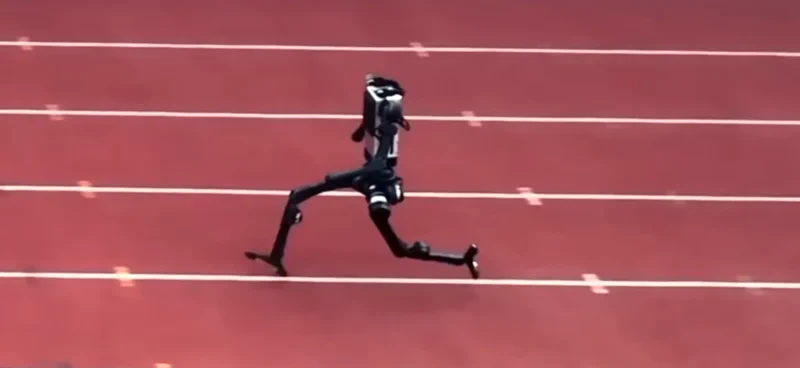
- Track & Field: The classics are back, but with brutally tighter time limits. The 100m sprint must now be completed in under one minute, and the 400m in under five. This year also introduces the standing long jump.
- Strength & Combat: Because who doesn’t want to see robots fight? This category includes freestyle fighting and the debut of weightlifting, with lightweight and heavyweight gold medals up for grabs.
- Ball Sports: Robot football is leveling up. Expect to see actual dribbling, powerful shots, and diving saves—a significant improvement over last year’s clumsy kicking contests. Table tennis also makes its debut.
- Scenario-Based Tasks: This is where the money is. Robots will be tasked with real-world jobs like housekeeping, emergency response, library book sorting, and even picking up beans to test fine motor skills.
- Dancesport & Gymnastics: In a bizarre and beautiful display of artistic ambition, 108 teams will compete in street dance, ballroom dance, and cheerleading. Difficulty levels have been raised, so expect more complex—and potentially disastrous—maneuvers.
Competitions
This isn’t just a tech demo; it’s a high-stakes battle of code and carbon fiber. The rulebook has been rewritten to weed out the weak. Full autonomy is now required for almost all events, meaning teleoperation is out. This is a true test of a robot’s onboard intelligence.
The expansion to 51 events includes some fantastic new additions designed to push robots to their limits. The tug-of-war will test raw power and stability, while the long jump challenges dynamic control and explosive strength. Scenario-based events have also evolved, with some now featuring head-to-head competition between pairs or groups of four robots, moving beyond simple solo time trials. The officiating has also been scaled up, with 223 referees—a hundred more than last year—ready to call foul on any wobbly-kneed competitor.
Exhibition & Industry
While a formal exhibitor list has yet to be released, the event is a magnet for China’s burgeoning robotics industry. With 157 enterprises and 200 universities participating, the sidelines of the competition will effectively be a massive trade show and recruitment fair. Expect to see major Chinese robotics companies showcasing their latest platforms, hoping to catch the eye of investors and clients. This is where the transition from “competition prototype” to “commercial product” begins, and the pressure on the teams to perform is immense.
Schedule Highlights
While a minute-by-minute schedule is still forthcoming, organizers have teased several can’t-miss moments.
- Opening Night (Aug 22): The games kick off with a 7-a-side football exhibition match, alongside the preliminary heats for the 100m and 400m sprints.
- Peak Gold Medal Day (Aug 23): A total of 12 gold medals will be awarded, making it the second-busiest day for podium ceremonies.
- Weightlifting Finals (Aug 24): The robot “strongmen” will compete for gold in both lightweight and heavyweight categories in the evening.
- Grand Finale (Aug 26): The event culminates with the finals for 5-a-side football and the ever-popular freestyle fighting before the closing ceremony.
Registration
Getting a front-row seat to the future is surprisingly affordable.
Tickets for competition days start at just 98 CNY, while access to the opening and closing ceremonies starts at 128 CNY. Various multi-person packages are also available.
Spectators in mainland China can purchase tickets through numerous platforms, including the “Chaopiao Saiyan” WeChat mini-program, Damai, and Maoyan. For international visitors, tickets can be purchased directly through Damai International.