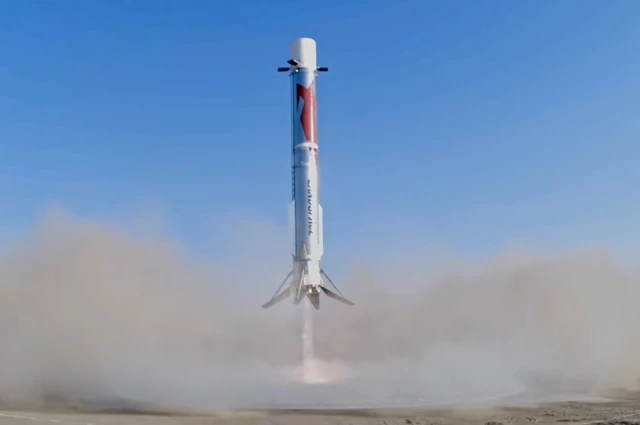
In what is becoming a familiar spectacle—albeit for a vanishingly exclusive club—another rocket has successfully returned from the edge of space to perform a graceful vertical touchdown. Chinese commercial outfit LandSpace officially joined the ranks on Wednesday, successfully recovering the first stage of its Zhuque-3 (ZQ-3) rocket following a launch from the Jiuquan Satellite Launch Center in northwest China.
The Zhuque-3 Y2 rocket roared into life at 7:35 a.m. Beijing Time, successfully delivering the Honghu-03 satellite into its intended orbit. Minutes later, the first-stage booster—a towering cylinder of engineering standing over 40 metres tall—executed a series of intricate manoeuvres to scrub off speed before touching down vertically on its deployable landing legs at a bespoke landing site. This mission represents China’s first-ever land-based recovery of an orbital-class rocket booster, a milestone that is frankly non-negotiable for any firm serious about competing in the modern launch market.
This achievement is distinct from the sea-based net recovery of the state-developed Long March-10B rocket seen in July, highlighting the parallel, and increasingly competitive, tracks of China’s state-owned and private space sectors. LandSpace, a private firm, is clearly positioning its stainless-steel, methane-fuelled Zhuque-3 as a direct challenger to SpaceX’s Falcon 9, with a design philosophy that also takes more than a few, shall we say, aesthetic cues from Starship.
Why this matters
Sticking the landing on a rocket booster has become the new “Hello, World!” for aspiring space powers. It is the entry fee for the low-cost launch game that SpaceX pioneered. By nailing this recovery, LandSpace has validated its technical roadmap and catapulted itself into the top tier of commercial launch providers. While there is still a long road from a single successful recovery to the kind of rapid, routine reuse that truly slashes costs, this is a loud declaration of intent. It signals that the global duopoly on reusable rockets is officially being challenged, and the race to build the satellite mega-constellations of the future just got a whole lot more interesting.