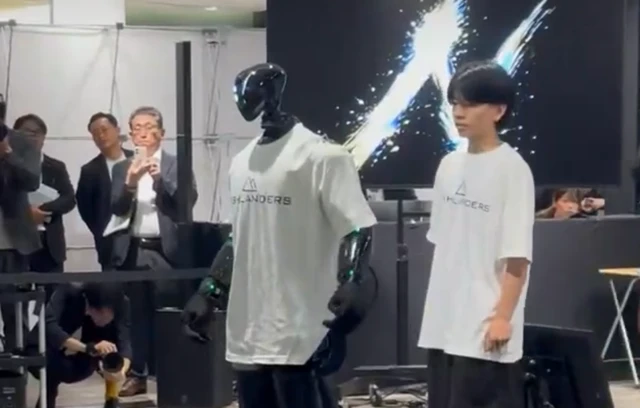
Mitsubishi Motors Corporation, a firm more synonymous with rugged Outlanders than sleek androids, is officially pivoting towards the humanoid frontier. The Japanese carmaker announced on 9 July 2026 that it has signed a Memorandum of Understanding with Highlanders, Inc., a high-octane robotics startup spun out of the University of Tokyo. The ambitious roadmap involves repurposing idle sections of Mitsubishi’s Kyoto manufacturing plant to mass-produce “Physical AI” humanoids, with the first units expected to roll off the assembly line as early as 2027.
The partnership is a strategic play to tackle Japan’s chronic labour shortages by marrying Highlanders’ AI pedigree with Mitsubishi’s deep-seated expertise in heavy industry. While Highlanders designs the brains and the brawn, Mitsubishi provides the one thing robotics startups crave most: industrial scale. Mitsubishi has already injected capital into the startup and intends to increase its stake as the project matures. The goal is a formidable production capacity of 1,000 units per month.
The first customer for these new mechanical workers will be Mitsubishi itself. The company plans to deploy the humanoids across its own factories to handle parts logistics and assembly, effectively stress-testing the tech on its own watch. This “eat your own dog food” strategy is designed to harvest operational data at pace, refining the robots for the gritty realities of the industrial world before they hit the open market.
Why this matters
Mitsubishi’s venture is the latest—and perhaps most pragmatic—sign of a shifting tide: legacy automakers are becoming the kingmakers of the humanoid age. By offering up their vast manufacturing cathedrals, firms like Mitsubishi are solving the “production hell” that usually kills off robotics startups. These smaller outfits excel at R&D but often flounder when it comes to the hard graft of mass manufacturing.
This move sees Mitsubishi join an elite club alongside BMW (partnered with Figure), Mercedes-Benz (collaborating with Apptronik), and Hyundai (the owners of Boston Dynamics). These alliances are forging a new industrial backbone, pairing automotive muscle with startup agility. While the likes of Tesla are determined to go it alone, this partnership model suggests that the fastest way to get thousands of humanoids off the drawing board and onto the factory floor is to use the infrastructure we already have.