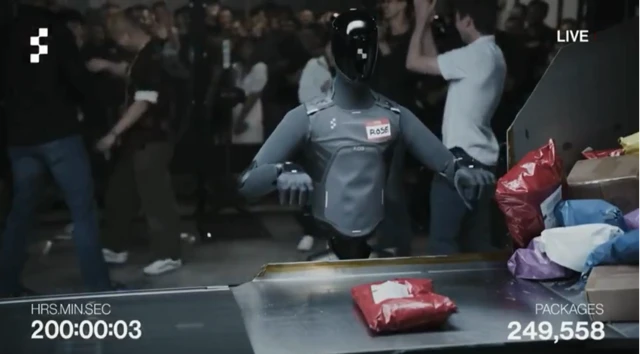
In what can only be described as a monumental display of robotic stamina, Figure AI, Inc. has revealed that its F.03 humanoid robot has just smashed a 200-hour continuous parcel-sorting marathon. The robot, affectionately dubbed “Rose” in some of the footage, autonomously processed a staggering 249,558 packages without so much as a mechanical hiccup, according to CEO Brett Adcock. What began as a standard eight-hour shift was extended simply because the machine refused to call it a day—a level of commitment your human colleagues likely won’t be matching anytime soon.
The entire operation was powered by Figure’s end-to-end neural network, the Helix AI system, operating entirely without human intervention or “puppet-master” teleoperation. This wasn’t merely a hardware stress test; it was a definitive proof of concept that the robot’s AI brain can tackle mind-numbing, repetitive tasks for over eight days straight without getting bored, distracted, or demanding a tea break. While the feat is undeniably impressive, eagle-eyed viewers of the livestream noted that the performance wasn’t quite flawless. There were occasional slips, such as packages being placed label-side down—a minor error, perhaps, but one that causes real headaches in a professional logistics chain.
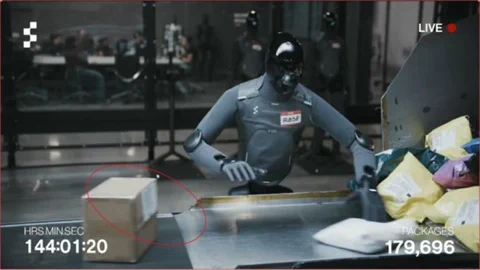
This demonstration arrives hot on the heels of a widely publicised “Man vs. Machine” showdown, where a human intern narrowly pipped an F.03 robot to the post in a 10-hour sorting contest. The intern managed 12,924 packages against the robot’s 12,732, averaging 2.79 seconds per parcel compared to the robot’s 2.83. However, while the human required breaks and finished the shift with a “basically broken” forearm, the robot was ready to soldier on indefinitely.
Why does this matter?
The real takeaway from this 200-hour ordeal isn’t raw speed—it’s about unflinching, superhuman endurance. A human worker simply cannot pull an eight-day shift, but a robot can. For the logistics and manufacturing sectors, which are currently grappling with chronic labour shortages and high staff turnover for repetitive roles, this is the holy grail. While the F.03 might be a fraction slower than a motivated intern for now, its ability to work 24/7 without rest, injury, or complaint represents a tectonic shift in the economics of manual labour. Adcock’s boast that this was the “last time a human will ever win” might carry a hint of Silicon Valley swagger, but it’s backed by the cold, hard logic of automation. The speed will come; the endurance is already here.