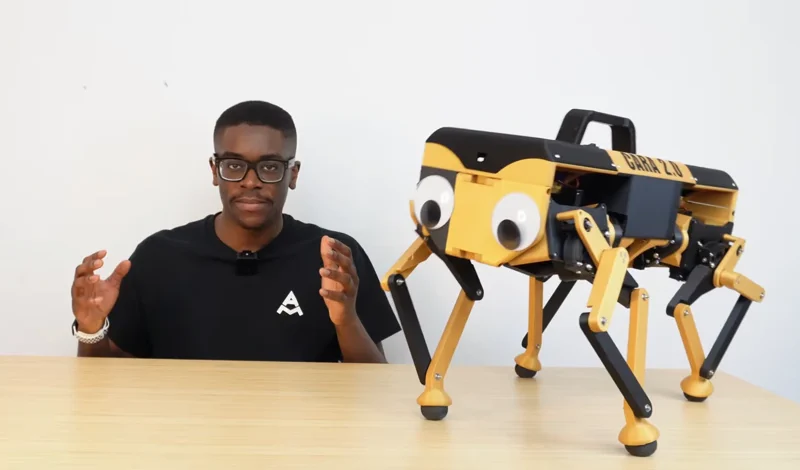
Maker and YouTuber Aaed Musa has returned with a major overhaul of his idiosyncratic rope-driven robot dog, and the stats are genuinely impressive. The new CARA 2.0, born from a university senior engineering project, has managed to slash the price tag of its predecessor by more than half, tumbling from $3,000 to a far more palatable $1,450 (roughly £1,150). It’s also undergone a serious diet, shedding 42% of its bulk to drop from 14.25kg to a nimble 8.26kg. This is the successor to the original Translation not available (en-gb) that first turned heads with its clever, low-backlash capstan drives.
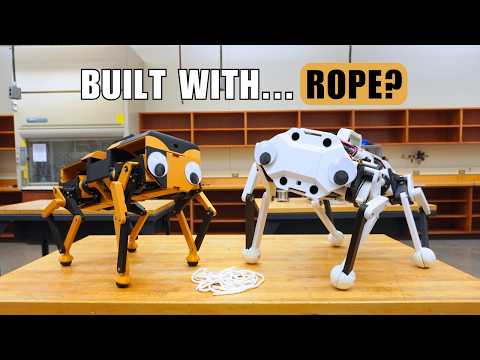
Developed alongside a team as a final-year capstone project, CARA 2.0 clocks a walking speed of 0.55 m/s and can lug a 6.8kg payload for about an hour. While the team’s ambitious “moonshot” goal was to break the sub-$1,000 barrier, a final build cost of $1,450 for a dynamic quadruped of this calibre is certainly not to be sniffed at. These savings were found by ditching pricey carbon fibre tubes in favour of 3D-printed structures and sourcing budget drone motors—which the team then had to painstakingly rewind by hand to triple their torque output.
Why does this matter?
Here’s the kicker: despite the project’s success, Musa is officially calling time on the very technology that gave the robot its name. CARA stands for “Capstans Are Really Awesome,” but after this latest build, Musa has concluded that while they might be awesome in theory, they are deeply impractical in the real world. In his project post-mortem, he confirmed he is retiring the design and won’t be revisiting capstan drives, lamenting that they “just aren’t very assembly-friendly.”
It’s a classic engineering lesson learned the hard way. A design can be a masterstroke on paper—offering zero backlash and high performance—but if it’s a total nightmare to build and maintain, it’s a dead end for practical use. Musa notes that for his next quadruped, he’ll be “using off-the-shelf actuators.” It’s a pragmatic, if slightly bittersweet, conclusion to a project that successfully built a better, cheaper robot dog, only to prove that its core innovation was a beautiful but flawed premise. You can dive into all the technical nitty-gritty on Musa’s project page.