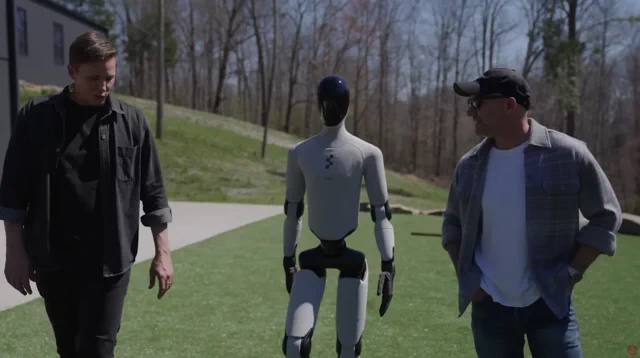
In the frantic sprint to populate the global workforce with autonomous machines, Figure AI, Inc. hasn’t just joined the race—it’s effectively engaged the afterburners. During a remarkably unvarnished tour on the Shawn Ryan Show, the company revealed that it can now assemble a complete humanoid robot in roughly 90 minutes. This isn’t a speculative “pie in the sky” projection; it is their current operational tempo when the line is humming, backed by a staggering ambition to scale to one million units per year within the decade. Let that sink in for a moment. We have officially moved past the era of the “bespoke science project” and entered the age of the humanoid assembly line.

The machine at the heart of this manufacturing blitz stands 5ft 6in tall, weighs approximately 61kg, and can operate for four to five hours on a single charge. When it’s running on empty, it tops up in about an hour by simply stepping onto an inductive charging pad, drawing two kilowatts of power wirelessly through its feet. Every movement—from its steady gait to intricate manual tasks—is governed entirely by Figure’s Helix neural network. There isn’t a single line of traditional, “if-then” hand-written code dictating its actions. When pressed on the hardware’s resilience, a Figure representative offered a refreshing bit of candour: “Sometimes we break necks, sometimes it’s fine.”
This industrial muscle isn’t merely for show. Figure AI has already inked commercial deals with titans like BMW for automotive manufacturing and Brookfield for logistics and real estate. The company also teased that two more major client announcements are slated for the next 60 days. These robots boast fifth-generation hands equipped with embedded cameras and tactile sensors, a soft, foam-wrapped chassis for human safety, and “clothing” that can be removed without so much as a screwdriver.
Why does this matter?
The primary bottleneck in robotics has never been the robot itself; it’s the factory required to build it. While competitors are busy polishing demos for social media, Figure is obsessing over the “machine that builds the machine.” A 90-minute build time per unit fundamentally disrupts the economics and accessibility of general-purpose robotics. It signals a definitive strategic pivot from crafting high-cost, individual prototypes to mass-producing a standardised platform. This approach, paired with an AI-first control system that learns through experience rather than explicit programming, suggests Figure isn’t just trying to build a better bot—it’s aiming to build the Ford Model T of the humanoid world. The race is no longer about who has the most agile machine, but who can deploy them by the thousands.